

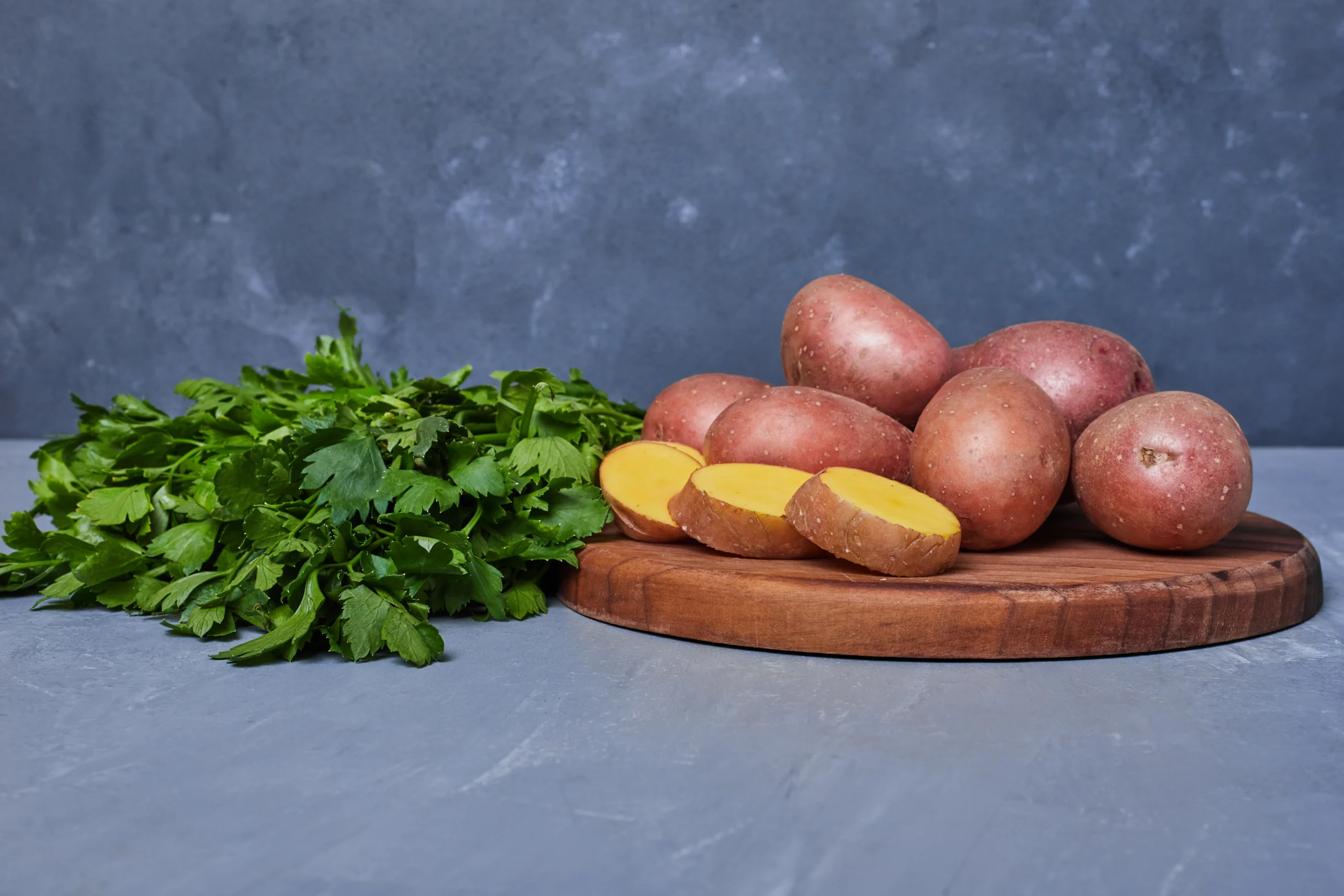
Basic Information:
- Common Name: Sweet Potatoes
- Scientific Name: Ipomoea batatas
- Category: Root Vegetable
- Varieties: Sweet potatoes with orange flesh are one of the most common varieties, known for their vibrant orange color and sweet taste. There are also other varieties with different flesh colors, such as white, yellow, and purple.
Nutritional Information:
- Macronutrients (per 100 grams):
- Carbohydrates: 17.3 grams
- Proteins: 1.58 grams
- Fats: 0.38 grams
- Saturated Fat: 0.02 grams
- Monounsaturated Fat: 0.01 grams
- Polyunsaturated Fat: 0.03 grams
- Micronutrients:
- Vitamins:
- Vitamin A: 14,187 IU (473% DV)
- Vitamin C: 2.4 mg (3% DV)
- Vitamin E: 0.26 mg (2% DV)
- Vitamin K: 1.8 µg (2% DV)
- Vitamin B6: 0.21 mg (12% DV)
- Minerals:
- Potassium: 337 mg (7% DV)
- Magnesium: 25 mg (6% DV)
- Phosphorus: 47 mg (4% DV)
- Calcium: 30 mg (2% DV)
- Iron: 0.61 mg (3% DV)
Phytonutrients
While specific data on the phytonutrient content of raw sweet potatoes with orange flesh may vary, here are some common phytonutrients that are often present:
- Beta-Carotene:
- Sweet potatoes with orange flesh are rich in beta-carotene, a type of carotenoid that gives them their vibrant color. Beta-carotene is a precursor to vitamin A and acts as a powerful antioxidant, supporting eye health, immune function, and skin health.
- Vitamin C:
- Sweet potatoes also contain vitamin C, another antioxidant that supports immune function, collagen synthesis, and wound healing.
- Anthocyanins:
- While sweet potatoes with purple flesh are particularly high in anthocyanins, which are responsible for their purple color, orange-fleshed sweet potatoes may also contain small amounts of these beneficial compounds. Anthocyanins have antioxidant and anti-inflammatory properties and may help reduce the risk of chronic diseases.
- Quercetin:
- Quercetin is a flavonoid found in various plant foods, including sweet potatoes. It has antioxidant and anti-inflammatory effects and may have protective benefits against heart disease, allergies, and other inflammatory conditions.
- Chlorogenic Acid:
- Sweet potatoes may contain chlorogenic acid, a phenolic compound with antioxidant properties. Chlorogenic acid may help lower blood pressure and improve glucose metabolism.
- Fiber:
- While not a phytonutrient per se, sweet potatoes are a good source of dietary fiber, which supports digestive health, regulates blood sugar levels, and may help lower cholesterol.
- Vitamin E:
- Sweet potatoes contain small amounts of vitamin E, a fat-soluble antioxidant that protects cell membranes from damage caused by free radicals.
These are just a few examples of the phytonutrients that may be present in sweet potatoes with orange flesh. Consuming a variety of fruits and vegetables, including sweet potatoes, can provide a wide range of phytonutrients that contribute to overall health and well-being.
Calorie Count and Glycemic Index
- Calorie Count: Approximately 79 calories per 100 grams
- Glycemic Index: Medium (around 50)
Physical Characteristics:
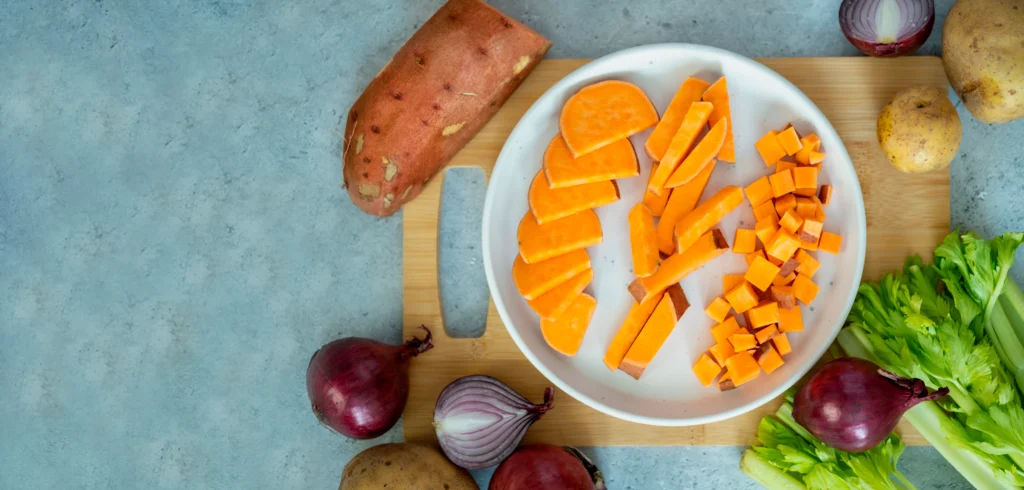
- Color: Orange flesh
- Shape: Generally elongated, irregular shape
- Size: Varies, but typically medium to large in size
- Texture: Smooth skin with firm, starchy flesh
Culinary Uses:
- Common Dishes: Sweet potatoes are used in a variety of dishes, including roasted sweet potatoes, mashed sweet potatoes, sweet potato fries, soups, stews, and casseroles. They can also be used in baked goods like pies and muffins.
- Preparation Methods: Sweet potatoes can be baked, boiled, roasted, steamed, or microwaved. They can be served as a side dish, incorporated into salads, or used as a base for breakfast bowls. They can also be mashed and used as a topping for shepherd’s pie or as a filling for sweet potato casserole.
- Suitable Pairings: Sweet potatoes pair well with savory flavors like garlic, rosemary, thyme, and smoked paprika. They also complement sweeter ingredients like cinnamon, nutmeg, maple syrup, and brown sugar.
Geographical Information:
- Origin: Sweet potatoes are believed to have originated in Central or South America, with historical evidence of cultivation dating back thousands of years.
- Primary Growing Regions: Sweet potatoes are grown in many countries around the world, including the United States (particularly in the southern states), China, Nigeria, Uganda, and Indonesia.
- Seasonal Availability: Sweet potatoes are typically harvested in the fall months, but they are available year-round in most regions due to modern storage and transportation methods.
| Proximates: | |
| Water | 79.5 g |
| Energy (Atwater General Factors) | 79 kcal |
| Energy (Atwater Specific Factors) | 77 kcal |
| Nitrogen | 0.25 g |
| Protein | 1.58 g |
| Total lipid (fat) | 0.38 g |
| Ash | 1.18 g |
| Carbohydrates: | |
| Carbohydrate, by difference | 17.3 g |
| Total dietary fiber (AOAC 2011.25) | 4.44 g |
| High Molecular Weight Dietary Fiber (HMWDF) | 4.25 g |
| Low Molecular Weight Dietary Fiber (LMWDF) | 0.16 g |
| Sugars, Total | 6.06 g |
| Sucrose | 3.06 g |
| Glucose | 0.98 g |
| Fructose | 0.93 g |
| Lactose | <0.25 g |
| Maltose | 1.1 g |
| Minerals: | |
| Calcium, Ca | 22 mg |
| Iron, Fe | 0.4 mg |
| Magnesium, Mg | 19.1 mg |
| Phosphorus, P | 37 mg |
| Potassium, K | 486 mg |
| Sodium, Na | <2.3 mg |
| Zinc, Zn | 0.34 mg |
| Copper, Cu | 0.187 mg |
| Manganese, Mn | 0.417 mg |
| Selenium, Se | <2.5 µg |
| Molybdenum, Mo | <2.5 µg |
| Vitamins and Other Components: | |
| Vitamin C, total ascorbic acid | 14.8 mg |
| Thiamin | 0.045 mg |
| Niacin | 0.432 mg |
| Vitamin B-6 | 0.124 mg |
| Vitamin K (phylloquinone) | 0.2 µg |
| Vitamin K (Dihydrophylloquinone) | <0.1 µg |
| Vitamin K (Menaquinone-4) | <0.1 µg |