
Basic Information
- Common Name: Chorizo
- Scientific Name: Not applicable as chorizo is a type of food rather than a species.
- Category: Meat product
- Varieties: Chorizo can vary significantly depending on the region. Spanish chorizo and Mexican chorizo are the most well-known varieties, with Spanish chorizo being cured and firm and Mexican chorizo being fresh and meant to be cooked before eating.
Nutritional Information
- Macronutrients:
- Carbs: Chorizo is low in carbohydrates.
- Proteins: It is a good source of protein.(19.1 g)
- Fats: High in fats, especially saturated fat due to the pork content.(28.3 g)
- Micronutrients: Chorizo can provide vitamins such as Vitamin B12 and minerals like iron and zinc.
- Calorie Count: High in calories due to its fat content. Approximately 273 calories per 100 grams.
- Glycemic Index: Low, as it contains minimal carbohydrates.
Phytonutrients
Phytonutrients are naturally occurring compounds in plants that have antioxidant and anti-inflammatory properties, contributing to the plant’s color, flavor, and resistance to disease. Since chorizo is a meat product made primarily from pork, it does not contain phytonutrients in the same way that fruits, vegetables, herbs, and grains do. Meat products, including chorizo, derive their nutritional value mainly from macronutrients (like proteins and fats) and micronutrients (such as vitamins and minerals), rather than phytonutrients.
However, chorizo is often seasoned with a variety of spices and herbs, which can contribute small amounts of phytonutrients. For example:
- Paprika: Made from ground bell peppers or chili peppers, paprika can provide capsaicin (in hot varieties), which has anti-inflammatory and antioxidant properties.
- Garlic: Used in chorizo seasoning, garlic contains allicin, which is known for its antibacterial and antioxidant effects.
- Oregano: Sometimes used in chorizo seasoning, oregano contains thymol and carvacrol, compounds with antioxidant properties.
It’s important to note that the quantities of these phytonutrients in chorizo would be relatively small, especially compared to consuming these spices or herbs directly in larger amounts. The primary nutritional considerations for chorizo would still be its macronutrient content (particularly fats and proteins) and micronutrients like B vitamins and minerals such as iron and zinc, rather than its phytonutrient content.
Physical Characteristics
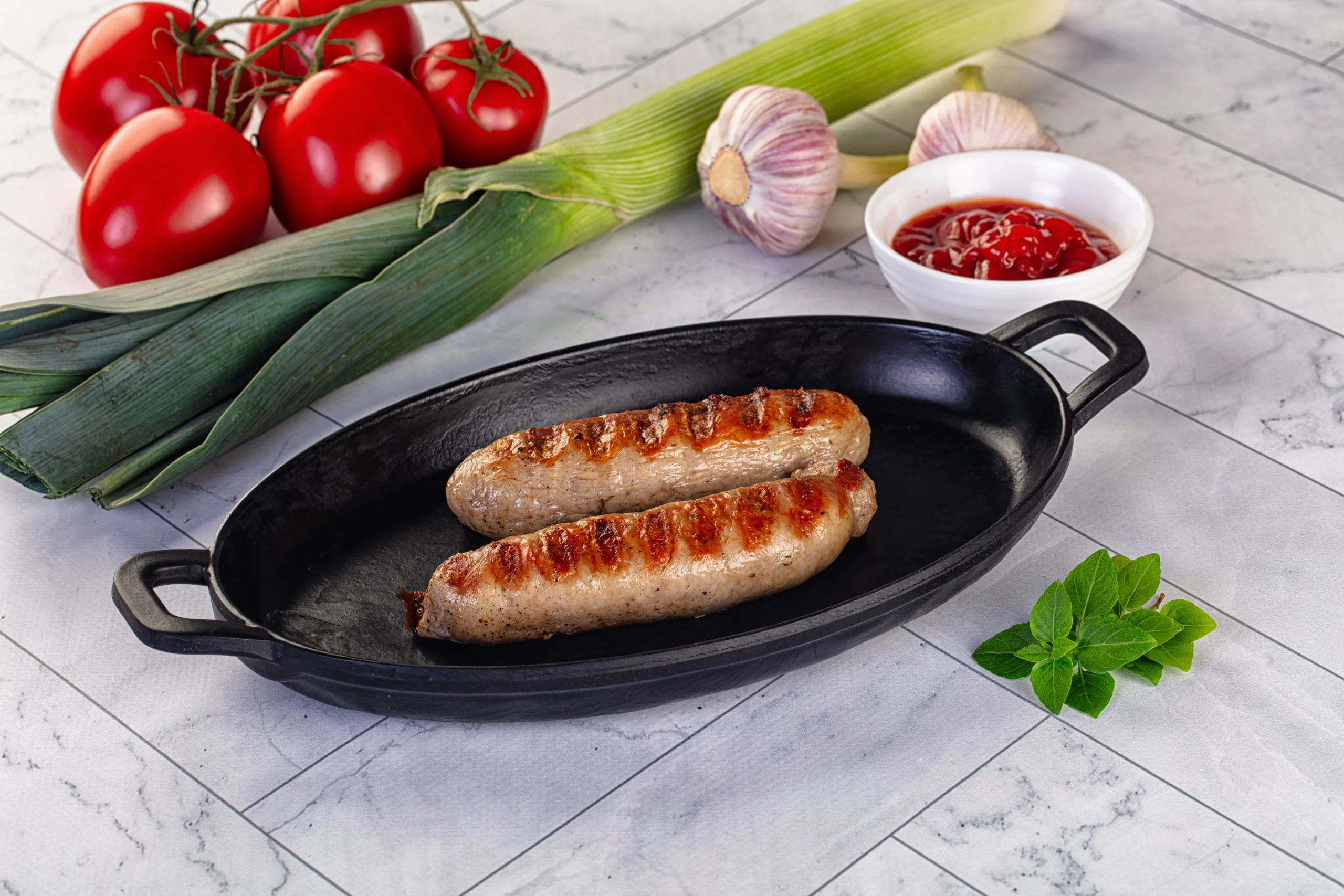
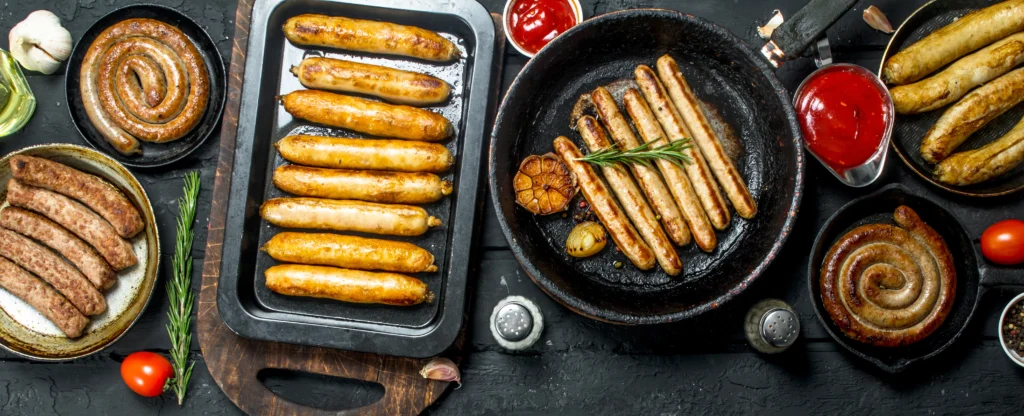
- Color: Reddish due to the use of paprika and other spices.
- Shape: Available in links or ground form.
- Size: Varies depending on the preparation.
- Texture: Firm and slightly oily when cooked.
Culinary Uses
- Common Dishes: Chorizo is used in a variety of dishes, including stews, paellas, tacos, and scrambled eggs.
- Preparation Methods: Can be pan-fried, grilled, or used as an ingredient in other dishes.
- Suitable Pairings: Pairs well with potatoes, eggs, and bread, as well as in dishes with beans and lentils.
Geographical Information
- Origin: Chorizo has origins in both Spain and Mexico, with each region having its own distinct version of the sausage.
- Primary Growing Regions: While chorizo is not “grown,” the production of pork, which is its primary ingredient, is widespread, with major producers including China, the European Union, and the United States.
- Seasonal Availability: As a processed meat product, chorizo is available year-round.
Additional Notes
Chorizo’s flavor and nutritional profile can vary significantly depending on the specific recipe and method of preparation used. Spanish chorizo, which is cured, can be eaten without further cooking, whereas Mexican chorizo is usually sold fresh and must be cooked. The spices and herbs used in chorizo, such as garlic and paprika, add to its distinctive flavor profile. When consuming chorizo, it’s important to consider its high fat and sodium content, particularly in the context of a balanced diet.
| Proximates: | |
| Water | 46.3 g |
| Energy | 346 kcal |
| Energy | 1450 kJ |
| Nitrogen | 3.09 g |
| Protein | 19.3 g |
| Total lipid (fat) | 28.1 g |
| Total fat (NLEA) | 26 g |
| Ash | 3.66 g |
| Carbohydrates: | |
| Carbohydrate, by difference | 2.63 g |
| Minerals: | |
| Calcium, Ca | 37 mg |
| Iron, Fe | 2.34 mg |
| Magnesium, Mg | 30.1 mg |
| Phosphorus, P | 207 mg |
| Potassium, K | 435 mg |
| Sodium, Na | 983 mg |
| Zinc, Zn | 2.19 mg |
| Copper, Cu | 0.13 mg |
| Manganese, Mn | 0.188 mg |
| Selenium, Se | 25.9 µg |
| Vitamins and Other Components: | |
| Thiamin | 0.365 mg |
| Riboflavin | 0.42 mg |
| Niacin | 7.06 mg |
| Pantothenic acid | 1.2 mg |
| Vitamin B-6 | 0.554 mg |
| Folate, total | 10 µg |
| Choline, total | 97.1 mg |
| Choline, free | 42,7 mg |
| Choline, from phosphocholine | 40.3 mg |
| Choline, from phosphotidyl choline | 0.4 mg |
| Choline, from glycerophosphocholine | 2.8 mg |
| Choline, from sphingomyelin | 10.9 mg |
| Betaine | 6.1 mg |
| Vitamin B-12 | 1.21 µg |
| Vitamin E (alpha-tocopherol) | 1.5 mg |
| Tocopherol, delta | 2.35 mg |
| Vitamin K (Menaquinone-4) | 16.8 µg |
| Lipids: | |
| Fatty acids, total saturated | 9.45 g |
| SFA 4:0 | 0.006 g |
| SFA 8:0 | 0.003 g |
| SFA 10:0 | 0.02 g |
| SFA 12:0 | 0.022 g |
| SFA 14:0 | 0.346 g |
| SFA 15:0 | 0.012 g |
| SFA 16:0 | 5.9 g |
| SFA 17:0 | 0.072 g |
| SFA 18:0 | 3 g |
| SFA 20:0 | 0.055 g |
| SFA 22:0 | 0.011 g |
| SFA 24:0 | 0.022 g |
| Fatty acids, total monounsaturated | 11.7 g |
| MUFA 14:1 c | 0.006 g |
| MUFA 16:1 c | 0.569 g |
| MUFA 17:1 | 0.062 g |
| MUFA 17:1 c | 0.062 g |
| MUFA 18:1 c | 10.8 g |
| MUFA 20:1 c | 0.247 g |
| MUFA 22:1 c | 0.006 g |
| MUFA 22:1 n-9 | 0.006 g |
| Fatty acids, total polyunsaturated | 4.74 g |
| PUFA 18:2 c | 4.16 g |
| PUFA 18:2 n-6 c,c | 4.13 g |
| PUFA 18:2 CLAs | 0.029 g |
| PUFA 18:3 c | 0.189 g |
| PUFA 18:3 n-3 c,c,c (ALA) | 0.184 g |
| PUFA 18:3 n-6 c,c,c | 0.005 g |
| PUFA 20:2 c | 0.182 g |
| PUFA 20:2 n-6 c,c | 0.182 g |
| PUFA 20:3 c | 0.058 g |
| PUFA 20:3 n-3 | 0.025 g |
| PUFA 20:3 n-6 | 0.034 g |
| PUFA 20:4 | 0.128 g |
| PUFA 20:4c | 0.128 g |
| PUFA 20:5c | 0.003 g |
| PUFA 20:5 n-3 (EPA) | 0.003 g |
| PUFA 22:2 | 0.001 g |
| PUFA 22:5 c | 0.02 g |
| PUFA 22:4 | 0.031 g |
| PUFA 22:5 n-3 (DPA) | 0.02 g |
| PUFA 22:6 c | 0.005 g |
| PUFA 22:6 n-3 (DHA) | 0.005 g |
| Fatty acids, total trans | 0.115 g |
| Fatty acids, total trans-monoenoic | 0.093 g |
| TFA 16:1 t | 0.004 g |
| TFA 18:1 t | 0.089 g |
| Fatty acids, total trans-dienoic | 0.022 g |
| TFA 18:2 t not further defined | 0.022 g |
| Cholesterol | 107 mg |