
Basic Information
- Common Name: Pasta Sauce, Spaghetti Sauce, Marinara Sauce
- Scientific Name: N/A (This is a prepared food product, not a single plant or animal species.)
- Category: Food Product (Condiment/Sauce)
- Varieties: There are numerous varieties of pasta sauce, including marinara (a simple sauce with tomatoes, garlic, herbs, and onions), arrabbiata (spicy), bolognese (meat-based), and alfredo (cream-based). Ready-to-serve sauces vary in texture, ingredients, and flavor profiles based on brand and recipe.
Nutritional Information
- Macronutrients (per 100 grams of ready-to-serve marinara sauce):
- Carbohydrates: Approximately 8 grams, mostly from sugars and dietary fiber.
- Proteins: About 1.41 grams
- Fats: 1.48 grams, depending on the addition of oil or other fats in the recipe.
- Micronutrients: Rich in vitamin C and vitamin A, with some sauces also providing significant amounts of minerals like potassium and iron, depending on the ingredients used. Some sauces may be fortified with additional vitamins and minerals.
- Calorie Count: Roughly 50-70 calories per 100 grams.
- Glycemic Index: Medium, but this can vary based on specific ingredients and the amount of sugar added.
Phytonutrients
Ready-to-serve pasta sauces, particularly tomato-based sauces like marinara or spaghetti sauce, contain a variety of phytonutrients derived from their vegetable ingredients. These bioactive compounds contribute to the health benefits associated with consuming vegetable-rich foods, including antioxidant and anti-inflammatory effects. Here’s an overview of key phytonutrients found in tomato-based pasta sauces:
1. Lycopene
- Type: A carotenoid that gives tomatoes their red color.
- Benefits: Lycopene is a potent antioxidant known for its potential to reduce the risk of certain types of cancer, particularly prostate cancer, and to support heart health.
2. Beta-Carotene
- Type: Another carotenoid, which the body can convert into vitamin A.
- Benefits: Beta-carotene supports immune function, vision, and skin health, and also possesses antioxidant properties.
3. Vitamin C (Ascorbic Acid)
- Type: While not a phytonutrient, vitamin C is a significant antioxidant found in tomatoes and other vegetables used in pasta sauces.
- Benefits: Supports immune system health, and skin health through collagen synthesis, and also serves as an antioxidant.
4. Flavonoids
- Types: Including quercetin and kaempferol.
- Benefits: These compounds have antioxidant and anti-inflammatory properties, contributing to the prevention of chronic diseases and supporting overall health.
5. Phenolic Acids
- Types: Such as caffeic acid and ferulic acid.
- Benefits: Phenolic acids offer antioxidant benefits, protecting cells from oxidative damage and reducing inflammation.
Additional Nutrients
While the focus here is on phytonutrients, it’s worth noting that tomato-based pasta sauces also contain minerals like potassium, which support heart health, and are a source of dietary fiber, especially if they include other vegetables or herbs.
The specific content of these phytonutrients can vary based on the sauce’s recipe, the types and amounts of vegetables used, and the cooking process. For example, cooking tomatoes can increase the bioavailability of lycopene, making it easier for the body to use.
Ready-to-serve pasta sauces, especially those made with a variety of vegetables, can contribute valuable phytonutrients to the diet. To maximize health benefits, look for sauces with minimal added sugars and sodium, and those made with whole, non-processed ingredients.
Physical Characteristics
- Color: Ranges from bright red to deep maroon, depending on the type and concentration of tomatoes and other ingredients.
- Shape: N/A (liquid form)
- Size: Sold in various container sizes, commonly in jars or cans.
- Texture: This can vary from smooth to chunky, depending on the preparation and ingredients.
Culinary Uses
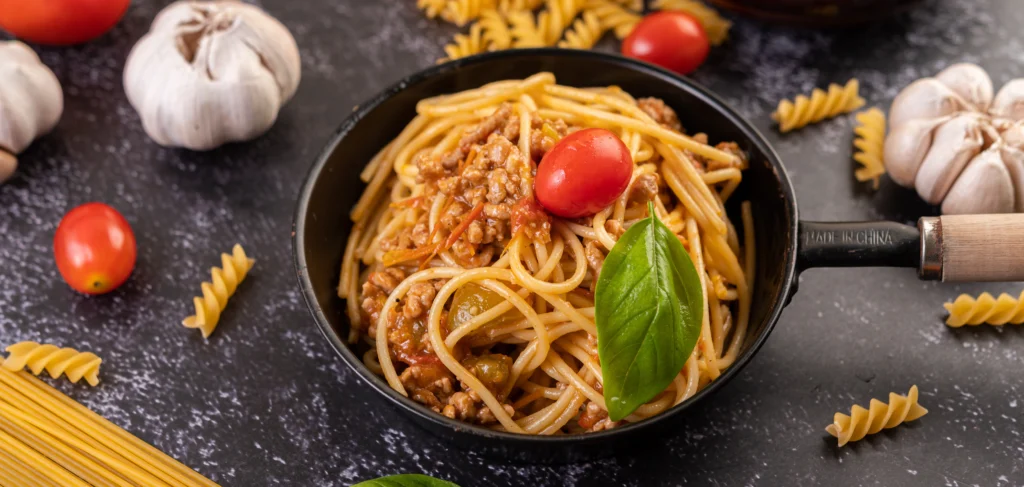
Ready-to-serve pasta sauces are versatile in the kitchen:
- Common Dishes: Used as a base for pasta dishes, lasagna, pizza topping, and in stews and soups.
- Preparation Methods: Can be heated and served over cooked pasta, used as a cooking sauce for meats and vegetables, or added to recipes as a flavor enhancer.
- Suitable Pairings: Pairs well with pasta, meats (especially beef, chicken, and seafood), vegetables, and cheeses like mozzarella and Parmesan.
Geographical Information
- Origin: The concept of tomato-based pasta sauce has its roots in Italian cuisine, with variations existing depending on regional recipes and traditions.
- Primary Growing Regions: Tomatoes, the primary ingredient in marinara sauce, are grown globally, with significant production in China, the United States, India, Turkey, and Italy.
- Seasonal Availability: Ready-to-serve pasta sauces are available year-round due to modern preservation techniques.
Ready-to-serve pasta sauces offer convenience for quick meals, providing a range of flavors and nutritional benefits. While homemade sauces can be tailored to specific dietary needs and preferences, commercially prepared sauces are a practical option for those looking to save time in the kitchen, offering a taste of traditional Italian cuisine with the versatility to complement a wide range of dishes.
| Proximates: | |
| Water | 87.4 g |
| Energy (Atwater General Factors) | 51 kcal |
| Energy (Atwater Specific Factors) | 45 kcal |
| Nitrogen | 0.23 g |
| Protein | 1.41 g |
| Total lipid (fat) | 1.48 g |
| Total fat (NLEA) | 1.05 g |
| Ash | 1.66 g |
| Carbohydrates: | |
| Carbohydrate, by difference | 8.05 g |
| Carbohydrate, by summation | 7.31 g |
| Fiber, total dietary | 1.8 g |
| Sugars, Total | 5.5 g |
| Sucrose | 0.85 g |
| Glucose | 2.3 g |
| Fructose | 2.35 g |
| Minerals: | |
| Calcium, Ca | 27 mg |
| Iron, Fe | 0.78 mg |
| Magnesium, Mg | 18.5 mg |
| Phosphorus, P | 34 mg |
| Potassium, K | 319 mg |
| Sodium, Na | 419 mg |
| Zinc, Zn | 0.2 mg |
| Copper, Cu | 0.081 mg |
| Manganese, Mn | 0.137 mg |
| Vitamins and Other Components: | |
| Vitamin A, RAE | 32 µg |
| Carotene, beta | 390 µg |
| Carotene, alpha | 0 µg |
| Lycopene | 12700 µg |
| Lutein + zeaxanthin | 190 µg |
| Lipids: | |
| Fatty acids, total saturated | 0.17 g |
| SFA 4:0 | 0.002 g |
| SFA 8:0 | 0.002 g |
| SFA 10:0 | 0.003 g |
| SFA 12:0 | 0.001 g |
| SFA 14:0 | 0.002 g |
| SFA 15:0 | 0.001 g |
| SFA 16:0 | 0.107 g |
| SFA 17:0 | 0.001 g |
| SFA 18:0 | 0.039 g |
| SFA 20:0 | 0.005 g |
| SFA 22:0 | 0.004 g |
| SFA 24:0 | 0.002 g |
| Fatty acids, total monounsaturated | 0.376 g |
| MUFA 16:1 c | 0.001 g |
| MUFA 17:1 | 0.001 g |
| MUFA 17:1 c | 0.001 g |
| MUFA 18:1 c | 0.364 g |
| MUFA 20:1 | 0.008 g |
| MUFA 20:1 c | 0.008 g |
| Fatty acids, total polyunsaturated | 0.504 g |
| PUFA 18:2 c | 0.425 g |
| PUFA 18:2 n-6 c,c | 0.424 g |
| PUFA 18:2 CLAs | 0.001 g |
| PUFA 18:3 c | 0.079 g |
| PUFA 18:3 n-3 c,c,c (ALA) | 0.079 g |
| PUFA 20:2 c | 0.001 g |
| PUFA 20:2 n-6 c,c | 0.001 g |
| Fatty acids, total trans | 0.005 g |
| Fatty acids, total trans-monoenoic | 0.001 g |
| TFA 18:1 t | 0.001 g |
| Fatty acids, total trans-dianoetic | 0.004 g |
| TFA 18:2 t not further defined | 0.004 g |