
Basic Information
Name:
- Common: White Rice
- Scientific: Oryza sativa
- Category: Grain, Cereal
Varieties:
- Basmati: Aromatic long-grain rice primarily grown in India and Pakistan, known for its distinct fragrance and flavor.
- Jasmine: Aromatic long-grain rice from Thailand, known for its floral aroma and soft texture.
- Standard Long Grain: Commonly grown in various regions and used in a wide range of culinary applications.
Nutritional Information (per 100 grams of raw long grain white rice)
Macronutrients:
- Carbohydrates: 80.3 grams
- Dietary Fiber: 1.3 grams
- Proteins: 7.04 grams
- Fats: 1.03 grams
- Saturated fats: 0.1 grams
- Polyunsaturated fats: 0.2 grams
- Monounsaturated fats: 0.1 grams
Micronutrients:
- Vitamins:
- Thiamin (Vitamin B1): 0.07 mg (6% DV)
- Niacin (Vitamin B3): 1.6 mg (10% DV)
- Vitamin B6: 0.1 mg (6% DV)
- Folate: 9 mcg (2% DV)
- Minerals:
- Iron: 0.80 mg (4% DV)
- Magnesium: 23 mg (6% DV)
- Phosphorus: 68 mg (5% DV)
- Potassium: 35 mg (1% DV)
- Zinc: 1.2 mg (11% DV)
- Manganese: 0.9 mg (40% DV)
- Selenium: 15.1 mcg (27% DV)
Calorie Count:
- Approximately 365 calories per 100 grams
Glycemic Index:
- High, typically around 70-75
Phytonutrients
White rice, while less nutrient-dense compared to brown rice, still contains some phytonutrients that contribute to its health benefits:
1. Phenolic Acids:
- Includes: Ferulic acid.
- Benefits: Has antioxidant properties that help protect cells from oxidative damage and reduce inflammation.
2. Phytosterols:
- Includes: Beta-sitosterol.
- Benefits: May help lower cholesterol levels and improve heart health.
3. Tocopherols and Tocotrienols (Vitamin E):
- Benefits: Act as antioxidants, protecting cells from damage, and may contribute to skin health and a reduced risk of heart disease.
These phytonutrients, along with the fiber and other nutrients in white rice, offer some health benefits, particularly in terms of antioxidant protection and heart health. However, it is important to note that the milling process that produces white rice removes much of the bran and germ, which reduces the overall phytonutrient content compared to whole grain brown rice.
Physical Characteristics
Color:
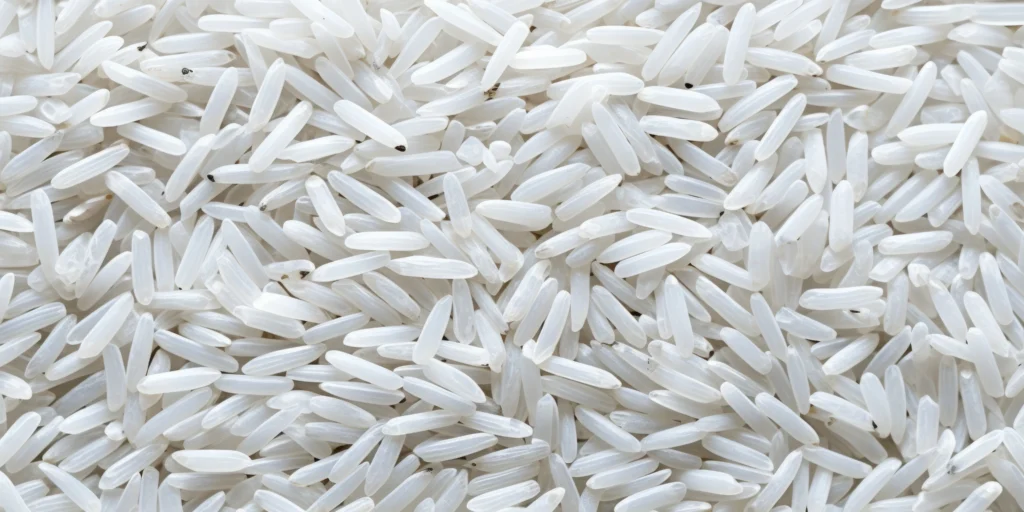
- White, with a polished and shiny appearance.
Shape:
- Long and slender grains, typically about 7-8 mm in length.
Size:
- Length is about 7-8 mm, width is about 2 mm.
Texture:
- Raw: Hard and smooth.
- Cooked: Light, fluffy, and slightly sticky with individual grains remaining separate.
Aroma and Flavor:
- Aroma: Mild, slightly sweet aroma when raw, with a neutral to slightly nutty scent when cooked.
- Flavor: Mild and slightly sweet flavor, with a neutral taste that complements a wide variety of dishes.
Culinary Uses
Common Dishes:
- Side Dishes: Often served as a plain side dish to accompany various main courses.
- Pilafs and Fried Rice: Used in pilafs and fried rice dishes due to its ability to remain separate and fluffy.
- Sushi: In some cuisines, it is used in sushi preparation after seasoning.
- Rice Pudding: Can be used to make desserts like rice pudding.
- Salads: Ideal for cold rice salads with vegetables and dressings.
Preparation Methods:
- Basic Cooking: Typically cooked with a water-to-rice ratio of 2:1. Bring to a boil, reduce heat, cover, and simmer for about 18-20 minutes until water is absorbed and rice is tender.
- Steaming: Can be steamed for a more delicate texture.
- Boiling: Boil in ample water and drain excess water for a different texture.
- Flavor Enhancements: Cooked in broth or seasoned with herbs and spices for added flavor.
Suitable Pairings:
- Proteins: Complements chicken, beef, pork, seafood, and tofu.
- Vegetables: Pairs well with a wide variety of vegetables, including peas, carrots, bell peppers, and spinach.
- Sauces: Works well with soy sauce, curry, teriyaki, and various gravies.
- Legumes: Combined with beans or lentils for a complete protein source.
Geographical Information
Origin:
- White rice has been cultivated for thousands of years, with origins traced back to ancient China around 7000 years ago.
Primary Growing Regions:
- Asia: China, India, Thailand, Vietnam, and Japan are major producers.
- Americas: The United States (Arkansas, California, Louisiana, and Texas), Brazil, and Argentina.
- Africa: Egypt, Nigeria, and Madagascar.
- Europe: Italy and Spain also produce significant quantities of rice.
Seasonal Availability:
- Available year-round, as the main ingredients are non-seasonal and can be stored for long periods.
| Proximates: | |
| Water | 11.2 g |
| Energy (Atwater General Factors) | 359 kcal |
| Energy (Atwater Specific Factors) | 370 lcal |
| Nitrogen | 1.18 g |
| Protein | 7.04 g |
| Total lipid (fat) | 1.03 g |
| Ash | 0.42 g |
| Carbohydrates: | |
| Carbohydrate, by difference | 80.3 g |
| Fiber, total dietary | 0.1 g |
| Total dietary fiber (AOAC 2011.25) | 2.77 g |
| High Molecular Weight Dietary Fiber (HMWDF) | 1.93 g |
| Low Molecular Weight Dietary Fiber (LMWDF) | 0.3 g |
| Starch | 74.4 g |
| Minerals: | |
| Calcium, Ca | 4 mg |
| Iron, Fe | 0.14 mg |
| Magnesium, Mg | 26.5 mg |
| Phosphorus, P | 108 mg |
| Potassium, K | 82 mg |
| Zinc, Zn | 1.35 mg |
| Copper, Cu | 0.214 mg |
| Manganese, Mn | 0.981 mg |
| Selenium, Se | 6.6 µg |
| Molybdenum, Mo | 64.2 µg |
| Vitamins and Other Components: | |
| Thiamin | 0.065 mg |
| Riboflavin | 0.08 mg |
| Niacin | 1.43 mg |
| Vitamin B-6 | 0.058 mg |
| Biotin | <3.7 µg |