
Basic Information
Name:
- Common: Chinese Fried Rice
- Scientific: Not applicable (culinary dish)
Category:
- Grain-based dish, Main Course, Side Dish
Varieties:
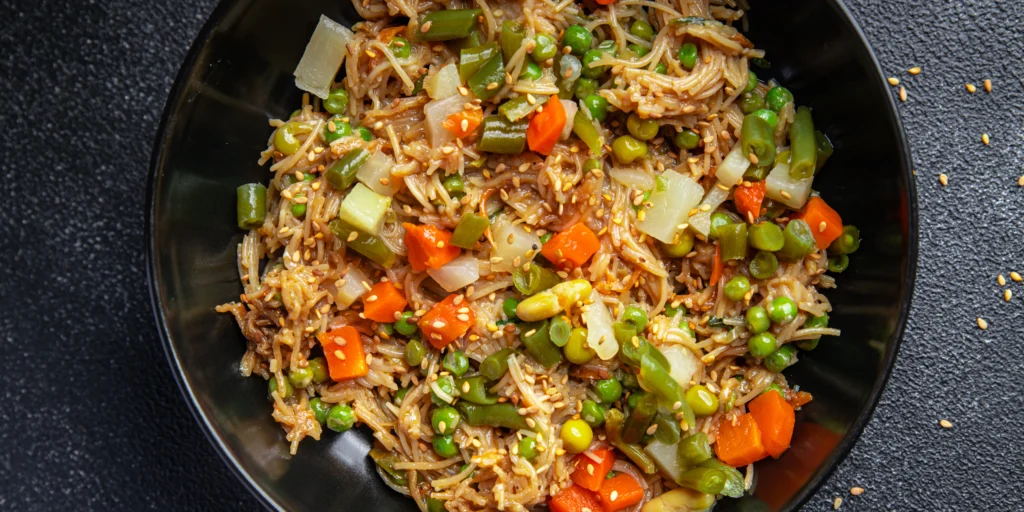
- Vegetable Fried Rice: Contains a variety of vegetables like peas, carrots, and bell peppers.
- Egg Fried Rice: Includes scrambled eggs but no meat.
- Special Fried Rice: Can include tofu or other plant-based proteins.
- Yangzhou Fried Rice: Traditionally includes meat, but vegetarian versions are available.
Nutritional Information (per 1 cup/200 grams serving)
Macronutrients:
- Carbohydrates: 32.5 grams
- Proteins: 3.84 grams
- Fats: 3.19 grams
- Saturated fats: 1-2 grams
- Polyunsaturated fats: 2-3 grams
- Monounsaturated fats: 1-2 grams
Micronutrients:
- Vitamins:
- Vitamin A: 15-20% of the Daily Value (DV) (from added vegetables like carrots and peas)
- Vitamin C: 10-15% DV (from vegetables)
- Folate: 6-8% DV (from rice and vegetables)
- Minerals:
- Iron: 4-6% DV
- Magnesium: 6-8% DV
- Phosphorus: 8-10% DV
- Potassium: 4-6% DV
Calorie Count:
- Approximately 250-300 calories per 1 cup (200 grams)
Glycemic Index:
- Moderate, typically around 55-65, depending on the type of rice and additional ingredients.
Phytonutrients
Chinese fried rice contains several key phytonutrients from the vegetables and other plant-based ingredients used in its preparation:
1. Carotenoids:
- Includes: Beta-carotene (from carrots, bell peppers).
- Benefits: Support eye health and immune function, and act as antioxidants.
2. Flavonoids:
- Includes: Quercetin (from onions, scallions).
- Benefits: Provide antioxidant and anti-inflammatory properties, helping to protect against oxidative stress and inflammation.
3. Phenolic Acids:
- Includes: Chlorogenic acid and caffeic acid (from vegetables like bell peppers and peas).
- Benefits: Contribute to reducing inflammation, preventing cancer, and protecting cardiovascular health.
4. Polyphenols:
- Includes: Catechins and epicatechins (from vegetables and rice).
- Benefits: Help improve heart health by lowering blood pressure and reducing LDL cholesterol levels.
5. Glucosinolates:
- Includes: Found in vegetables like broccoli (if included).
- Benefits: Support detoxification processes and may help prevent cancer.
6. Fiber:
- Includes: Soluble and insoluble fiber (from rice and vegetables).
- Benefits: Supports digestive health and helps maintain healthy cholesterol levels.
These phytonutrients contribute to the overall health-promoting properties of Chinese fried rice, offering antioxidant, anti-inflammatory, and immune-boosting benefits.
Physical Characteristics
Color:
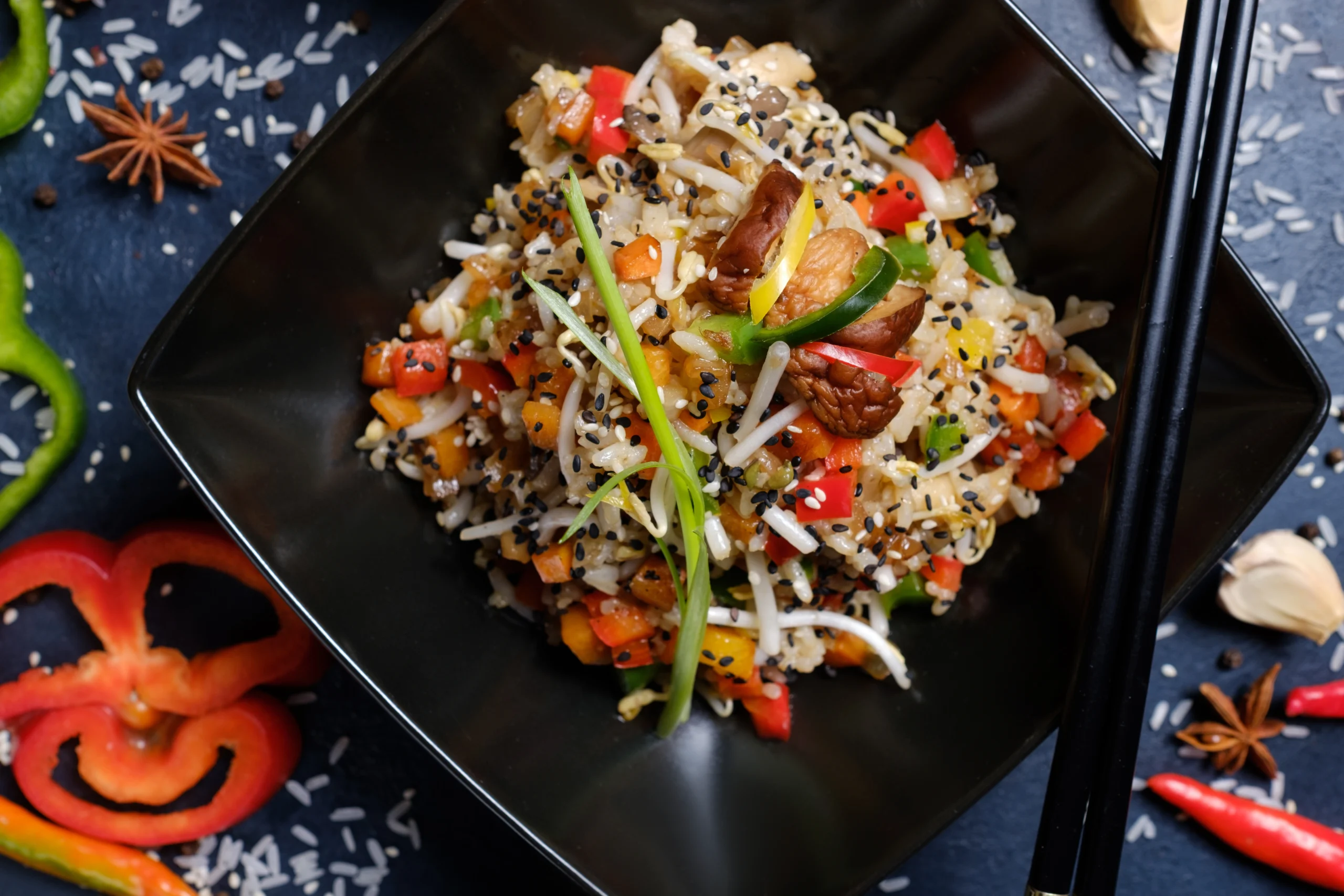
- Varied: Typically a mix of white or brown (rice), green (peas, scallions), orange (carrots), and other vegetables.
Shape:
- Individual grains of rice mixed with diced or sliced vegetables.
Size:
- Each serving is typically around 1 cup (200 grams), but portions can vary.
Texture:
- Mouthfeel: Slightly chewy with a mix of soft and crunchy textures from the rice and vegetables.
- Consistency: Homogeneous mix of ingredients, with rice grains remaining separate and not mushy.
Aroma and Flavor:
- Aroma: Savory with a slight soy sauce fragrance, combined with the aromatic notes of garlic, ginger, and vegetables.
- Flavor: Savory and umami from soy sauce, slightly sweet from the vegetables, with a hint of spice from optional ingredients like ginger or chili.
Culinary Uses
Common Dishes:
- Main Course: Can be eaten as a main dish, especially for lunch or dinner.
- Side Dish: Often served as a side dish accompanying other Chinese dishes such as stir-fries, dumplings, or soups.
Preparation Methods:
- Ingredients: Cooked rice (preferably day-old for better texture), soy sauce, vegetables (peas, carrots, bell peppers, onions, scallions), garlic, ginger, eggs (optional).
- Cooking Technique:
- Stir-Frying: Heat oil in a wok or large skillet, add aromatics like garlic and ginger, followed by vegetables. Stir-fry briefly, then add the cooked rice and soy sauce, stirring continuously until well mixed and heated through.
- Egg Addition: If using eggs, scramble them separately before mixing with the rice or create a well in the center of the wok to scramble them before mixing with the rice.
Suitable Pairings:
- Vegetables: Complements well with steamed or stir-fried vegetables like broccoli, bok choy, and snap peas.
- Proteins: Pairs well with tofu, tempeh, or other plant-based proteins.
- Sauces: Often enhanced with additional soy sauce, hot sauce, or hoisin sauce.
- Sides: Can be served alongside egg rolls, spring rolls, and dumplings.
Geographical Information
Origin:
- Chinese fried rice is believed to have originated during the Sui Dynasty (589–618 AD) in China. It was a way to utilize leftover rice and ingredients, turning them into a flavorful and filling dish.
Primary Growing Regions for Rice:
- China: Major rice-producing regions include the Yangtze River Valley, Guangdong, and Guangxi.
- Southeast Asia: Countries like Thailand, Vietnam, and India also produce large quantities of rice used in various Asian cuisines.
Seasonal Availability:
- Available year-round due to the non-perishable nature of rice and the year-round availability of vegetables used in the dish. Fresh vegetables are used seasonally, but frozen vegetables are commonly used to maintain consistency and availability throughout the year.
| Proximates: | |
| Water | 59.3 g |
| Energy (Atwater General Factors) | 174 kcal |
| Nitrogen | 0.61 g |
| Protein | 3.84 g |
| Total lipid (fat) | 3.19 g |
| Total fat (NLEA) | 2.22 g |
| Ash | 1.13 g |
| Carbohydrates: | |
| Carbohydrate, by difference | 32.5 g |
| Sugars, Total | 0.62 g |
| Sucrose | 0.37 g |
| Glucose | 0.12 g |
| Fructose | 0.12 g |
| Minerals: | |
| Calcium, Ca | 11 mg |
| Iron, Fe | 0.46 mg |
| Magnesium, Mg | 9.7 mg |
| Phosphorus, P | 44 mg |
| Potassium, K | 69 mg |
| Sodium, Na | 361 mg |
| Zinc, Zn | 0.69 mg |
| Copper, Cu | 0.086 mg |
| Manganese, Mn | 0.428 mg |
| Vitamins and Other Components: | |
| Choline, total | 5.5 m |
| Choline, free | 1.5 mg |
| Choline, from phosphocholine | 0.5 mg |
| Choline, from phosphotidyl choline | 2.2 mg |
| Choline, from glycerophosphocholine | 1.3 mg |
| Betaine | 0.2 mg |
| Vitamin A, RAE | 22 µg |
| Retinol | 10 µg |
| Carotene, beta | 128 µg |
| Carotene, alpha | 38 µg |
| Lycopene | 3 µg |
| Lutein + zeaxanthin | 103 µg |
| Lipids: | |
| Fatty acids, total saturated | 0.493 g |
| SFA 14:0 | 0.012 g |
| SFA 16:0 | 0.346 g |
| SFA 17:0 | 0.002 g |
| SFA 18:0 | 0.112 g |
| SFA 20:0 | 0.009 g |
| SFA 22:0 | 0.008 g |
| SFA 24:0 | 0.005 g |
| Fatty acids, total monounsaturated | 0.588 g |
| MUFA 16:1 c | 0.007 g |
| MUFA 17:1 | 0.001 g |
| MUFA 17:1 c | 0.001 g |
| MUFA 18:1 c | 0.574 g |
| MUFA 20:1 | 0.006 g |
| MUFA 20:1 c | 0.006 g |
| Fatty acids, total polyunsaturated | 1.13 g |
| PUFA 18:2 c | 1 g |
| PUFA 18:2 n-6 c,c | 0.998 g |
| PUFA 18:2 CLAs | 0.002 g |
| PUFA 18:3 c | 0.123 g |
| PUFA 18:3 n-3 c,c,c (ALA) | 0.118 g |
| PUFA 18:3 n-6 c,c,c | 0.005 g |
| PUFA 20:2 c | 0.001 g |
| PUFA 20:2 n-6 c,c | 0.001 g |
| PUFA 20:4 | 0.002 g |
| PUFA 20:4c | 0.002 g |
| Fatty acids, total trans | 0.009 g |
| Fatty acids, total trans-monoenoic | 0.004 g |
| TFA 18:1 t | 0.004 g |
| Fatty acids, total trans-dienoic | 0.005 g |
| TFA 18:2 t not further defined | 0.005 g |