
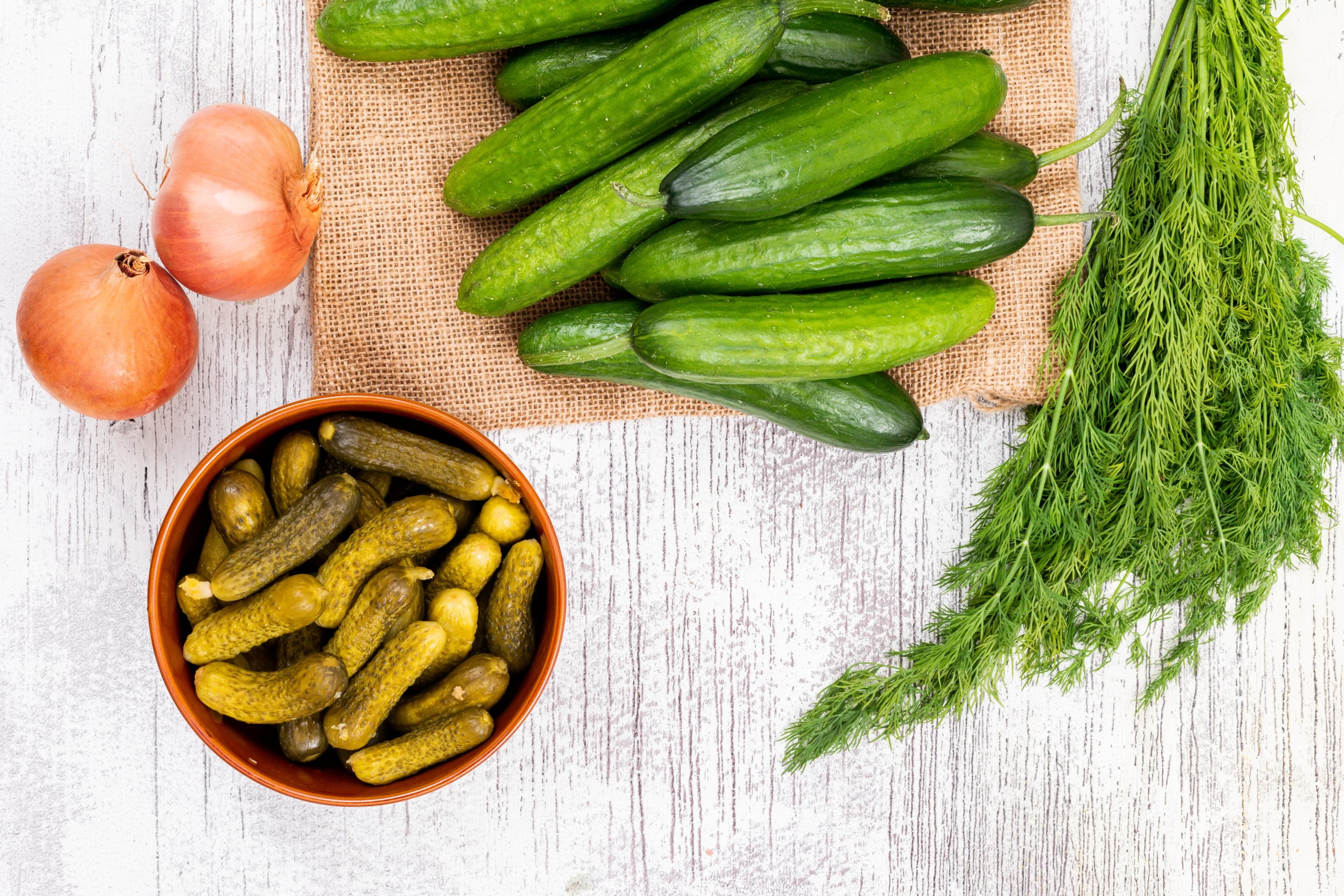
Sure, let’s dive into the details about pickles, specifically cucumber pickles prepared with dill or kosher dill seasoning.
Basic Information
- Common Name: Dill Pickles or Kosher Dill Pickles
- Scientific Name: Derived from cucumbers, Cucumis sativus, pickled with dill flavoring.
- Category: Vegetable (Though often used as a condiment or snack, the base ingredient, cucumber, is a vegetable.)
- Varieties: There are many varieties of cucumber that can be used for making dill pickles, including Kirby cucumbers, which are most commonly used for their crisp texture.
Nutritional Information
- Macronutrients: Pickles are low in carbs, proteins, and fats. A typical serving size (about one large pickle) contains approximately 1.99 grams of carbohydrates, 0.48 grams of protein, and 0.43 grams fat.
- Micronutrients: They are a good source of Vitamin K, and also contain small amounts of Vitamin A, iron, calcium, magnesium, phosphorus, and potassium.
Phytonutrients
Dill or kosher dill pickles, being derived from cucumbers and pickled with various ingredients, contain a variety of phytonutrients that can offer health benefits. The pickling process, however, may affect the concentration of these nutrients. Here’s an overview of the primary phytonutrients present in pickles made from cucumbers, along with their health benefits:
1. Cucurbitacins
- Presence: Found in cucumbers, these compounds are part of a class of phytochemicals that can contribute to the bitter taste in some cucumbers.
- Benefits: They have been studied for their potential in cancer therapy due to their ability to inhibit cancer cell proliferation.
2. Flavonoids
- Types and Presence:
- Quercetin: Present in cucumbers, this flavonoid is retained to some extent in pickles. Its levels may vary depending on the pickling process.
- Kaempferol: Another flavonoid found in cucumbers and potentially in cucumber pickles.
- Benefits: Flavonoids are known for their antioxidant properties, contributing to heart health and offering anti-inflammatory benefits.
3. Triterpenes
- Presence: Cucumbers contain triterpenes in their skin, which may be preserved in pickles depending on the pickling process.
- Benefits: These compounds have been shown to have anti-inflammatory effects and may support heart health.
4. Vitamins and Minerals
While not phytonutrients per se, pickles contain vitamins and minerals from cucumbers that are vital for health:
- Vitamin K: Important for blood clotting and bone health.
- Vitamin A: Supports vision, immune function, and skin health.
- Minerals: Such as potassium, calcium, and magnesium, which are essential for various bodily functions including heart health, bone strength, and muscle function.
5. Antioxidants
- Presence: Cucumbers contain antioxidants like beta-carotene and vitamin C, though the levels of vitamin C can be reduced significantly during the pickling process.
- Benefits: Antioxidants help combat oxidative stress and may reduce the risk of chronic diseases.
Considerations
- The pickling process involves fermentation or the use of vinegar, which can alter the nutritional composition of the cucumbers. Fermentation can increase the bioavailability of some nutrients while decreasing others.
- Salt content is significantly increased during pickling, which could affect individuals needing to manage their sodium intake.
Conclusion
Dill or kosher dill pickles made from cucumbers contain a range of phytonutrients that may offer various health benefits, particularly in terms of antioxidant and anti-inflammatory properties. However, the pickling process may influence the levels of these beneficial compounds. To maximize health benefits while consuming pickles, it might be wise to consider the sodium content and the potential changes in nutrient levels due to pickling

Calorie Count and Glycemic Index
- Calorie Count: A large dill pickle can have around 14 calories.
- Glycemic Index: Pickles have a low glycemic index due to their minimal carbohydrate content.
Physical Characteristics
- Color: Usually bright to dark green, depending on the cucumber variety and the pickling process.
- Shape: Retains the shape of the cucumber used, typically elongated with a slightly curved shape.
- Size: Can vary widely but commonly are 4 to 6 inches in length when made from whole cucumbers.
- Texture: Crisp and crunchy exterior with a juicy interior.
Culinary Uses
- Common Dishes: Often served as a condiment with sandwiches, burgers, or hot dogs. Also a popular snack or side dish.
- Preparation Methods: Cucumbers are fermented in a brine of water, vinegar, salt, and dill. Garlic and other spices may be added for the “kosher” variety.
- Suitable Pairings: Pairs well with hearty meats, sandwiches, and is often used in or alongside salads.
Geographical Information
- Origin: The practice of pickling cucumbers with dill originated in the Middle Eastern and European regions, particularly in areas that are now part of Russia and Poland.
- Primary Growing Regions: Cucumbers suitable for pickling are grown worldwide, but the United States is a major producer of dill pickles.
- Seasonal Availability: Cucumbers are typically harvested in late spring through summer, but dill pickles are available year-round due to the preservation process.
This overview gives a comprehensive look at dill and kosher dill pickles, covering their basic information, nutritional content, physical characteristics, culinary uses, and geographical details.
| proximates: | |
| Water | 94.7 g |
| Energy (Atwater General Factors) | 14 kcal |
| Energy (Atwater Specific Factors) | 12 kcal |
| Nitrogen | 0.08 g |
| Protein | 0.48 g |
| Total lipid (fat) | 0.43 g |
| Ash | 2.44 g |
| Carbohydrates: | |
| Carbohydrate, by difference | 1.99 g |
| Fiber, total dietary | 1 g |
| Sugars, Total | 1.28 g |
| Glucose | 0.63 g |
| Fructose | 0.65 g |
| Minerals: | |
| Calcium, Ca | 54 mg |
| Iron, Fe | 0.23 mg |
| Magnesium, Mg | 7.1 mg |
| Phosphorus, P | 16 mg |
| Potassium, K | 112 mg |
| Sodium, Na | 808 mg |
| Zinc, Zn | 0.11 mg |
| Copper, Cu | 0.026 mg |
| Manganese, Mn | 0.056 mg |
| Vitamins and Other Components: | |
| Vitamin C, total ascorbic acid | 2.1 mg |
| Thiamin | 0.047 mg |
| Riboflavin | 0.057 mg |
| Niacin | 0.109 mg |
| Pantothenic acid | 0.2 mg |
| Vitamin B-6 | 0.034 mg |
| Folate, total | 8 µg |
| Vitamin A, RAE | 4 µg |
| Carotene, beta | 45 µg |
| Cryptoxanthin, beta | 1 µg |
| Lutein + zeaxanthin | 199 µg |
| Vitamin E (alpha-tocopherol) | 0.12 mg |
| Tocopherol, gamma | 0.04 mg |
| Vitamin K (phylloquinone) | 16.8 µg |