
Basic Information
Name: Commonly known as Safflower Oil. The scientific name for the plant is Carthamus tinctorius.
Category: Safflower oil is categorized as a vegetable oil.
Varieties: There are two main types of safflower oil, depending on the predominant type of fatty acid it contains:
- High-linoleic safflower oil, which is rich in polyunsaturated fatty acids.
- High-oleic safflower oil, which contains a higher concentration of monounsaturated fatty acids.
Nutritional Information
- Macronutrients: Safflower oil is high in fats, with the composition varying between the high-linoleic and high-oleic varieties. High-linoleic safflower oil is richer in polyunsaturated fatty acids, while high-oleic oil has more monounsaturated fats.
- Micronutrients: It is a good source of vitamin E, a powerful antioxidant that helps protect cells from damage.
Phytonutrients
Safflower oil, derived from the seeds of the Carthamus tinctorius plant, is primarily valued for its fatty acid composition, which varies between high-linoleic and high-oleic types. While it’s known more for its fat content than its broad phytonutrient profile, safflower oil does contain some important micronutrients and phytochemicals:
1. Vitamin E (Tocopherols)
- Antioxidant Properties: Safflower oil is a good source of vitamin E, a fat-soluble antioxidant that protects cells from oxidative stress and damage caused by free radicals. It also supports immune function and skin health.
2. Phytosterols
- Cholesterol Management: Like other vegetable oils, safflower oil contains phytosterols, which are plant-derived compounds structurally similar to cholesterol. Phytosterols can help lower cholesterol levels by inhibiting its absorption in the intestines, contributing to heart health.
Health Benefits
The phytonutrients present in safflower oil, primarily vitamin E and phytosterols, contribute to several health benefits:
- Antioxidant Protection: Vitamin E provides significant antioxidant protection, reducing oxidative stress and potentially lowering the risk of chronic diseases.
- Heart Health: The phytosterols in safflower oil can contribute to cardiovascular health by helping to lower LDL (bad) cholesterol levels.
Considerations
While safflower oil offers these health benefits due to its phytonutrient content, it’s important to consume it as part of a balanced diet. The high-oleic variety, in particular, is noted for its monounsaturated fat content, which can support heart health when used to replace saturated and trans fats in the diet. However, balancing omega-6 fatty acids (predominant in high-linoleic safflower oil) with omega-3 fatty acids is crucial for maintaining overall health and reducing inflammation.
Nutritional Context
Consumers choosing safflower oil for its health benefits should opt for cold-pressed or expeller-pressed varieties when possible, as these methods tend to preserve more of the oil’s natural nutrients compared to oils extracted using chemical solvents. However, it’s worth noting that while safflower oil contains beneficial nutrients, the overall intake of various types of fats and oils should be moderated to maintain a healthy dietary balance.

Calorie Count and Glycemic Index
- Calorie Count: Approximately 884 calories per 100 grams or about 120 calories per tablespoon (13.5 grams).
- Glycemic Index: As a pure fat source, safflower oil has no carbohydrates and therefore no glycemic index.
Physical Characteristics
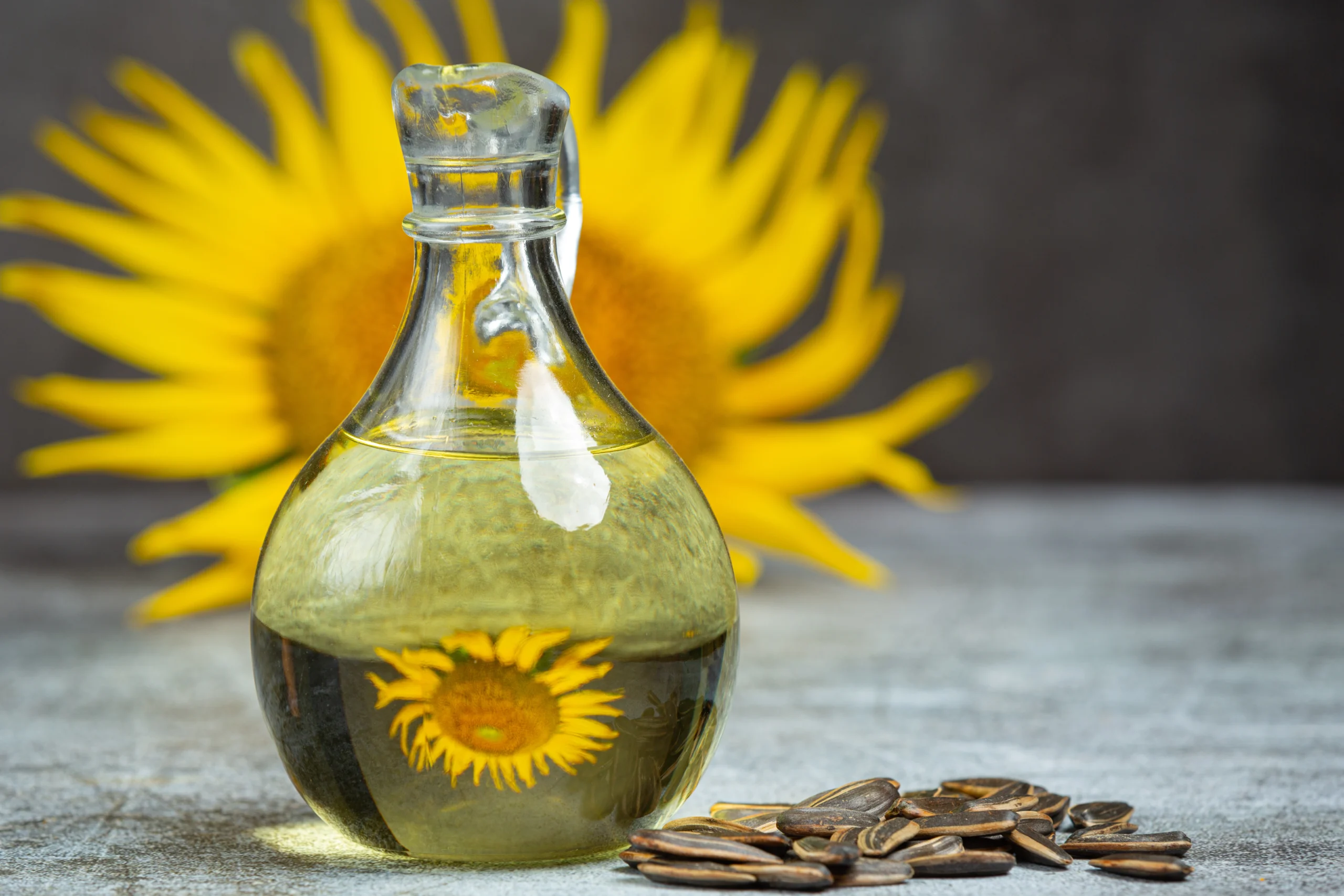
- Color: Light, clear, and pale yellow.
- Shape: As a liquid, it takes the shape of its container.
- Size: Sold in various container sizes, from small bottles to larger jugs.
- Texture: Smooth and liquid at room temperature.
Culinary Uses
- Common Dishes: Safflower oil is versatile in the kitchen, used for frying, sautéing, and in salad dressings due to its neutral flavor and high smoke point, especially the high-oleic variety.
- Preparation Methods: Can be used directly from the bottle for cooking or as a base for dressings and marinades.
- Suitable Pairings: Its mild flavor makes it a good all-purpose oil, suitable for a wide range of dishes without overpowering other ingredients.
Geographical Information
- Origin: Safflower is one of humanity’s oldest crops, with its use traced back to ancient Egypt, the Middle East, and parts of Asia for both dyeing textiles and culinary purposes.
- Primary Growing Regions: Today, safflower is cultivated worldwide, with significant production in India, the United States, Mexico, Ethiopia, and Argentina.
- Seasonal Availability: Safflower oil is available year-round, as the seeds can be stored and pressed as needed.
| Proximates: | |
| Total fat (NLEA) | 93.2 g |
| Vitamins and Other Components: | |
| Vitamin E (alpha-tocopherol) | 46 mg |
| Tocopherol, beta | <2.47 mg |
| Tocopherol, gamma | 3.52 mg |
| Tocopherol, delta | <9.97 mg |
| Tocotrienol, alpha | <21.1 mg |
| Tocotrienol, beta | <21.1 mg |
| Tocotrienol, gamma | <21.1 mg |
| Tocotrienol, delta | <21.1 mg |
| Vitamin K (phylloquinone) | 5.3 µg |
| Lipids: | |
| Fatty acids, total saturated | 7.65 g |
| SFA 4:0 | 0.004 g |
| SFA 8:0 | 0.002 g |
| SFA 10:0 | 0.004 g |
| SFA 12:0 | 0.004 g |
| SFA 14:0 | 0.074 g |
| SFA 15:0 | 0.016 g |
| SFA 16:0 | 4.66 g |
| SFA 17:0 | 0.028 g |
| SFA 18:0 | 1.96 g |
| SFA 20:0 | 0.4 g |
| SFA 21:0 | 0.01 g |
| SFA 22:0 | 0.308 g |
| SFA 24:0 | 0.189 g |
| Fatty acids, total monounsaturated | 71.6 g |
| MUFA 16:1 c | 0.092 g |
| MUFA 17:1 | 0.041 g |
| MUFA 17:1 c | 0.041 g |
| MUFA 18:1 c | 71 g |
| MUFA 20:1 c | 0.323 g |
| MUFA 22:1 c | 0.012 g |
| MUFA 22:1 n-9 | 0.012 g |
| MUFA 24:1 c | 0.174 g |
| Fatty acids, total polyunsaturated | 13.8 g |
| PUFA 18:2 c | 13.6 g |
| PUFA 18:2 n-6 c,c | 13.6 g |
| PUFA 18:2 CLAs | 0.021 g |
| PUFA 18:3 c | 0.15 g |
| PUFA 18:3 n-3 c,c,c (ALA) | 0.15 g |
| PUFA 20:2 c | 0.004 g |
| PUFA 20:2 n-6 c,c | 0.004 g |
| PUFA 22:3 | 0.006 g |
| PUFA 20:5c | 0.001 g |
| PUFA 20:5 n-3 (EPA) | 0.001 g |
| PUFA 22:2 | 0.007 g |
| Fatty acids, total trans | 0.129 g |
| Fatty acids, total trans-monoenoic | 0.041 g |
| TFA 18:1 t | 0.04 g |
| TFA 18:2 t not further defined | 0.091 g |
| TFA 18:2 t | 0.091 g |
| Phytosterols: | |
| Stigmastadiene | <1 mg |
| Stigmasterol | 16.9 mg |
| Campesterol | 35.5 mg |
| Brassicasterol | <0.5 mg |
| Beta-sitosterol | 148 mg |
| Campestanol | 1.09 mg |
| Beta-sitostanol | 11.8 mg |
| Delta-5-avenasterol | 14 mg |
| Delta-7-Stigmastenol | 50.8 mg |