
Basic Information
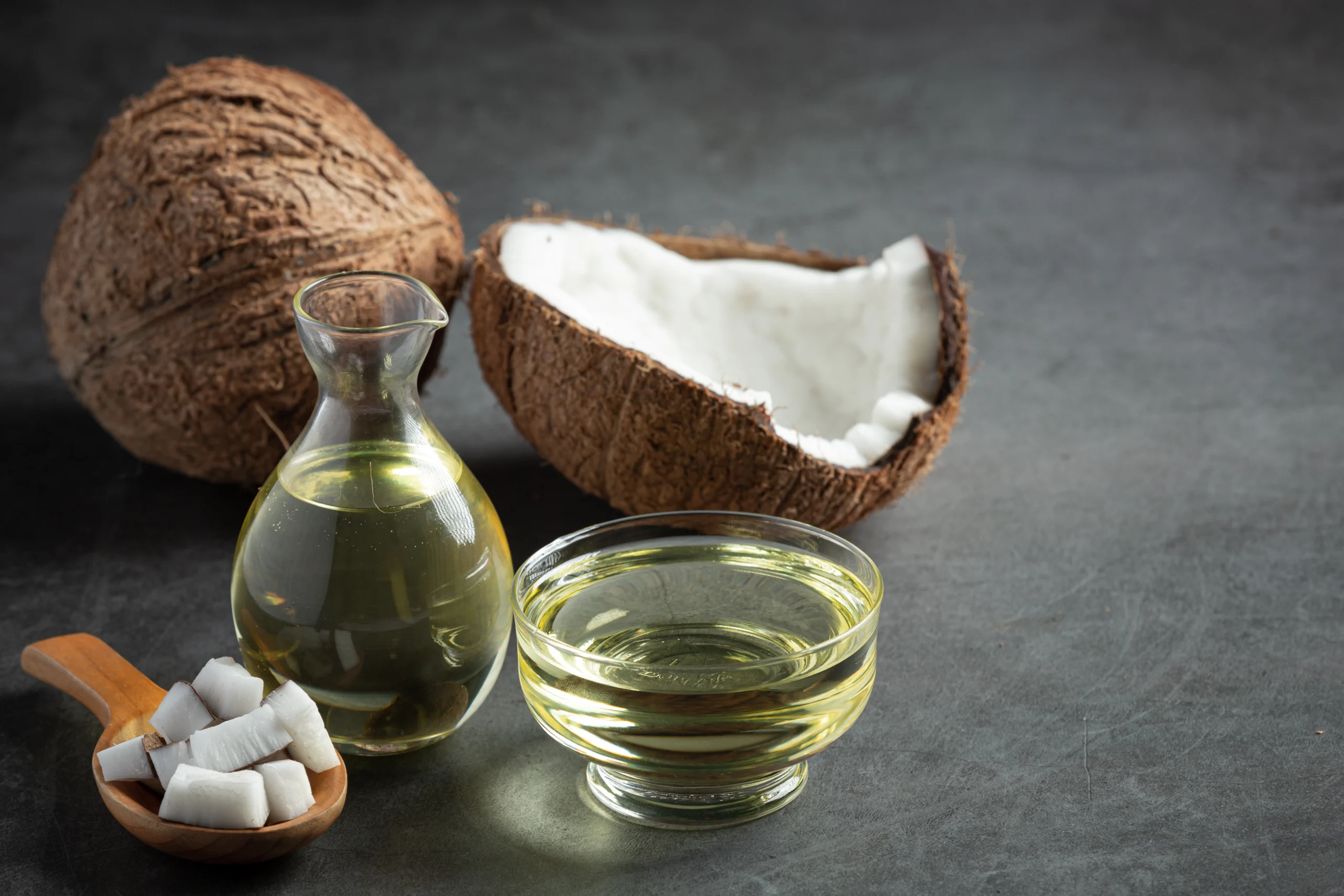
Name: Commonly known as Coconut Oil. The oil is derived from the kernel or meat of mature coconuts harvested from the coconut palm tree, scientifically named Cocos nucifera.
Category: Coconut oil is categorized as a vegetable oil, despite being derived from the fruit of the coconut palm.
Varieties: There are primarily two types of coconut oil: Virgin (or extra virgin) coconut oil, which is produced from the fresh meat of the coconut without chemical processing, and refined coconut oil, which is extracted from dried coconut meat and often chemically treated to remove flavors and aromas.
Nutritional Information
- Macronutrients: Coconut oil is almost entirely composed of fat, with a high percentage of saturated fats, including medium-chain triglycerides (MCTs) like lauric acid, capric acid, and caprylic acid. It contains negligible amounts of carbohydrates and proteins.
- Carbohydrates: 0.84 g.
- Proteins: negligible amounts of proteins.
- Fats: 99.1 g.
- Micronutrients: Coconut oil contains small amounts of fat-soluble vitamins, particularly vitamin E and vitamin K, but it is not a significant source of vitamins and minerals.
Phytonutrients
Coconut oil, derived from the meat of coconuts from the Cocos nucifera palm, is primarily known for its high saturated fat content, particularly medium-chain triglycerides (MCTs). Though not rich in a wide variety of phytonutrients compared to whole fruits and vegetables, coconut oil does contain several compounds with potential health benefits:
1. Medium-Chain Triglycerides (MCTs)
- Key Components: Coconut oil is rich in MCTs, such as lauric acid, capric acid, and caprylic acid. These fats are metabolized differently than long-chain triglycerides, going straight to the liver from the gut where they can be used as a quick energy source or turned into ketones.
- Health Implications: MCTs have been studied for their potential to support weight management, improve energy levels, and enhance cognitive function. Lauric acid, in particular, makes up about 50% of the fatty acids in coconut oil and is known for its antimicrobial and antifungal properties.
2. Phenolic Compounds
- Antioxidant Properties: Virgin coconut oil contains certain phenolic compounds and antioxidants, though in smaller quantities than found in whole fruits and vegetables. These compounds can help protect the body from oxidative stress and inflammation.
- Types: The specific phenolic compounds in coconut oil can vary based on the method of extraction, with cold-pressed virgin coconut oil typically having a higher antioxidant capacity compared to refined coconut oil.
3. Vitamin E
- Antioxidant Vitamin: While not a phytonutrient per se, coconut oil contains small amounts of vitamin E, a fat-soluble antioxidant that helps protect the body from oxidative damage caused by free radicals. The concentration of vitamin E can vary depending on the processing method of the coconut oil.
Health Benefits
- Metabolic Health: The MCTs in coconut oil may help boost metabolism and increase feelings of fullness, potentially aiding in weight management efforts. However, evidence is mixed, and the effects may vary between individuals.
- Antimicrobial Effects: Lauric acid has been shown to have antimicrobial and antifungal effects, which can help combat various pathogens and support the immune system.
- Heart Health: There is some debate about the impact of coconut oil’s high saturated fat content on heart health. Some studies suggest that replacing long-chain saturated fats with MCTs can have a beneficial effect on cholesterol levels, but the American Heart Association recommends consuming it in moderation.
Considerations
The health impact of coconut oil, especially regarding its high saturated fat content, is a subject of ongoing research and debate. While it can be a source of MCTs and has certain antimicrobial properties, it’s important to use coconut oil as part of a balanced diet, considering the broader context of dietary patterns and individual health goals.
Calorie Count and Glycemic Index
- Calorie Count: Approximately 895 calories per 100 grams.
- Glycemic Index: Coconut oil does not contain carbohydrates, so it does not have a glycemic index value.
Physical Characteristics
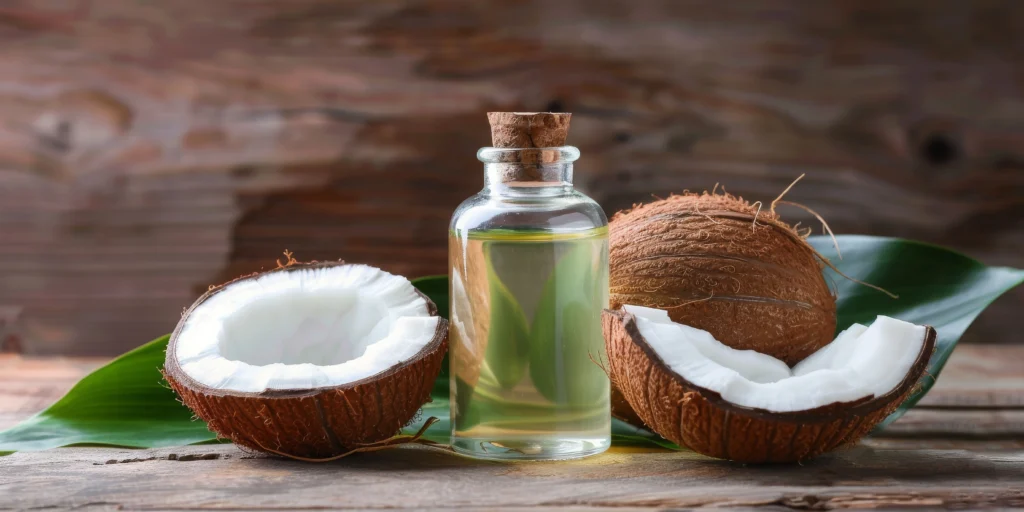
- Color: Virgin coconut oil is typically a clear liquid above 24°C (75°F) and turns into a white solid below this temperature. Refined coconut oil is also clear in its liquid form but can be bleached to a pure white as a solid.
- Shape: As an oil, it takes the shape of its container when liquid. When solid, it can be scooped or molded.
- Size: Sold in various container sizes, ranging from small jars to large buckets.
- Texture: Liquid coconut oil has a thin, oily texture. When solid, it has a firm texture that melts upon heating.
Culinary Uses
- Common Dishes: Coconut oil is used in a variety of culinary applications. Virgin coconut oil is often used in baking, sautéing, and as a dairy-free alternative in recipes requiring butter. It’s also popular in raw food recipes and smoothies.
- Preparation Methods: Coconut oil can be used both in its solid form for baking and frying and in its liquid form for dressings and marinades.
- Suitable Pairings: Coconut oil pairs well with tropical flavors like pineapple, lime, and mango in sweet dishes, as well as with chicken, shrimp, and vegetables in savory dishes.
Geographical Information
- Origin: The coconut palm is believed to have originated in the Indo-Malay region, spreading across much of the tropics through both natural and human-assisted means.
- Primary Growing Regions: The leading producers of coconuts (and thus coconut oil) include Indonesia, the Philippines, India, Sri Lanka, and Thailand.
- Seasonal Availability: Coconuts can be harvested year-round in tropical climates, making coconut oil consistently available.
| proximates: | |
| Water | 0.03 g |
| Energy (Atwater General Factors) | 895 kcal |
| Energy (Atwater Specific Factors) | 833 kcal |
| Total lipid (fat) | 99.1 g |
| Total fat (NLEA) | 90.5 g |
| Ash | 0.03 g |
| Carbohydrates: | |
| Carbohydrate, by difference | 0.84 g |
| Minerals: | |
| Calcium, Ca | 1 mg |
| Iron, Fe | 0.05 mg |
| Zinc, Zn | 0.02 mg |
| Vitamins and Other Components: | |
| Vitamin E (alpha-tocopherol) | 0.11 mg |
| Tocopherol, beta | 0.6 mg |
| Tocopherol, delta | 0.18 mg |
| Tocotrienol, alpha | 2.17 mg |
| Tocotrienol, beta | 0.13 mg |
| Tocotrienol, gamma | 0.36 mg |
| Tocotrienol, delta | 0.25 mg |
| Vitamin K (phylloquinone) | 0.6 µg |
| Lipids: | |
| Fatty acids, total saturated | 82.5 mg |
| SFA 4:0 | 0.009 g |
| SFA 6:0 | 0.477 g |
| SFA 8:0 | 6.8 g |
| SFA 10:0 | 5.39 g |
| SFA 12:0 | 41.8 g |
| SFA 14:0 | 16.7 g |
| SFA 15:0 | 0.015 g |
| SFA 16:0 | 8.64 g |
| SFA 17:0 | 0.009 g |
| SFA 18:0 | 2.52 g |
| SFA 20:0 | 0.076 g |
| SFA 22:0 | 0.019 g |
| SFA 24:0 | 0.031 g |
| Fatty acids, total monounsaturated | 6.31 g |
| MUFA 16:1 c | 0.016 g |
| MUFA 18:1 c | 6.25 g |
| MUFA 20:1 | 0.041 g |
| MUFA 20:1 c | 0.041 g |
| Fatty acids, total polyunsaturated | 1.7 g |
| PUFA 18:2 c | 1.68 g |
| PUFA 18:2 n-6 c,c | 1.68 g |
| PUFA 18:3 c | 0.02 g |
| PUFA 18:3 n-3 c,c,c (ALA) | 0.02 g |
| Fatty acids, total trans | 0.028 g |
| Fatty acids, total trans-monoenoic | 0.021 g |
| TFA 18:1 t | 0.021 g |
| Fatty acids, total trans-dienoic | 0.007 g |
| TFA 18:2 t not further defined | 0.007 g |