
Basic Information
- Common Name: Nectarine
- Scientific Name: Prunus persica var. nucipersica
- Category: Fruit
Varieties
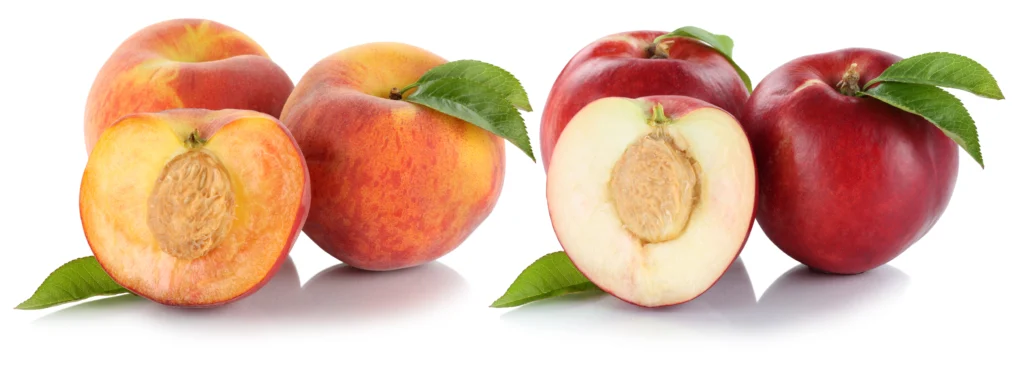
Nectarines come in many varieties, which can be broadly classified into two groups based on their flesh: white and yellow nectarines. Each group contains numerous varieties that differ in taste and texture. White nectarines are generally sweeter and less acidic, whereas yellow nectarines have a more traditional acidic tang.
Nutritional Information
Macronutrients (per 100g of raw nectarine)
- Carbohydrates: Approximately 9.18g
- Proteins: About 1.06g
- Fats: 0.28g
Micronutrients
Nectarines are a good source of several vitamins and minerals, particularly:
- Vitamins: Vitamin C, vitamin A, and some B vitamins (especially niacin and vitamin B6).
- Minerals: Potassium, with smaller amounts of magnesium and phosphorus.
Phytonutrients
Nectarines, like many fruits, are packed with a variety of phytonutrients, which are compounds that provide numerous health benefits. These phytonutrients include antioxidants, anti-inflammatory agents, and compounds that may contribute to reducing the risk of chronic diseases. Here are some of the key phytonutrients found in raw nectarines:
Phenolic Compounds
- Anthocyanins: These are potent antioxidants found in the skin of nectarines, especially in red-skinned varieties. They have anti-inflammatory properties and can help protect against cardiovascular diseases and certain cancers.
- Chlorogenic Acid: This compound is known for its antioxidant and anti-inflammatory effects. It can help lower blood pressure and has been linked to a reduced risk of chronic diseases like type 2 diabetes.
Carotenoids
- Beta-Carotene: Found in yellow-fleshed nectarines, beta-carotene is converted into vitamin A in the body, which is essential for healthy vision, skin, and immune function.
- Lutein and Zeaxanthin: These carotenoids are important for eye health, particularly in protecting against age-related macular degeneration and cataracts.
Flavonoids
- Catechins: Known for their anti-inflammatory and antioxidant properties, catechins can help reduce the risk of chronic diseases and aid in weight management.
- Quercetin: This flavonoid has anti-inflammatory and antioxidant effects. It can help reduce the risk of heart disease, hypertension, and certain cancers.
Other Phytonutrients
- Fiber: While not a phytonutrient in the traditional sense, the dietary fiber in nectarines contributes to digestive health, helps control blood sugar levels, and can aid in weight management by promoting feelings of fullness.
It’s important to note that the specific content and concentration of these phytonutrients can vary based on the variety of nectarine, its ripeness, and growing conditions. Consuming a diverse diet rich in fruits and vegetables, including nectarines, can help maximize the intake of these beneficial compound
Calorie Count
A raw nectarine has about 43 calories per 100 grams.
Glycemic Index
Nectarines have a glycemic index (GI) range of 43, which is considered low.
Physical Characteristics
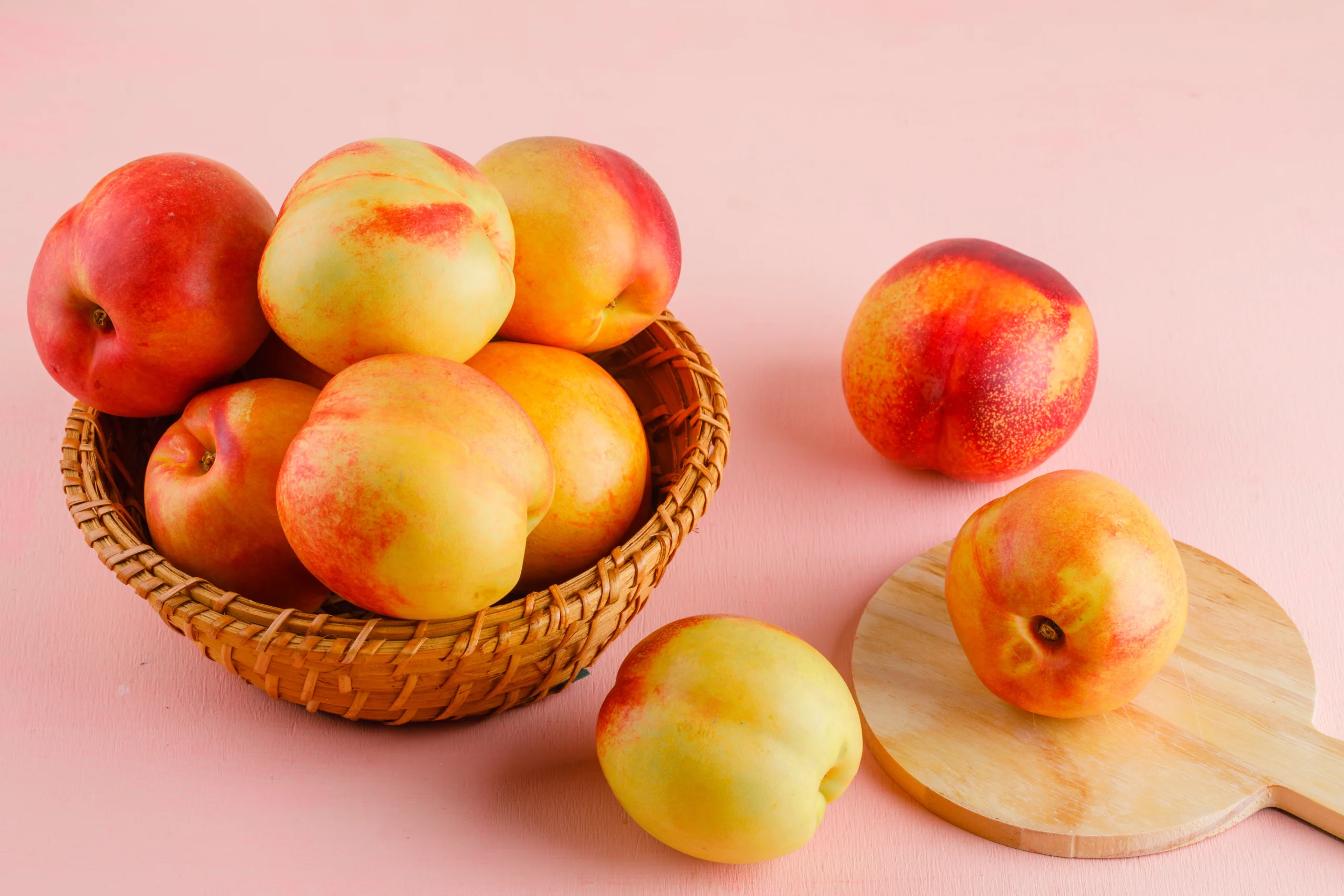
- Color: The skin of nectarines can range from bright red to yellow with a smooth texture, often having a slight blush depending on the variety and ripeness. The flesh can be white or yellow.
- Shape: Typically spherical, slightly flattened at the top and bottom.
- Size: Average diameter is about 2.5 to 3 inches (6.35 to 7.62 cm).
- Texture: The flesh is firm and juicy with a smooth, edible skin.
Culinary Uses
Nectarines are versatile in culinary uses. They can be eaten raw or used in a variety of dishes, including:
- Common Dishes: Salads, pies, and tarts. They are also popular in jams, jellies, and preserves.
- Preparation Methods: Grilled, roasted, or baked.
- Suitable Pairings: Pairs well with other fruits, cream, custard, honey, almonds, and spices like cinnamon and vanilla.
Geographical Information
- Origin: China, over 2000 years ago, but they were developed into the modern fruit we know today in Iran.
- Primary Growing Regions: Today, major producers include China, the European Union, the United States (particularly California), and Chile.
- Seasonal Availability: Nectarines are typically in season during the summer months, but availability may vary depending on the region.
| proximates: | |
| Water | 89 g |
| Energy (Atwater General Factors) | 43 kcal |
| Energy (Atwater Specific Factors) | 39 kcal |
| Nitrogen | 0.17 g |
| Protein | 1.06 g |
| Total lipid (fat) | 0.28 g |
| Total fat (NLEA) | 0.13 g |
| Ash | 0.48 g |
| Carbohydrates: | |
| Carbohydrate, by difference | 9.18 g |
| Carbohydrate, by summation | 9.42 g |
| Fiber, total dietary | 1.5 g |
| Fiber, soluble | 0.6 g |
| Fiber, insoluble | 0.9 g |
| Sugars, Total | 7.89 g |
| Sucrose | 4.83 g |
| Glucose | 1.67 g |
| Fructose | 1.39 g |
| Starch | 0.07 g |
| Minerals: | |
| Calcium, Ca | 2 mg |
| Iron, Fe | 0.3 mg |
| Magnesium, Mg | 8.8 mg |
| Phosphorus, P | 26 mg |
| Potassium, K | 131 mg |
| Sodium, Na | 13 mg |
| Zinc, Zn | 0.21 mg |
| Copper, Cu | 0.082 mg |
| Manganese, Mn | 0.047 mg |
| Vitamins and Other Components: | |
| Vitamin C, total ascorbic acid | 2.9 mg |
| Thiamin | 0.034 mg |
| Riboflavin | 0.027 mg |
| Niacin | 1.12 mg |
| Pantothenic acid | 0.185 mg |
| Vitamin B-6 | 0.025 mg |
| Folate, total | 6 µg |
| Vitamin A, RAE | 21 µg |
| Carotene, beta | 199 µg |
| Cryptoxanthin, beta | 117 µg |
| Lutein + zeaxanthin | 130 µg |
| Vitamin E (alpha-tocopherol) | 0.61 mg |
| Tocopherol, beta | 0.01 mg |
| Tocopherol, gamma | 0.04 mg |
| Tocopherol, delta | 0.03 mg |
| Vitamin K (phylloquinone) | 2 µg |
| Amino acids: | |
| Tryptophan | 0.005 g |
| Threonine | 0.008 g |
| Isoleucine | 0.008 g |
| Leucine | 0.013 g |
| Lysine | 0.015 g |
| Methionine | 0.005 g |
| Cystine | 0.005 g |
| Phenylalanine | 0.01 g |
| Tyrosine | 0.006 g |
| Valine | 0.012 g |
| Arginine | 0.008 g |
| Histidine | 0.008 g |
| Alanine | 0.015 g |
| Aspartic acid | 0.566 g |
| Glutamic acid | 0.032 g |
| Glycine | 0.01 g |
| Proline | 0.009 g |
| Serine | 0.016 g |