
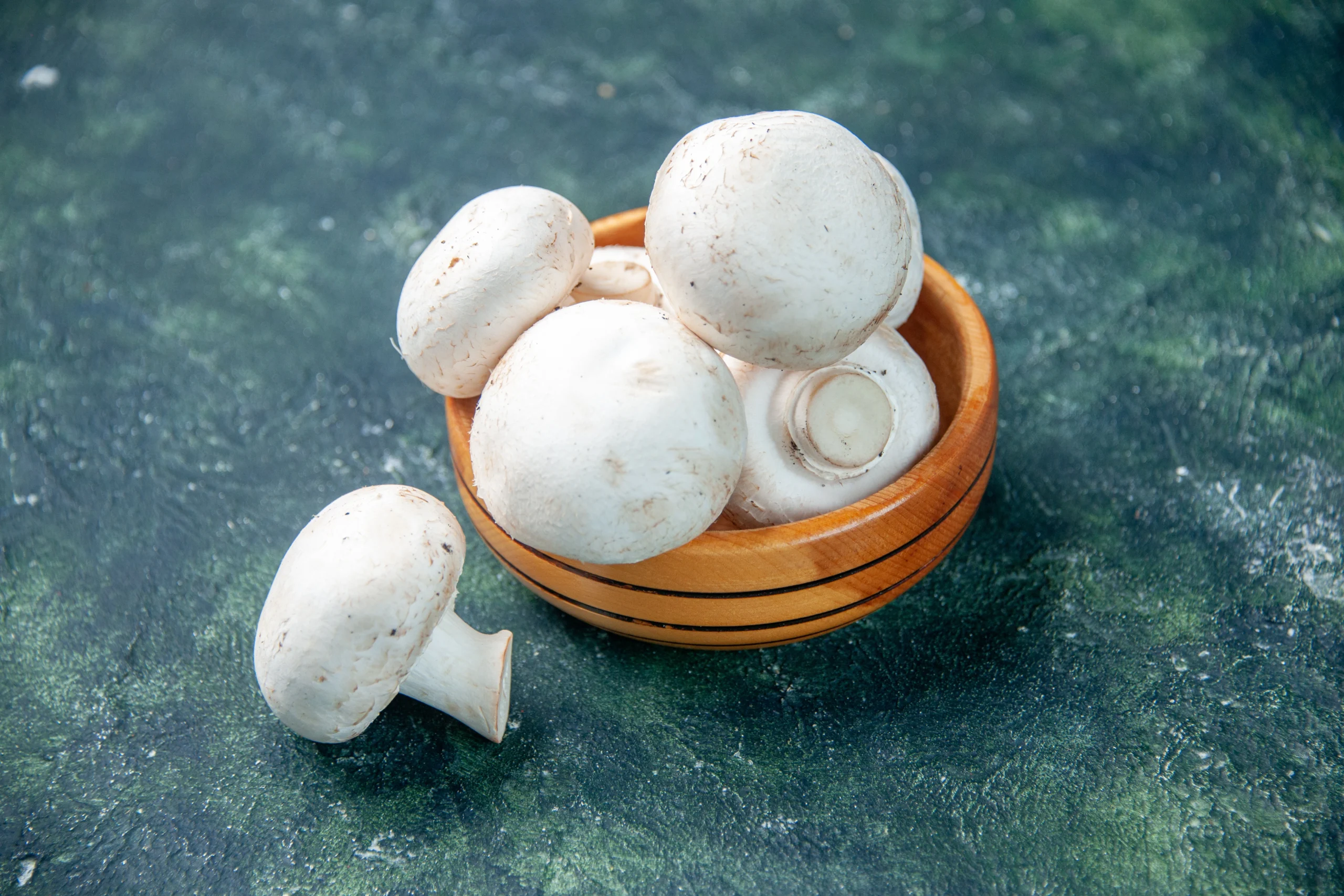
White button mushrooms, the most common and widely consumed mushrooms around the world, are a staple in many dishes due to their mild flavor and versatility. Here’s an in-depth look at white button mushrooms across your requested categories:
Basic Information
- Common Name: White Button Mushroom
- Scientific Name: Agaricus bisporus
- Category: Fungi
- Varieties: The white button mushroom is actually the young, unripe stage of several mushrooms, including cremini (which are slightly older and browner) and portabella mushrooms (the mature form).
Nutritional Information
White button mushrooms are low in calories and offer a range of nutrients, including essential vitamins and minerals.
- Macronutrients (per 100 grams):
- Carbohydrates: About 4.08g
- Proteins: Approximately 2.89g
- Fats: Less than 0.37g
- Micronutrients:
- Rich in B vitamins, especially niacin (B3) and riboflavin (B2).
- Good source of selenium, potassium, phosphorus, and copper.
- Contains small amounts of Vitamin D.
Phytonutrients
White button mushrooms (Agaricus bisporus) are not just a versatile culinary ingredient; they are also packed with beneficial phytonutrients that contribute to their health-promoting properties. These compounds include antioxidants, vitamins, and minerals that can support overall health in various ways. Here’s an overview of the key phytonutrients present in white button mushrooms:
1. Polysaccharides
- Beta-Glucans: White button mushrooms contain beta-glucans, a type of soluble dietary fiber known for its immune-enhancing properties. These compounds help stimulate the immune system by activating macrophages, natural killer cells, and other immune cells, potentially offering protection against infections and supporting cancer prevention efforts.
2. Antioxidants
- Ergothioneine: A sulfur-containing amino acid, ergothioneine is a potent antioxidant found in white button mushrooms. It helps protect cells from oxidative damage caused by free radicals, which can contribute to chronic diseases and aging.
- Selenium: While not a phytonutrient per se, selenium acts as an antioxidant when incorporated into the body’s enzymes. White button mushrooms are a good plant-based source of selenium, contributing to antioxidant defenses and supporting immune function.
3. Vitamins
- Vitamin D: When exposed to sunlight or ultraviolet light, white button mushrooms can generate vitamin D, specifically in the form of D2 (ergocalciferol). Vitamin D is essential for bone health, immune function, and overall well-being.
- B Vitamins: These mushrooms are rich in several B vitamins, including niacin (B3) and riboflavin (B2), which are important for energy metabolism, maintaining healthy skin and the nervous system.
4. Aromatic Compounds
- Phenolic Compounds: White button mushrooms contain various phenolic compounds that exhibit antioxidant properties. These compounds can help reduce inflammation and protect against some chronic diseases by neutralizing harmful free radicals.
Health Benefits Associated with Phytonutrients in White Button Mushrooms
The phytonutrients in white button mushrooms contribute to a range of health benefits, including:
- Immune System Support: Beta-glucans and other immune-stimulating compounds can enhance the body’s defense mechanisms.
- Antioxidant Protection: Ergothioneine, selenium, and phenolic compounds provide significant antioxidant benefits, helping to reduce oxidative stress and the risk of chronic diseases.
- Nutritional Support: The presence of vitamin D and B vitamins supports bone health, energy production, and neurological function.
White button mushrooms offer more than just flavor; they provide a variety of phytonutrients that can contribute to health and wellness, making them a valuable addition to a balanced diet. Their widespread availability and culinary versatility make it easy to incorporate these health benefits into everyday meals.
Calorie Count and Glycemic Index
- Calorie Count: Around 25 calories per 100 grams.
- Glycemic Index: Low, making them suitable for people watching their blood sugar levels.
Physical Characteristics
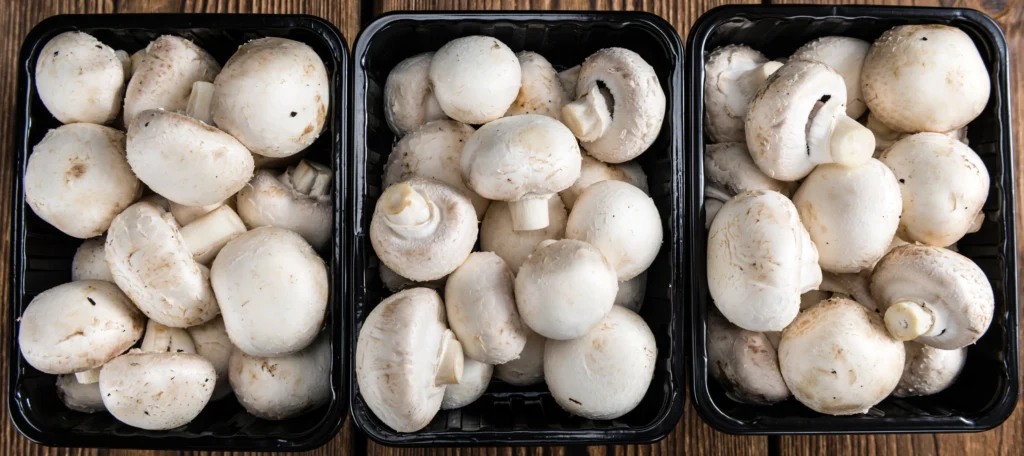
- Color: Pale to bright white.
- Shape: Small, rounded cap with a short, stubby stem. The cap starts out rounded and becomes flatter as it matures.
- Size: Caps can range from 1/2 inch to a couple of inches in diameter.
- Texture: Tender and moist with a mild, earthy flavor that intensifies when cooked.
Culinary Uses
White button mushrooms are incredibly versatile in cooking, used in a wide array of dishes due to their mild taste and pleasant texture.
- Common Dishes: Used in salads, soups, sauces, stir-fries, pizzas, and as a side dish.
- Preparation Methods: Can be eaten raw or cooked. Popular cooking methods include sautéing, grilling, roasting, and boiling.
- Suitable Pairings: Complements a wide variety of ingredients, including garlic, onions, herbs (like parsley and thyme), green vegetables, poultry, beef, and seafood.
Geographical Information
- Origin: Native to grasslands in Europe and North America.
- Primary Growing Regions: Now cultivated worldwide, with significant production in the United States, China, and Europe.
- Seasonal Availability: Available year-round due to indoor cultivation.
White button mushrooms are a culinary favorite, offering a blend of nutrition, flavor, and versatility. Their widespread availability and mild flavor make them a go-to ingredient for chefs and home cooks alike.
| proximates: | |
| Water | 91.8 g |
| Energy (Atwater General Factors) | 31 kcal |
| Energy (Atwater Specific Factors) | 25 kcal |
| Nitrogen | 0.46 g |
| Protein | 2.89 g |
| Total lipid (fat) | 0.37 g |
| Ash | 0.83 g |
| Carbohydrates: | |
| Carbohydrate, by difference | 4.08 g |
| Fiber, total dietary | 1.7 g |
| Beta-glucan | 0.75 g |
| Minerals: | |
| Calcium, Ca | 5 mg |
| Iron, Fe | 0.23 mg |
| Magnesium, Mg | 10.2 mg |
| Phosphorus, P | 93 mg |
| Potassium, K | 373 mg |
| Sodium, Na | 6 mg |
| Zinc, Zn | 0.51 mg |
| Copper, Cu | 0.389 mg |
| Manganese, Mn | 0.054 mg |
| Selenium, Se | 20 µg |
| Vitamins and Other Components: | |
| Thiamin | 0.065 mg |
| Riboflavin | 0.444 mg |
| Niacin | 3.88 mg |
| Vitamin B-6 | 0.077 mg |
| Biotin | 9.07 µg |
| Folate, total | 35 µg |
| Vitamin D (D2 + D3), International Units | 0.9 IU |
| Vitamin D (D2 + D3) | 0.02 µg |
| Vitamin D2 (ergocalciferol) | 0.02 µg |
| Glutathione | 4.3 mg |
| Phytosterols: | |
| Stigmasterol | <0.2 mg |
| Campesterol | <0.2 mg |
| Beta-sitosterol | <0.2 mg |
| Ergosta-7-enol | 1.63 mg |
| Ergosta-5,7-dienol | 5.84 mg |
| Ergosta-7,22-dienol | 1.54 mg |
| Ergosterol | 56 mg |
| Beta-sitostanol | <0.2 mg |
| Delta-5-avenasterol | <0.2 mg |
| Delta-7-Stigmastenol | <0.2 mg |
| Amino acids: | |
| Ergothioneine | 4 mg |