
Maitake mushrooms, known for their distinctive ruffled appearance and health benefits, are a sought-after ingredient in culinary and medicinal circles. Here’s a detailed overview based on your requested categories:
Basic Information
- Common Name: Maitake Mushroom
- Scientific Name: Grifola frondosa
- Category: Fungi
- Varieties: While “maitake” specifically refers to Grifola frondosa, there are no widely recognized sub-varieties. However, it is part of a larger family of mushrooms known for their medicinal properties.
Nutritional Information
Maitake mushrooms are rich in nutrients and offer a low-calorie option for various diets.
- Macronutrients (per 100 grams):
- Carbohydrates: Approximately 6.6g
- Proteins: Around 2.2g
- Fats: Less than 0.26g
- Micronutrients:
- Rich in B vitamins (niacin, riboflavin, pantothenic acid).
- Contains minerals such as potassium, calcium, and magnesium.
- Offers a source of dietary fiber and vitamin D2 (ergosterol) when exposed to sunlight.
Phytonutrients
Maitake mushrooms (Grifola frondosa) are not only celebrated for their culinary versatility but also for their significant health benefits, largely attributed to their rich content of phytonutrients. These bioactive compounds are thought to contribute to the mushroom’s potential anti-cancer, immune-modulating, and glucose-regulating properties. Here’s a detailed look at the phytonutrients present in maitake mushrooms:
1. Polysaccharides
- Beta-Glucans: Maitake contains high levels of beta-glucans, a type of polysaccharide known for its potent immune-stimulating effects. Beta-glucans can enhance the immune system by activating macrophages, natural killer cells, and T-cells, and have been studied for their potential to fight cancer.
- D-Fraction: A specific extract of maitake, known as D-fraction, contains a unique set of polysaccharides and protein complexes. It has been researched for its immune-boosting and anti-tumor properties.
2. Antioxidants
- Maitake mushrooms are a source of powerful antioxidants, which help protect the body’s cells from damage caused by free radicals. This includes phenolic compounds, flavonoids, and vitamins C and E, contributing to the overall antioxidant capacity of the mushroom.
3. Minerals and Vitamins
- While not phytonutrients per se, maitake is rich in several essential minerals and vitamins that support overall health. This includes selenium, a mineral with antioxidant properties, and B vitamins, which are crucial for energy metabolism and brain health.
Health Benefits Associated with Phytonutrients in Maitake Mushrooms
The combination of phytonutrients in maitake mushrooms contributes to several health benefits:
- Immune System Support: The beta-glucans and D-fraction in maitake can significantly boost immune function, potentially helping the body to fight off infections and cancer.
- Anticancer Potential: Research suggests that maitake’s polysaccharides may inhibit the growth of cancer cells and have beneficial effects when used alongside traditional cancer treatments.
- Blood Sugar Regulation: Some studies indicate that maitake mushrooms may help lower blood glucose levels, making them a potential aid in managing diabetes.
- Cholesterol Management: There is some evidence to suggest that maitake can help reduce high cholesterol levels, contributing to cardiovascular health.
Maitake mushrooms offer a rich blend of phytonutrients that not only enhance their culinary appeal but also provide significant health benefits. These include supporting the immune system, offering potential anticancer benefits, and helping to regulate blood sugar and cholesterol levels, making maitake mushrooms a valuable addition to a healthy diet.
Calorie Count and Glycemic Index
- Calorie Count: Approximately 31 calories per 100 grams.
- Glycemic Index: Low, making it suitable for most diets, including those managing blood sugar levels.
Physical Characteristics
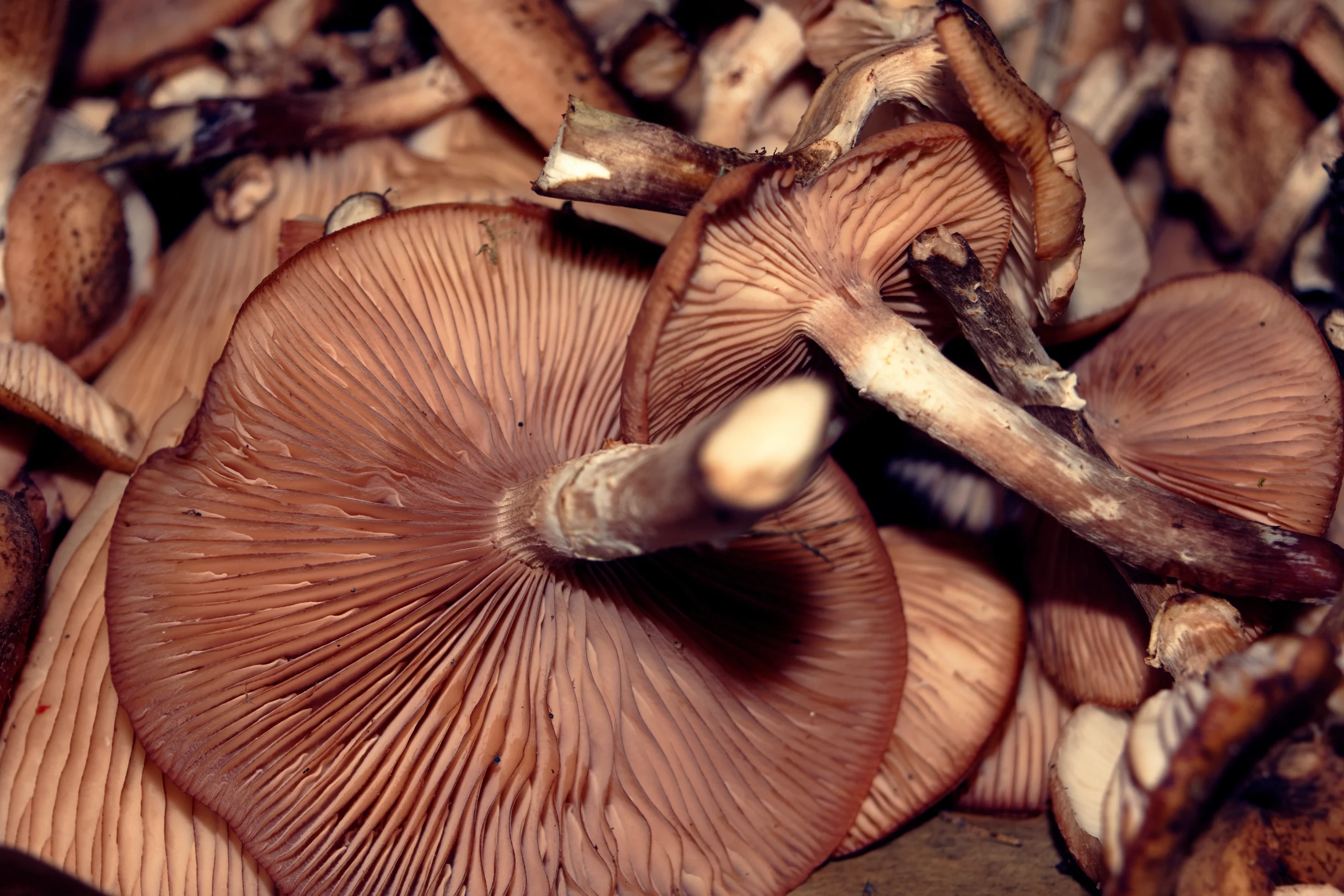
- Color: Ranges from a deep greyish-brown to a lighter tan or brown.
- Shape: Maitake mushrooms have a unique, ruffled appearance, resembling a cluster of dancing butterflies or feathers.
- Size: Can grow quite large, with whole clusters sometimes weighing several pounds.
- Texture: When cooked, they offer a pleasant, slightly chewy texture and a rich, earthy flavor.
Culinary Uses
Maitake mushrooms are versatile in the kitchen, known for their rich flavor and texture.
- Common Dishes: Often used in stir-fries, soups, stews, and risottos. They’re also excellent when sautéed, grilled, or roasted.
- Preparation Methods: Can be torn or cut into pieces. Their robust flavor stands up well to strong seasonings and methods like grilling or roasting.
- Suitable Pairings: Works well with garlic, soy sauce, green onions, and herbs. Pairs nicely with meats, especially poultry and pork, as well as in vegetarian and vegan dishes.
Geographical Information
- Origin: Native to the northeastern part of Japan and North America, but it has been found in temperate forests worldwide.
- Primary Growing Regions: While traditionally harvested in the wild in Japan and North America, maitake is now cultivated in several countries due to its popularity.
- Seasonal Availability: In wild, it’s typically found in late summer to early fall, but cultivated maitake is available year-round.
Maitake mushrooms, with their delightful taste and texture combined with nutritional and health benefits, make them a favorite among mushrooms for both culinary experts and health enthusiasts.
| proximates: | |
| Water | 90.4 g |
| Energy (Atwater General Factors) | 38 kcal |
| Energy (Atwater Specific Factors) | 31 kcal |
| Nitrogen | 0.35 g |
| Protein | 2.2 g |
| Total lipid (fat) | 0.26 g |
| Ash | 0.56 g |
| Carbohydrates: | |
| Carbohydrate, by difference | 6.6 g |
| Fiber, total dietary | 3.1 g |
| Beta-glucan | 2.5 g |
| Minerals: | |
| Calcium, Ca | <2.49 mg |
| Iron, Fe | 0.21 mg |
| Magnesium, Mg | 11 mg |
| Phosphorus, P | 72 mg |
| Potassium, K | 260 mg |
| Zinc, Zn | 0.76 mg |
| Copper, Cu | 0.272 mg |
| Manganese, Mn | 0.058 mg |
| Selenium, Se | 3.3 µg |
| Vitamins and Other Components: | |
| Thiamin | 0.01 mg |
| Riboflavin | 0.269 mg |
| Niacin | 6.76 mg |
| Vitamin B-6 | 0.071 mg |
| Biotin | 32.6 µg |
| Vitamin D (D2 + D3), International Units | 64 IU |
| Vitamin D (D2 + D3) | 1.6 µg |
| Vitamin D2 (ergocalciferol) | 1.6 µg |
| Vitamin D4 | 0.14 µg |
| Glutathione | 26 mg |
| Phytosterols: | |
| Stigmasterol | <0.2 mg |
| Campesterol | <0.2 mg |
| Beta-sitosterol | <0.2 mg |
| Ergosta-7-enol | 1.42 mg |
| Ergosta-7,22-dienol | 1.17 mg |
| Ergosta-5,7-dienol | 2.89 mg |
| Ergosterol | 59 mg |
| Beta-sitostanol | <0.2 mg |
| Delta-5-avenasterol | <0.2 mg |
| Delta-7-Stigmastenol | <0.2 mg |
| Amino acids: | |
| Ergothioneine | 2 mg |