
Basic Information
- Name: Ham, Sliced, Pre-packaged, Deli Meat (96% Fat Free, Water Added)
- Scientific Name: N/A (Processed food product made from Sus scrofa domesticus, domestic pig)
- Category: Processed meat
Nutritional Information
- Macronutrients:
- Carbohydrates: Typically low, around 0.27 g per 100 g
- Proteins: Approximately 16.7 g per 100 g
- Fats: Low, about 3.73 g per 100 g due to being 96% fat-free
- Micronutrients: Source of B vitamins, especially B1, B2, B3 (niacin), and B12, as well as minerals like iron, zinc, phosphorus, and potassium.
phytonutrients
Sliced, pre-packaged deli ham, especially those varieties that are 96% fat-free with water added, is primarily a processed meat product and does not contain a significant array of phytonutrients. Phytonutrients are bioactive compounds typically found in fruits, vegetables, grains, and other plant foods, known for their health-promoting properties, including antioxidant, anti-inflammatory, and anti-carcinogenic effects.
Phytonutrient Content
- Phytonutrients: Processed meats like ham do not contain phytonutrients in the way that plant-based foods do. The nutritional value of ham is more focused on its macronutrient content (proteins and fats) and certain micronutrients derived from the meat itself.
Other Nutritional Considerations
While ham does not offer phytonutrients, it does provide:
- Proteins: A good source of high-quality protein necessary for muscle repair and growth.
- B Vitamins: Especially B1 (thiamine), B2 (riboflavin), B3 (niacin), and B12, which are important for energy production and red blood cell formation.
- Minerals: Such as zinc, iron, phosphorus, and potassium, contributing to various body functions including immune response and bone health.
Health Considerations
- Sodium: Processed deli meats like ham are often high in sodium, which can be a concern for individuals with high blood pressure or those monitoring their salt intake.
- Nitrates and Nitrites: Many processed meats contain these additives for preservation, flavor, and color. While they can convert into potentially harmful compounds, their actual health impact is subject to ongoing research and debate.
In conclusion, while pre-packaged sliced ham provides certain nutritional benefits, primarily from protein and micronutrients, it does not contain phytonutrients as plants do. For a balanced diet, it’s recommended to consume a variety of foods, including plenty of fruits and vegetables, which are rich sources of phytonutrients.
Calorie Count and Glycemic Index
- Calorie Count: Roughly 106 calories per 100 g
- Glycemic Index: Not applicable (minimal carbohydrate content)
Physical Characteristics
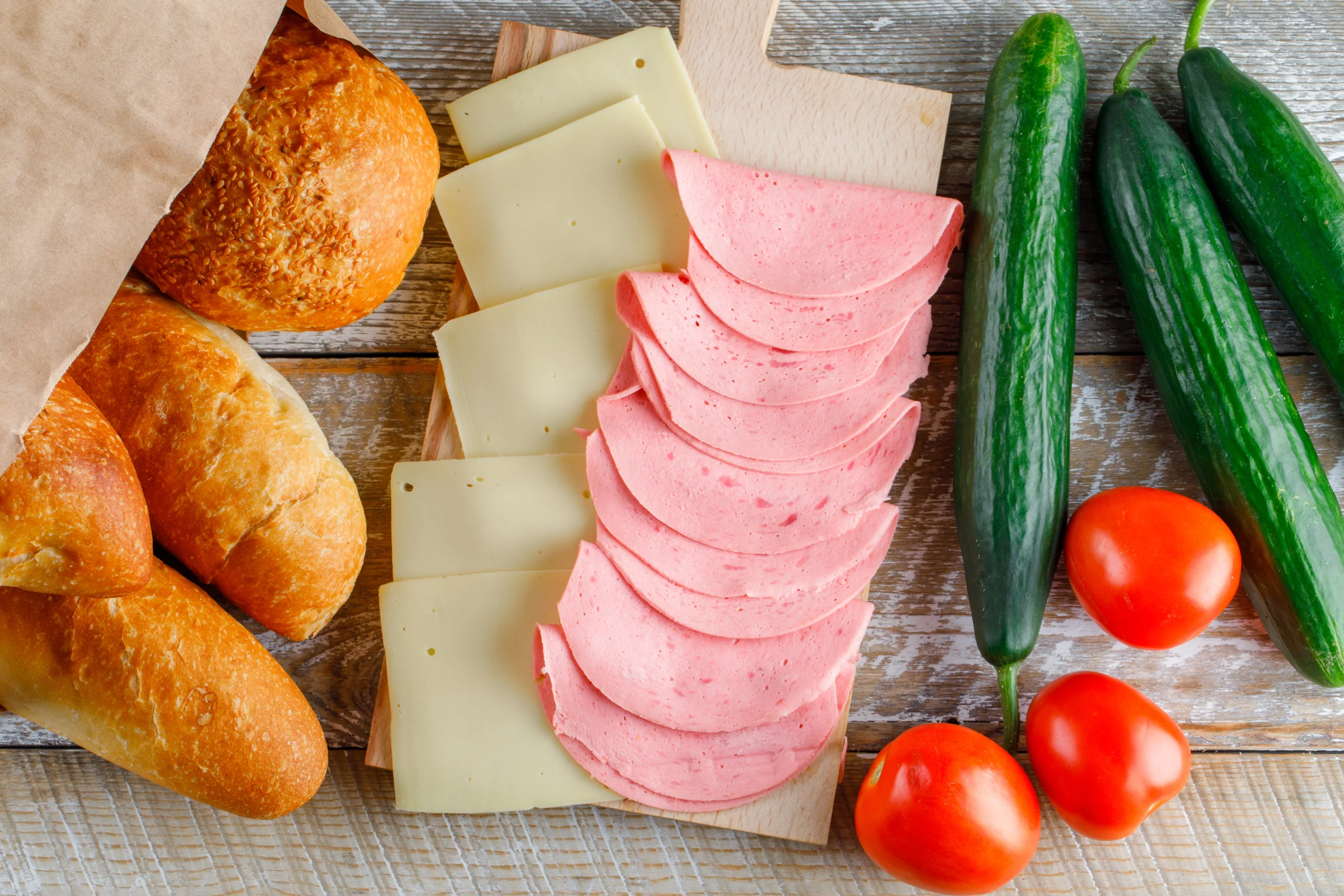
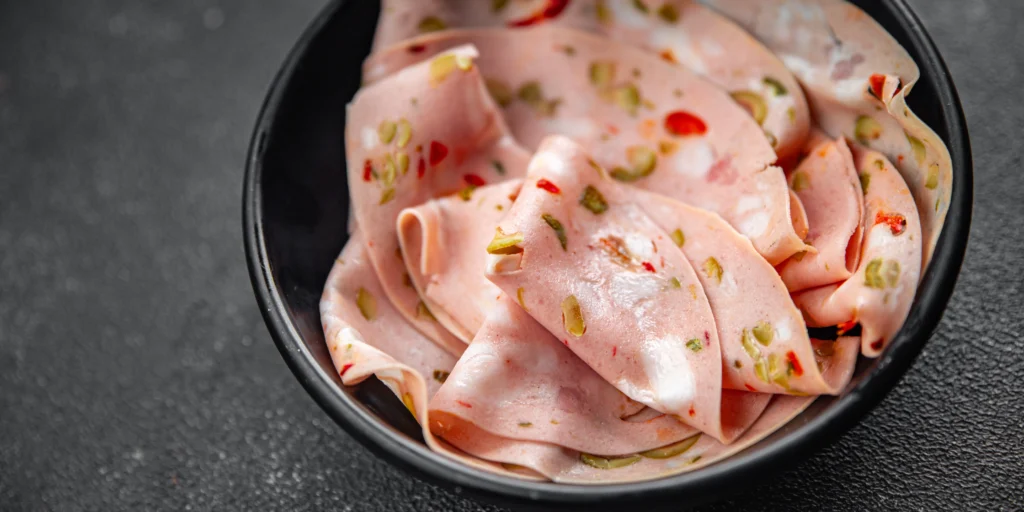
- Color: Pink to light red
- Shape: Thinly sliced, can vary in shape based on the cut of the ham
- Size: Slices vary in size but are typically around 2-3 mm thick
- Texture: Tender and moist, with a smooth and slightly firm texture
Culinary Uses
Sliced ham is extremely versatile in the kitchen and can be used in a variety of dishes:
- Common Dishes: Sandwiches, salads, wraps, omelets, and pizzas. Often used as a protein addition to breakfast meals.
- Preparation Methods: Can be eaten as is from the package, or heated/grilled as desired. Often added to cooked dishes in the final stages to maintain moisture.
- Suitable Pairings: Complements a wide range of flavors, including cheeses (Swiss, cheddar), bread, eggs, and vegetables (lettuce, tomato, cucumber). It pairs well with condiments like mustard and mayonnaise.
Geographical Information
- Origin: The preservation of meat through salting, smoking, and curing has ancient origins, with ham production techniques being refined in Europe.
- Primary Growing Regions: As a processed meat product, the pork used for ham is sourced globally, with major pork-producing countries including China, the European Union, and the United States.
- Seasonal Availability: Pre-packaged, sliced ham is available year-round due to its processing and packaging.
Ham, especially when sliced and pre-packaged for convenience, offers a low-fat, protein-rich option for various meals. Its processing includes adding water for moisture, and it’s often made to be 96% fat-free, making it a relatively healthier choice among processed meats. Its widespread availability and ease of use make it a staple protein source in many diets.
| proximates: | |
| Water | 75.7 g |
| Energy (Atwater General Factors) | 101 kcal |
| Energy (Atwater Specific Factors) | 106 kcal |
| Nitrogen | 2.67 g |
| Protein | 16.7 g |
| Total lipid (fat) | 3.73 g |
| Total fat (NLEA) | 3.15 g |
| Ash | 3.61 g |
| Carbohydrates: | |
| Carbohydrate, by difference | 0.27 g |
| Minerals: | |
| Calcium, Ca | 5 mg |
| Iron, Fe | 0.58 mg |
| Magnesium, Mg | 18.8 mg |
| Phosphorus, P | 261 mg |
| Potassium, K | 425 mg |
| Sodium, Na | 1040 mg |
| Zinc, Zn | 1.52 mg |
| Copper, Cu | 0.05 mg |
| Lipids: | |
| Fatty acids, total saturated | 1.12 g |
| SFA 10:0 | 0.003 g |
| SFA 12:0 | 0.001 g |
| SFA 14:0 | 0.042 mg |
| SFA 15:0 | 0.001 g |
| SFA 16:0 | 0.71 g |
| SFA 17:0 | 0.008 g |
| SFA 18:0 | 0.348 g |
| SFA 20:0 | 0.005 g |
| SFA 22:0 | 0.001 g |
| Fatty acids, total monounsaturated | 1.47 g |
| MUFA 16:1 c | 0.09 g |
| MUFA 17:1 | 0.007 g |
| MUFA 17:1 c | 0.007 g |
| MUFA 18:1 c | 1.35 g |
| MUFA 20:1 c | 0.027 g |
| Fatty acids, total polyunsaturated | 0.544 g |
| PUFA 18:2 c | 0.446 g |
| PUFA 18:2 n-6 c,c | 0.443 g |
| PUFA 18:2 CLAs | 0.003 g |
| PUFA 18:3 c | 0.013 g |
| PUFA 18:3 n-3 c,c,c (ALA) | 0.013 g |
| PUFA 20:2 c | 0.017 g |
| PUFA 20:2 n-6 c,c | 0.017 g |
| PUFA 20:3 c | 0.009 g |
| PUFA 20:3 n-3 | 0.001 g |
| PUFA 20:3 n-6 | 0.008 g |
| PUFA 20:4 | 0.053 g |
| PUFA 20:4c | 0.053 g |
| PUFA 22:5 c | 0.005 g |
| PUFA 22:4 | 0.01 g |
| PUFA 22:5 n-3 (DPA) | 0.005 g |
| PUFA 22:6 c | 0.001 g |
| PUFA 22:6 n-3 (DHA) | 0.001 g |
| Fatty acids, total trans | 0.01 g |
| Fatty acids, total trans-monoenoic | 0.009 g |
| TFA 18:1 t | 0.009 g |
| Fatty acids, total trans-dienoic | 0.001 g |
| TFA 18:2 t not further defined | 0.001 g |