

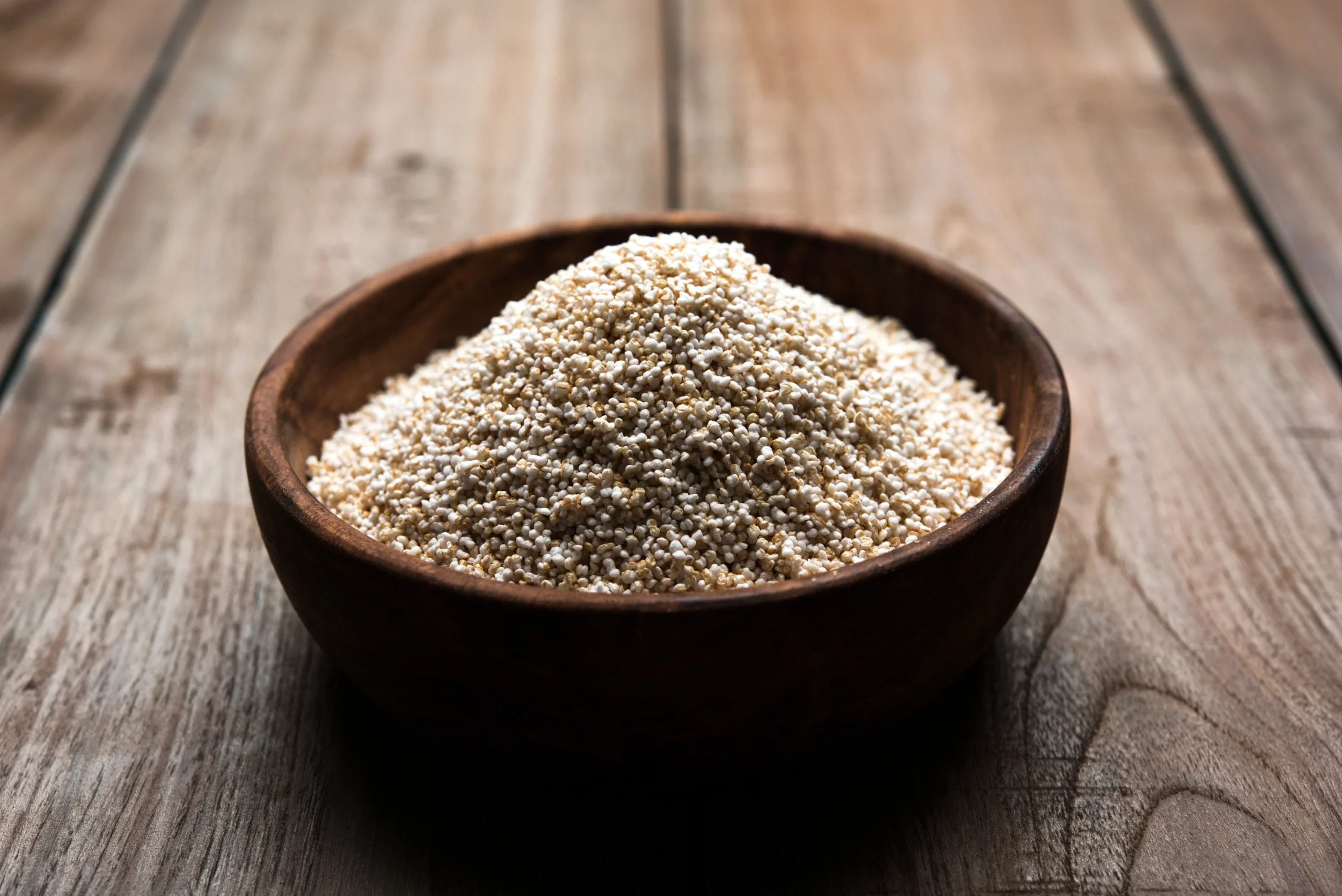
Quinoa flour, made from ground quinoa seeds (Chenopodium quinoa), is a highly nutritious and gluten-free alternative to conventional grain flours. Quinoa, often referred to as a “superfood,” is actually a seed from the Chenopodiaceae family, though it’s commonly treated as a grain in culinary contexts. Its flour is prized for both its nutritional profile and versatility in cooking and baking. Here’s a comprehensive overview of quinoa flour:
Basic Information
- Common Name: Quinoa Flour
- Scientific Name: Chenopodium quinoa
- Category: Although quinoa is technically a seed, it is categorized as a whole grain in dietary terms.
- Varieties: Quinoa comes in several varieties, including white, red, and black quinoa, which may slightly affect the flavor and nutritional content of the flour.
Nutritional Information
- Macronutrients:
- Carbohydrates: About 69.5 grams per 100 grams. It’s rich in complex carbohydrates and dietary fiber.
- Proteins: High in protein, around 11.5 grams per 100 grams, containing all nine essential amino acids, making it a complete protein source.
- Fats: Contains around 6.66 grams of fat per 100 grams, with a good balance of unsaturated fatty acids.
- Micronutrients: Rich in vitamins and minerals, including B vitamins (especially folate), vitamin E, magnesium, potassium, calcium, iron, and phosphorus. It also contains antioxidants like quercetin and kaempferol.
Phytonutrients
Quinoa flour, made from the ground seeds of Chenopodium quinoa, inherits the rich phytonutrient profile of whole quinoa, making it a highly nutritious addition to any diet. Quinoa is renowned not only for its complete protein profile but also for its wide array of bioactive compounds that contribute to its health benefits. Here’s a detailed overview of the phytonutrients present in quinoa flour:
Phytonutrients in Quinoa Flour
- Saponins: Quinoa seeds naturally contain saponins, which are bitter-tasting compounds that can act as antioxidants. While many saponins are removed during processing to improve flavor, small amounts may remain, contributing to the flour’s health properties.
- Quercetin and Kaempferol: These flavonoids are potent antioxidants found in quinoa. They have anti-inflammatory, anti-viral, and anti-cancer properties. The presence of these flavonoids in quinoa flour contributes to its health-promoting qualities.
- Phenolic Acids: Quinoa is a good source of phenolic acids, such as ferulic, vanillic, and coumaric acids, which are known for their antioxidant activity. These compounds help protect the body against oxidative stress and may reduce the risk of chronic diseases.
- Betacyanins and Betaxanthins: Present in colored varieties of quinoa (like red and black quinoa), these pigment-related compounds have antioxidant properties. They contribute to the antioxidant capacity of quinoa flour made from these varieties.
- Ecdysteroids: These bioactive compounds are unique to quinoa and have been shown to possess various health-promoting effects, including the potential to help regulate blood sugar levels.
- Omega-3 Fatty Acids: While not a phytonutrient per se, the presence of alpha-linolenic acid (ALA), a type of omega-3 fatty acid in quinoa, is worth mentioning for its anti-inflammatory benefits and contribution to heart health.
Nutritional Context and Health Implications
The diverse array of phytonutrients in quinoa flour contributes to its status as a superfood. These compounds provide significant antioxidant and anti-inflammatory benefits, which can help reduce the risk of various chronic diseases, including heart disease, diabetes, and cancer. Additionally, the flavonoids quercetin and kaempferol are of particular interest for their extensive health benefits and are found in higher amounts in quinoa than in many other grains.
Considerations
Quinoa flour’s nutritional benefits extend beyond its macronutrient profile, offering a complex array of micronutrients and phytonutrients beneficial for health. However, the concentration of these compounds in quinoa flour can vary depending on the processing methods used to produce the flour. To maximize the health benefits, it is advisable to incorporate a variety of whole grains and flour alternatives, like quinoa flour, into your diet.
In summary, quinoa flour is not only a versatile and gluten-free alternative to traditional flours but also a nutrient-dense ingredient rich in phytonutrients. Its inclusion in the diet can offer a range of health benefits, contributing to overall well-being and disease prevention.
Calorie Count and Glycemic Index
- Calorie Count: Approximately 385 calories per 100 grams.
- Glycemic Index: Low to medium, beneficial for maintaining stable blood sugar levels.
Physical Characteristics
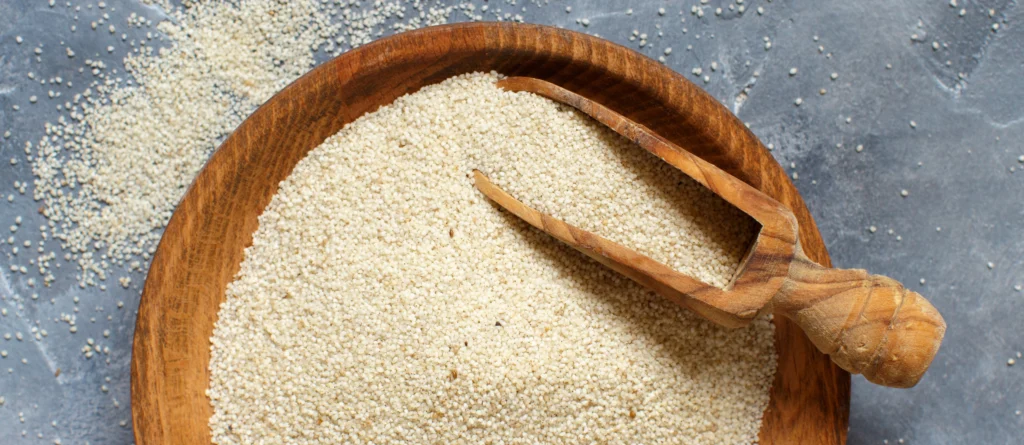
- Color: Light beige to ivory, depending on the variety of quinoa used.
- Shape: Fine powder.
- Size: Similar in granularity to all-purpose wheat flour.
- Texture: Soft and airy, with a slight nuttiness.
Culinary Uses
Quinoa flour is versatile and can be used in various culinary applications:
- Common Dishes: Ideal for gluten-free baking, including bread, muffins, cakes, and cookies. It’s also used in pancakes, waffles, and as a thickener for soups and sauces.
- Preparation Methods: Can be used as a direct substitute for wheat flour in many recipes, especially in gluten-free cooking. It may be mixed with other gluten-free flours to improve texture and flavor.
- Suitable Pairings: Pairs well with both sweet and savory ingredients, enhancing dishes with its mild, nutty flavor.
Geographical Information
- Origin: Quinoa is native to the Andean region of South America, where it has been cultivated for thousands of years.
- Primary Growing Regions: While traditionally grown in Peru, Bolivia, and Ecuador, quinoa cultivation has spread globally, including to the United States, Canada, and parts of Europe.
- Seasonal Availability: Quinoa flour is generally available year-round, thanks to global cultivation practices and the shelf stability of the flour.
Quinoa flour stands out for its nutritional richness, offering a gluten-free, complete protein option for those with dietary restrictions or seeking healthier flour alternatives. Its adaptability in recipes, from traditional Andean dishes to modern gluten-free baking, underscores its growing popularity among health-conscious consumers and culinary enthusiasts alike.
| proximates: | |
| Water | 9.95 g |
| Energy (Atwater General Factors) | 385 kcal |
| Energy (Atwater Specific Factors) | 378 kcal |
| Nitrogen | 2.04 g |
| Protein | 11.9 g |
| Total lipid (fat) | 6.6 g |
| Ash | 2 g |
| Carbohydrates: | |
| Carbohydrate, by difference | 69.5 g |
| Fiber, total dietary | 6.3 g |
| Total dietary fiber (AOAC 2011.25) | 6.95 g |
| High Molecular Weight Dietary Fiber (HMWDF) | 6.33 g |
| Low Molecular Weight Dietary Fiber (LMWDF) | 0.15 g |
| Beta-glucan | <0.1 g |
| Starch | 58.1 g |
| Minerals: | |
| Calcium, Ca | 38 mg |
| Iron, Fe | 4.53 mg |
| Magnesium, Mg | 164 mg |
| Phosphorus, P | 369 mg |
| Potassium, K | 551 mg |
| Sodium, Na | 6 mg |
| Zinc, Zn | 2.77 mg |
| Copper, Cu | 0.482 mg |
| Manganese, Mn | 2.02 mg |
| Selenium, Se | 4.1 µg |
| Molybdenum, Mo | 17.6 µg |
| Vitamins and Other Components: | |
| Thiamin | 0.345 mg |
| Riboflavin | 0.316 mg |
| Niacin | 1.21 mg |
| Vitamin B-6 | 0.222 mg |
| Biotin | 26.2 µg |