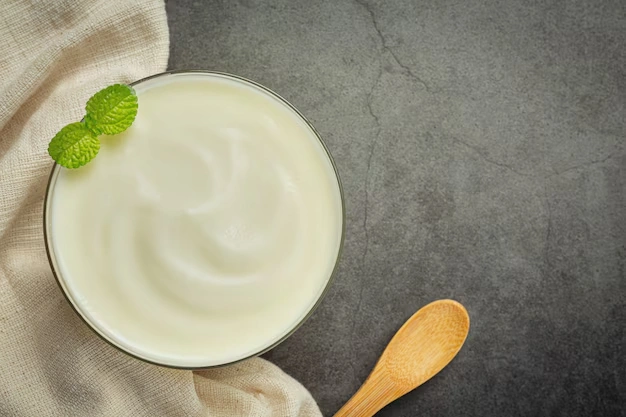

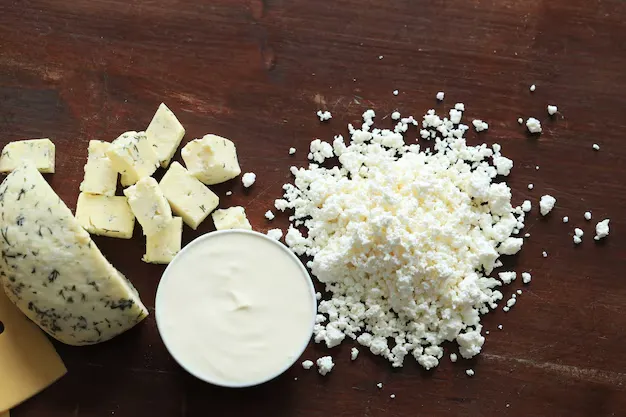
Basic Information
- Name: Cottage Cheese, Lowfat, 2% Milkfat
- Scientific Name: Not applicable, as cottage cheese is a dairy product, not a species of plant or animal.
- Category: Dairy product
Varieties
Cottage cheese is typically categorized based on its fat content. For low fat cottage cheese, the varieties include:
- 2% Milkfat: Indicates that the cottage cheese is made from milk that retains 2% fat, making it a low fat option.
- Other varieties: in the broader category of cottage cheese may include nonfat (0% milkfat) and regular (about 4% milkfat or more).
Nutritional Information
Macronutrients
- Carbohydrates: Low in carbohydrates, primarily present as lactose.
- Proteins: High in protein, making it a popular choice among athletes and those looking to increase their protein intake.
- Fats: Contains a reduced amount of fat due to the 2% milkfat content.
Micronutrients
- Vitamins: Good source of B-vitamins, including B12, riboflavin (B2), and pantothenic acid (B5).
- Minerals: Rich in calcium, phosphorus, and selenium. It also provides a decent amount of potassium.
Phytonutrients
Cottage cheese, including the low fat, 2% milkfat variety, is a dairy product that primarily provides nutritional value through its macronutrients (fats, proteins, carbohydrates) and micronutrients (vitamins and minerals), rather than phytonutrients. Phytonutrients are compounds found in plants that have various health benefits, such as antioxidant properties, and are not present in animal products like cheese. However, cottage cheese is a nutritious food that contributes to a healthy diet in several ways, despite the absence of phytonutrients.
Nutritional Profile of Lowfat Cottage Cheese
While low fat cottage cheese does not contain phytonutrients, it offers a range of important nutrients:
- Proteins: It is high in protein, which is essential for muscle repair, growth, and overall body maintenance.
- Fats: The 2% milkfat variety has reduced fat content, making it a lower-calorie option compared to full-fat varieties.
- Vitamins: Cottage cheese is a good source of B-vitamins, particularly Vitamin B12, riboflavin (B2), and pantothenic acid (B5), which are important for energy metabolism and overall health.
- Minerals: It provides calcium, essential for bone health, along with phosphorus, selenium, and potassium, supporting various bodily functions.
Health Considerations
- Lactose Content: As a dairy product, cottage cheese contains lactose, which some individuals may need to limit or avoid due to lactose intolerance.
- Sodium Content: Some brands of cottage cheese can be high in sodium, so it’s worth checking labels if sodium intake is a concern.
Although cottage cheese doesn’t contain phytonutrients, its nutritional profile makes it beneficial for those looking to increase their intake of high-quality protein and essential vitamins and minerals. Including low fat cottage cheese in a balanced diet can support health goals, such as muscle maintenance, bone health, and weight management. For individuals interested in the health benefits associated with phytonutrients, incorporating a variety of fruits, vegetables, whole grains, nuts, and seeds alongside dairy products like cottage cheese can provide a comprehensive array of nutrients beneficial for overall health.
Calorie Count
Low fat cottage cheese has a relatively low calorie count, making it a favorable option for weight management.
Glycemic Index
Cottage cheese has a low glycemic index (GI), making it suitable for those managing blood sugar levels.
Physical Characteristics
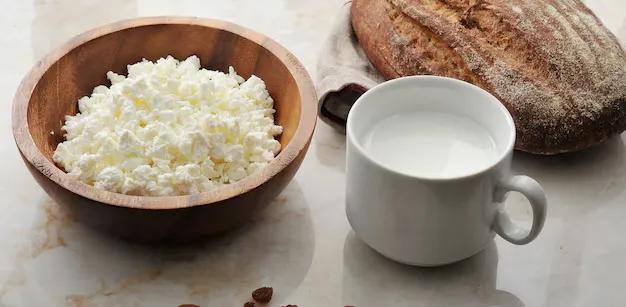
- Color: White.
- Shape: Cottage cheese does not have a distinct shape but is characterized by its curd structure.
- Size: The curds can vary in size, typically available in small or large curd varieties.
- Texture: Creamy with distinct curds, which can be either soft or slightly firm, depending on the processing.
Culinary Uses
- Common Dishes: Often eaten on its own or as a part of breakfast dishes, salads, and snacks. It’s also used in cooking for lasagnas, pancakes, and as a filling or topping.
- Preparation Methods: Can be consumed directly from the package, mixed with fruits, honey, or used as an ingredient in various recipes.
- Suitable Pairings: Pairs well with fresh fruits, like berries and peaches, as well as with nuts, honey, and granola. In savory dishes, it can complement herbs and spices, such as chives, dill, or paprika.
Geographical Information
- Origin: The origins of cottage cheese are believed to date back to ancient times, with no specific country of origin. It is a simple cheese that could have been discovered in several cultures.
- Primary Growing Regions: As a dairy product, cottage cheese is produced in countries with developed dairy industries, including the United States, Canada, and parts of Europe.
- Seasonal Availability: Available year-round.
Cottage cheese, especially the low fat 2% milkfat variety, is a versatile and nutritious dairy product, valued for its high protein content and low calorie count, making it a staple in many health-conscious diets.
| Proximates: | |
| Water | 81.1 g |
| Energy (Atwater General Factors) | 82 kcal |
| Energy (Atwater Specific Factors) | 84 kcal |
| Nitrogen | 1.73 g |
| Protein | 11 g |
| Total lipid (fat) | 2.3 g |
| Total fat (NLEA) | 1.87 g |
| Ash | 1.25 g |
| Carbohydrates: | |
| Carbohydrate, by difference | 4.31 g |
| Sugars, Total | 4.1 g |
| Sucrose | 0 g |
| Glucose | 0 g |
| Fructose | 0 g |
| Lactose | 3.98 g |
| Maltose | 0 g |
| Galactose | 0.12 g |
| Minerals: | |
| Calcium, Ca | 103 mg |
| Iron, Fe | 0.13 mg |
| Magnesium, Mg | 8.9 mg |
| Phosphorus, P | 148 mg |
| Potassium, K | 120 mg |
| Sodium, Na | 321 mg |
| Zinc, Zn | 0.61 mg |
| Copper, Cu | 0.03 mg |
| Manganese, Mn | 0.015 mg |
| Selenium, Se | 14.6 µg |
| Vitamins and Other Components: | |
| Thiamin | 0.02 mg |
| Riboflavin | 0.234 mg |
| Niacin | 0.09 mg |
| Pantothenic acid | 0.508 mg |
| Vitamin B-6 | 0.057 mg |
| Folate, total | 10 µg |
| Vitamin B-12 | 0.42 µg |
| Vitamin A, RAE | 69 µg |
| Retinol | 69 µg |
| Vitamin E (alpha-tocopherol) | 0.08 mg |
| Tocopherol, beta | 0 mg |
| Tocopherol, gamma | 0 mg |
| Tocopherol, delta | 0 mg |
| Tocotrienol, alpha | 0 mg |
| Tocotrienol, beta | 0 mg |
| Tocotrienol, gamma | 0 mg |
| Tocotrienol, delta | 0 mg |
| Lipids: | |
| Fatty acids, total saturated | 1.26 g |
| SFA 4:0 | 0.04 g |
| SFA 6:0 | 0.035 g |
| SFA 8:0 | 0.026 g |
| SFA 10:0 | 0.061 g |
| SFA 11:0 | 0 g |
| SFA 12:0 | 0.062 g |
| SFA 14:0 | 0.201 g |
| SFA 15:0 | 0.022 g |
| SFA 16:0 | 0.568 g |
| SFA 17:0 | 0.01 g |
| SFA 18:0 | 0.228 g |
| SFA 20:0 | 0.003 g |
| SFA 22:0 | 0.001 g |
| SFA 24:0 | 0 g |
| Fatty acids, total monounsaturated | 0.469 g |
| MUFA 14:1 c | 0.019 g |
| MUFA 15:1 | 0 g |
| MUFA 16:1 c | 0.024 g |
| MUFA 17:1 | 0.004 g |
| MUFA 17:1 c | 0.004 g |
| MUFA 18:1 c | 0.419 g |
| MUFA 20:1 | 0.003 g |
| MUFA 20:1 c | 0.003 g |
| MUFA 22:1 c | 0 g |
| MUFA 24:1 c | 0 g |
| Fatty acids, total polyunsaturated | 0.072 g |
| PUFA 18:2 c | 0.058 g |
| PUFA 18:2 n-6 c,c | 0.049 g |
| PUFA 18:2 CLAs | 0.009 g |
| PUFA 18:3 c | 0.007 g |
| PUFA 18:3 n-3 c,c,c (ALA) | 0.007 g |
| PUFA 18:3 n-6 c,c,c | 0 g |
| PUFA 18:3i | 0 g |
| PUFA 20:2 c | 0 g |
| PUFA 18:4 | 0 g |
| PUFA 20:2 n-6 c,c | 0 g |
| PUFA 20:3 c | 0.002 g |
| PUFA 20:3 n-3 | 0 g |
| PUFA 20:3 n-6 | 0.002 g |
| PUFA 20:3 n-9 | 0 g |
| PUFA 20:4 | 0.003 g |
| PUFA 20:4c | 0.003 g |
| PUFA 20:5c | 0.001 g |
| PUFA 20:5 n-3 (EPA) | 0.001 g |
| PUFA 22:2 | 0 g |
| PUFA 22:5 c | 0.001 g |
| PUFA 22:4 | 0 g |
| PUFA 22:5 n-3 (DPA) | 0.001 g |
| PUFA 22:6 c | 0 g |
| PUFA 22:6 n-3 (DHA) | 0 g |
| Fatty acids, total trans | 0.069 g |
| Fatty acids, total trans-monoenoic | 0.056 g |
| TFA 16:1 t | 0.005 g |
| TFA 18:1 t | 0.051 g |
| TFA 22:1 t | 0 g |
| Fatty acids, total trans-dienoic | 0.013 g |
| TFA 18:2 t not further defined | 0.013 g |
| Cholesterol | 12 mg |