

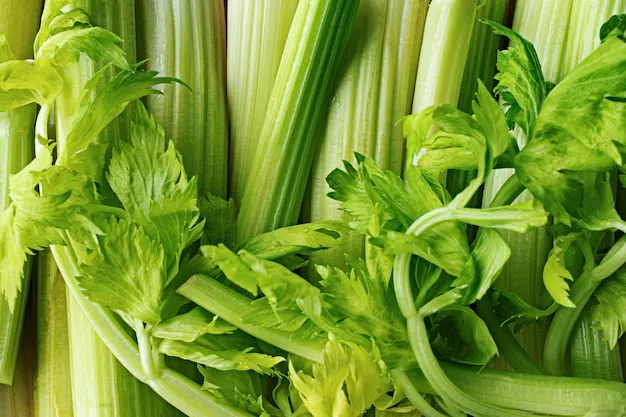
Basic Information
- Name: Celery (Common Name), Apium graveolens (Scientific Name)
- Category: Vegetable
Varieties
Celery is primarily grown for its stalks, but the leaves and seeds are also used in cooking. The most common variety found in grocery stores is Pascal celery. Other varieties might differ slightly in color, size, and taste but generally share similar characteristics.
Nutritional Information
Macronutrients
- Carbohydrates: Celery is low in carbohydrates, consisting mostly of fiber, which is beneficial for digestive health.
- Proteins: It contains a small amount of protein.
- Fats: Celery has negligible fat content.
Micronutrients
- Vitamins: It is a good source of Vitamin K and also contains some Vitamin A, folate, and Vitamin C.
- Minerals: Provides minerals like potassium and smaller amounts of sodium, calcium, and magnesium.
Phytonutrients
Raw celery is not only a low-calorie, hydrating vegetable but also a rich source of various phytonutrients that contribute to its health benefits, including antioxidant and anti-inflammatory effects. Here’s an overview of the key phytonutrients present in raw celery:
Flavonoids
- Apigenin: This compound is known for its anti-inflammatory, antioxidant, and potential anti-cancer properties. It’s one of the most researched flavonoids in celery.
- Luteolin: Another flavonoid that possesses antioxidant, anti-inflammatory, and anti-cancer benefits. Luteolin may help improve health by reducing oxidative stress and inflammation.
Phenolic Acids
- Caffeic Acid: Acts as an antioxidant, helping to neutralize harmful free radicals in the body.
- Ferulic Acid: Similar to caffeic acid, ferulic acid has antioxidant properties that protect cells from oxidative damage.
Coumarins
- Coumarins: These compounds have been shown to have potential blood-thinning effects, which can improve vascular health. They also have anti-fungal properties and may support skin health.
Phthalides
- Phthalides (such as sedanolide and butylphthalide): These compounds are responsible for celery’s distinctive smell and taste. They have been shown to help lower blood pressure by relaxing the blood vessels, improving blood flow, and potentially reducing stress hormones in the body.
Beta-Carotene
- Beta-Carotene: Although not as abundant in celery as in carrots, beta-carotene is a precursor to vitamin A, an essential nutrient for vision, immune function, and skin health.
Vitamin C
- Vitamin C: While technically a vitamin, it acts as a powerful antioxidant in the body, supporting immune health and aiding in the repair of tissues.
Dietary Fiber
- Dietary Fiber: Although not a phytonutrient, the fiber in celery supports digestive health and may help in maintaining a healthy weight by promoting feelings of fullness.
Minerals
- Potassium and Sodium: These essential minerals are involved in fluid balance and heart health. Celery, notably, has a balanced sodium-potassium ratio, which is beneficial for blood pressure control.
Water Content
- High Water Content: While not a phytonutrient, celery’s high water content contributes to hydration, which is vital for overall health.
The combination of these phytonutrients in celery contributes to its health-promoting properties, including anti-inflammatory and antioxidant effects, support for cardiovascular health, and potential protective effects against certain forms of cancer. Including raw celery in your diet can provide these benefits along with hydration and essential nutrients.
Calorie Count
Celery is very low in calories, making it a popular choice for weight loss diets and low-calorie eating plans.
Glycemic Index
Celery has a low glycemic index (GI), which makes it suitable for maintaining stable blood sugar levels.
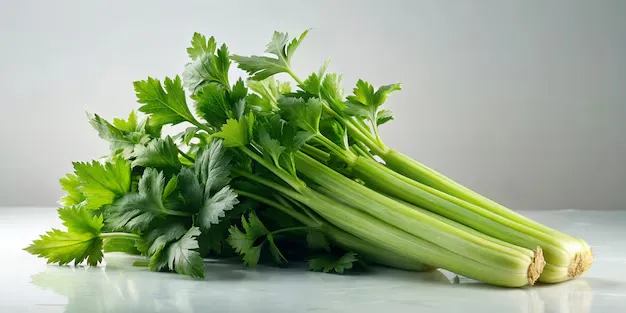
Physical Characteristics
- Color: Generally pale to bright green.
- Shape: Long, fibrous stalks with leaves at the top.
- Size: Stalks can grow up to 16 inches long, but commercial stalks are usually harvested before they reach their maximum size.
- Texture: Crisp and crunchy.
Culinary Uses
- Common Dishes: Celery is used in a variety of dishes, including salads, soups, and stews. It’s one of the three primary vegetables in the classic “mirepoix” used as a base for many sauces and soups, along with onions and carrots.
- Preparation Methods: Can be eaten raw, juiced, or cooked. It’s often used as a flavor enhancer in cooked dishes or as a crunchy, low-calorie snack.
- Suitable Pairings: Works well with a variety of foods, including peanut butter, cream cheese, and in combination with other vegetables. It pairs well with herbs like parsley and dill.
Geographical Information
- Origin: Celery originates from the Mediterranean region and parts of the Middle East.
- Primary Growing Regions: Today, it is cultivated globally, with significant production in the United States, Mexico, and parts of Europe.
- Seasonal Availability: Celery is available year-round, although it is typically in season in the fall.
Celery is valued both for its culinary versatility and its health benefits, including hydration due to its high water content, and potential anti-inflammatory and antioxidant properties. Its distinct, crisp texture and unique flavor profile make it a staple in many kitchens around the world.
| proximates: | |
| Water | 95.2 g |
| Energy (Atwater General Factors) | 17 kcal |
| Energy (Atwater Specific Factors) | 15 kcal |
| Nitrogen | 0.08 g |
| Protein | 0.49 g |
| Total lipid (fat) | 0.16 g |
| Ash | 0.83 g |
| Carbohydrates: | |
| Carbohydrate, by difference | 3.32 g |
| Minerals: | |
| Calcium, Ca | 46 mg |
| Iron, Fe | <0.25 mg |
| Magnesium, Mg | 10.9 mg |
| Phosphorus, P | 22 mg |
| Potassium, K | 265 mg |
| Sodium, Na | 97 mg |
| Zinc, Zn | 0.09 mg |
| Copper, Cu | <0.025 mg |
| Manganese, Mn | 0.076 mg |
| Selenium, Se | <2.5 µg |
| Molybdenum, Mo | <2.5 µg |
| Vitamins and Other Components: | |
| Vitamin B-6 | 0.052 mg |