
Basic Information
- Name: Carrots (Common Name), Daucus carota (Scientific Name)
- Category: Vegetable
Varieties
Frozen carrots typically don’t come in named varieties in the consumer market. They are usually prepared from common carrot types suitable for freezing, ensuring they retain their taste, texture, and nutritional value when thawed.
Nutritional Information
Macronutrients:
- Carbohydrates: Frozen carrots are a good source of carbs, primarily in the form of sugars and dietary fiber.
- Proteins: They contain small amounts of protein.
- Fats: Carrots have negligible fat content.
Micronutrients:
- Vitamins: Rich in Vitamin A (from beta-carotene), and they also provide some vitamins C and K.
- Minerals: They offer a variety of minerals, including potassium.
Phytonutrients:
Carrots, particularly frozen, unprepared ones, retain many of the phytonutrients found in fresh carrots, although the levels can vary slightly due to the blanching process before freezing. These phytonutrients include a range of compounds that contribute to their health benefits, antioxidant properties, and vibrant colors. Here’s a breakdown of the key phytonutrients present in carrots:
Beta-Carotene
- Primary Phytonutrient: Carrots are well-known for their high beta-carotene content, which the body converts into vitamin A. This compound is responsible for their orange color and is essential for eye health, immune function, and skin health.
Alpha-Carotene
- Secondary Carotenoid: Similar to beta-carotene, alpha-carotene is also converted into vitamin A in the body, albeit less efficiently. It contributes to the antioxidant effects and supports overall health.
Lutein
- Eye Health: Although lutein is more commonly associated with leafy greens, carrots also contain this phytonutrient, which is important for eye health, particularly in reducing the risk of macular degeneration and cataracts.
Lycopene
- In Red and Purple Carrots: Lycopene is a phytonutrient found in red and purple varieties of carrots and has been linked to a reduced risk of certain types of cancer and heart disease.
Polyacetylenes
- Faluin and Falcarinol: These compounds have shown anticancer properties in laboratory studies, suggesting that they may help protect against certain types of cancer.
Anthocyanins
- In Purple Carrots: Purple carrots are rich in anthocyanins, potent antioxidants that provide anti-inflammatory benefits and support heart health.
Vitamins and Minerals
While not phytonutrients, it’s worth noting that carrots are also a good source of several vitamins and minerals, including vitamin C, vitamin K, potassium, and manganese, which support overall health.
Dietary Fiber
- Prebiotic Effects: Carrots contain dietary fiber, which supports digestive health by helping to maintain a healthy gut microbiome.
Antioxidant Effects
The combination of these phytonutrients in carrots contributes to their overall antioxidant capacity, which can help reduce oxidative stress and inflammation in the body, lowering the risk of chronic diseases.
Frozen, unprepared carrots are a convenient way to incorporate these beneficial compounds into your diet, with the freezing process preserving most of the phytonutrients effectively. However, some water-soluble nutrients and phytonutrients may be slightly reduced during blanching before freezing, but frozen carrots remain a nutritious and healthful choice.
Calorie Count
Frozen, unprepared carrots typically have low calories, making them a healthy addition to any diet.
Glycemic Index
Carrots have a moderate glycemic index, but freezing can affect their GI slightly due to changes in the starch structure.
Physical Characteristics
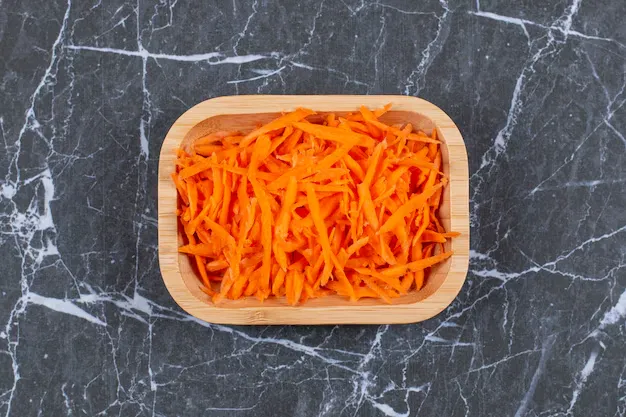
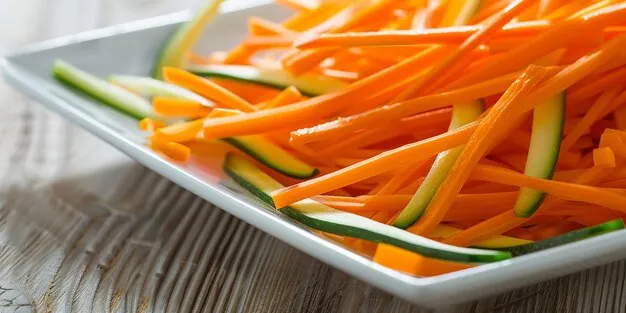
- Color: Orange, although carrot varieties can range from purple and red to white and yellow.
- Shape: Typically cylindrical, tapering to a rounded or pointed tip.
- Size: Varies, but frozen carrots are often cut into uniform sizes for even cooking.
- Texture: Frozen, unprepared carrots are firm but become tender once cooked.
Culinary Uses
- Common Dishes: Frozen carrots are versatile and can be used in a wide range of dishes, including stews, soups, stir-fries, and mixed vegetable sides.
- Preparation Methods: They can be boiled, steamed, microwaved, or added directly to dishes as they cook.
- Suitable Pairings: Pairs well with peas, potatoes, and other root vegetables, as well as with herbs like dill, parsley, and thyme.
Geographical Information
- Origin: Carrots are believed to have originated in Persia and were initially cultivated for their leaves and seeds.
- Primary Growing Regions: Today, carrots are grown worldwide, with China, the United States, and Russia among the top producers.
- Seasonal Availability: While fresh carrots have a season, frozen carrots are available year-round, offering a convenient way to enjoy this vegetable out of season.
Frozen carrots are a convenient, nutritious, and versatile vegetable that maintains much of the nutritional value and taste of fresh carrots. They provide an easy way to add vegetables to meals without the prep time required for fresh produce.
| proximates: | |
| Water | 90.1 g |
| Energy (Atwater General Factors) | 39 kcal |
| Energy (Atwater Specific Factors) | 37 kcal |
| Nitrogen | 0.13 g |
| Protein | 0.81 g |
| Total lipid (fat) | 0.47 g |
| Total fat (NLEA) | 0.33 g |
| Ash | 0.72 g |
| Carbohydrates: | |
| Carbohydrate, by difference | 7.92 g |
| Carbohydrate, by summation | 7.79 g |
| Fiber, total dietary | 3.2 g |
| Fiber, soluble | 1.4 g |
| Fiber, insoluble | 1.9 g |
| Sugars, Total | 4.2 g |
| Sucrose | 2.31 g |
| Glucose | 0.84 g |
| Fructose | 1.05 g |
| Lactose | 0 g |
| Maltose | 0 g |
| Galactose | 0 g |
| Starch | 0.38 g |
| Minerals: | |
| Calcium, Ca | 33 mg |
| Iron, Fe | 0.43 mg |
| Magnesium, Mg | 10.8 mg |
| Phosphorus, P | 31 mg |
| Potassium, K | 210 mg |
| Sodium, Na | 66 mg |
| Zinc, Zn | 0.28 mg |
| Copper, Cu | 0.08 mg |
| Manganese, Mn | 0.143 mg |
| Vitamins and Other Components: | |
| Vitamin C, total ascorbic acid | 2.2 mg |
| Thiamin | 0.039 mg |
| Riboflavin | 0.047 mg |
| Niacin | 0.465 mg |
| Pantothenic acid | 0.196 mg |
| Vitamin B-6 | 0.088 mg |
| Folate, total | 7 µg |
| Vitamin E (alpha-tocopherol) | 0.69 mg |
| Tocopherol, beta | 0.01 mg |
| Tocopherol, gamma | 0.01 mg |
| Tocopherol, delta | 0 mg |
| Tocotrienol, alpha | 0 mg |
| Tocotrienol, beta | 0 mg |
| Tocotrienol, gamma | 0 mg |
| Tocotrienol, delta | 0 mg |
| Vitamin K (phylloquinone) | 15 µg |
| Vitamin K (Dihydrophylloquinone) | 0 µg |
| Lipids: | |
| Fatty acids, total saturated | 0 g |
| SFA 4:0 | 0 g |
| SFA 6:0 | 0 g |
| SFA 8:0 | 0 g |
| SFA 10:0 | 0 g |
| SFA 12:0 | 0 g |
| SFA 14:0 | 0 g |
| SFA 15:0 | 0 g |
| SFA 16:0 | 0 g |
| SFA 17:0 | 0 g |
| SFA 18:0 | 0 g |
| SFA 20:0 | 0 g |
| SFA 22:0 | 0 g |
| SFA 24:0 | 0 g |
| Fatty acids, total monounsaturated | 0 g |
| MUFA 14:1 c | 0 g |
| MUFA 16:1 c | 0 g |
| MUFA 18:1 | 0 g |
| MUFA 18:1 c | 0 g |
| MUFA 20:1 | 0 g |
| MUFA 20:1 c | 0 g |
| MUFA 22:1 | 0 g |
| MUFA 22:1 c | 0 g |
| Fatty acids, total polyunsaturated | 0.163 g |
| PUFA 18:2 | 0.163 g |
| PUFA 18:2 c | 0.163 g |
| PUFA 18:3 | 0 g |
| PUFA 18:3 c | 0 g |
| PUFA 18:4 | 0 g |
| PUFA 20:4 | 0 g |
| PUFA 20:4c | 0 g |
| PUFA 20:5c | 0 g |
| PUFA 20:5 n-3 (EPA | 0 g |
| PUFA 22:5 c | 0 g |
| PUFA 22:5 n-3 (DPA) | 0 g |
| PUFA 22:6 c | 0 g |
| PUFA 22:6 n-3 (DHA) | 0 g |
| Amino acids: | |
| Tryptophan | 0.007 g |
| Threonine | 0.127 g |
| Isoleucine | 0.052 g |
| Leucine | 0.066 g |
| Lysine | 0.075 g |
| Methionine | 0.015 g |
| Cystine | 0.048 g |
| Phenylalanine | 0.042 g |
| Tyrosine | 0.031 g |
| Valine | 0.047 g |
| Arginine | 0.06 g |
| Histidine | 0.03 g |
| Alanine | 0.075 g |
| Aspartic acid | 0.112 g |
| Glutamic acid | 0.196 g |
| Glycine | 0.031 g |
| Proline | 0.034 g |
| Serine | 0.033 g |