
Basic Information
- Common Name: Red Cabbage
- Scientific Name: Brassica oleracea var. capitata f. rubra
- Category: Vegetable
Varieties
Red cabbage is a type of cabbage, primarily known for its vibrant color, which varies from dark red to purple. While there may not be as many named varieties of red cabbage as there are of green cabbage, some popular varieties include ‘Red Drumhead’, ‘Red Danish’, and ‘Ruby Ball’.
Nutritional Information
Macronutrients
- Carbohydrates: Red cabbage is low in carbohydrates, with about 6.79 grams per 100 grams.
- Proteins: It contains about 1.24 grams of protein per 100 grams.
- Fats: Red cabbage is very low in fat, with just 0.21 grams per 100 grams.
Micronutrients
Red cabbage is rich in vitamins and minerals, including:
- Vitamins: Vitamin C (a powerful antioxidant), Vitamin K (important for blood clotting), and B vitamins (such as folate).
- Minerals: It contains minerals like potassium, which is vital for heart health, and smaller amounts of calcium, magnesium, and iron.
Phytonutrients:
Red cabbage is a powerhouse of phytonutrients, compounds that are known for their health-promoting properties and are found in plant-based foods. These phytonutrients include a variety of antioxidants, flavonoids, anthocyanins, and glucosinolates, each contributing to red cabbage’s health benefits and vibrant color. Here’s a detailed overview of the key phytonutrients present in raw red cabbage:
Antioxidants
- Vitamin C: Acts as a powerful antioxidant, protecting cells from damage caused by free radicals.
- Vitamin A: Red cabbage contains beta-carotene, which the body converts into vitamin A. It’s essential for good vision, skin health, and immune function.
Flavonoids
- Quercetin: Known for its anti-inflammatory and antioxidant properties, quercetin can help reduce the risk of certain diseases.
- Kaempferol: This flavonoid may offer protective effects against heart disease, cancer, and other conditions.
Anthocyanins
Red cabbage is particularly rich in anthocyanins, a type of flavonoid pigment that gives the cabbage its characteristic red-purple color. Anthocyanins are linked to numerous health benefits, including:
- Cardiovascular health: May help improve heart health by reducing blood pressure and inflammation.
- Cognitive function: Linked to improved cognitive functions and protection against neurological diseases.
- Cancer prevention: Potential to reduce cancer risk by preventing the formation of cancerous cells and inhibiting tumor growth.
Glucosinolates
- Glucoraphanin: Converts into sulforaphane, a compound noted for its cancer-protective effects.
- Sinigrin: May have anti-cancer, anti-inflammatory, and antibacterial properties.
Other Phytonutrients
- Lutein and Zeaxanthin: These carotenoids are known for their role in eye health, particularly in protecting against age-related macular degeneration.
- Indole-3-carbinol: A compound that may have anti-estrogen properties and could help protect against certain types of cancer, such as breast cancer.
The combination of these phytonutrients in red cabbage contributes to its array of health benefits, including anti-inflammatory and anti-cancer properties, improved heart and gut health, and enhanced immune function. Consuming red cabbage as part of a varied diet can help leverage these benefits due to its rich nutritional profile.
Calorie Count and Glycemic Index
- Calories: It is low in calories, providing only about 34 calories per 100 grams.
- Glycemic Index: Red cabbage has a low glycemic index, which means it has a minimal impact on blood sugar levels.
Physical Characteristics
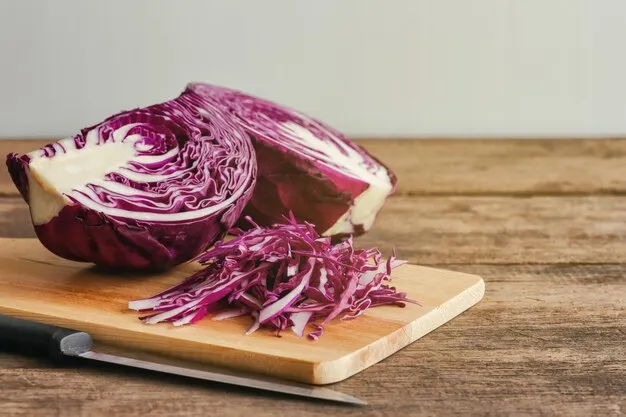
- Color: The leaves are typically dark red to purple.
- Shape: Red cabbage forms a round, compact head.
- Size: The heads can weigh anywhere from 1 to 3 kilograms (2 to 6 pounds).
- Texture: The leaves are crisp and dense, with a slightly tougher texture than green cabbage.
Culinary Uses
Red cabbage is versatile in the kitchen. It can be:
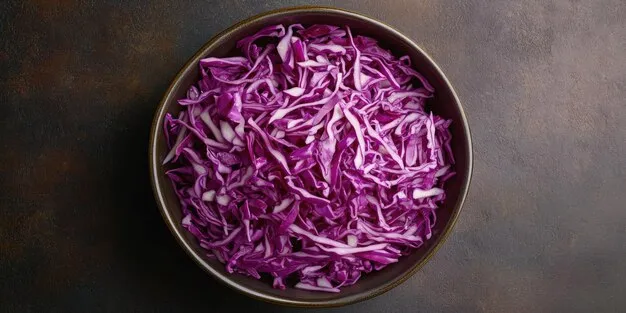
- Common Dishes: Used in salads, slaws, stir-fries, and as a garnish. It’s also a key ingredient in traditional dishes like German red cabbage (Rotkohl) and is often pickled.
- Preparation Methods: It can be eaten raw, steamed, boiled, sautéed, or fermented.
- Suitable Pairings: Red cabbage pairs well with apples, vinegar, spices (such as caraway seeds), pork, and beef.
Geographical Information
- Origin: Red cabbage is believed to have originated in Europe and has been cultivated since ancient times.
- Primary Growing Regions: It is now grown in many parts of the world, including Europe, the Americas, and Asia.
- Seasonal Availability: Red cabbage is available year-round, but its peak season is late fall through early spring.
Red cabbage is a nutritious and colorful addition to a variety of dishes, offering both aesthetic appeal and health benefits. Its ability to withstand cold temperatures makes it a valuable crop in regions with cooler climates.
| proximates: | |
| Water | 91.1 g |
| Energy (Atwater General Factors) | 34 kcal |
| Energy (Atwater Specific Factors) | 30 kcal |
| Nitrogen | 0.2 g |
| Protein | 1.24 g |
| Total lipid (fat) | 0.21 g |
| Ash | 0.61 g |
| Carbohydrates: | |
| Carbohydrate, by difference | 6.79 g |
| Minerals: | |
| Calcium, Ca | 31 mg |
| Iron, Fe | 0.25 mg |
| Magnesium, Mg | 13.3 mg |
| Phosphorus, P | 36 mg |
| Potassium, K | 269 mg |
| Sodium, Na | 12 mg |
| Zinc, Zn | 0.24 mg |
| Copper, Cu | 0.004 mg |
| Manganese, Mn | 0.309 mg |
| Molybdenum, Mo | 6 µg |
| Vitamins and Other Components: | |
| Vitamin C, total ascorbic acid | 53.9 mg |
| Vitamin B-6 | 0.179 mg |
| Vitamin K (phylloquinone) | 32.3 µg |
| Vitamin K (Dihydrophylloquinone) | 0.1 µg |
| Vitamin K (Menaquinone-4) | 0.1 µg |