
Basic Information
- Common Name: T-Bone Steak
- Scientific Name: Bos taurus
- Category: Meat (Red Meat)
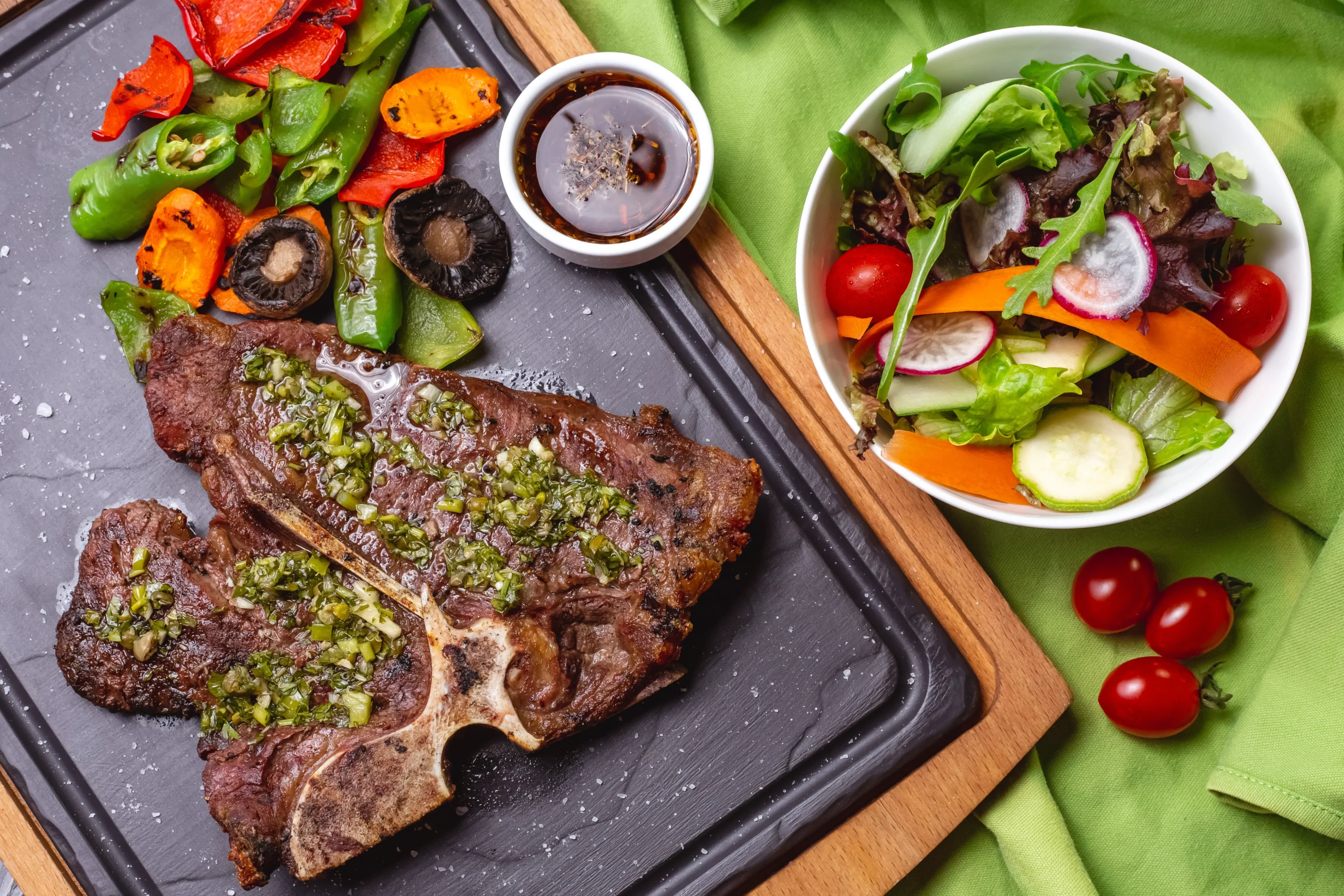
- Varieties: The “choice” grade refers to a USDA classification that signifies a high quality of beef with a moderate level of marbling. The T-bone steak is known for its T-shaped bone that separates two kinds of steak: the strip (or strip loin) on one side and the tenderloin on the other.
Nutritional Information
- Macronutrients: T-bone steak, especially when trimmed to 1/8″ fat and cooked, is high in protein and contains a moderate amount of fat, with virtually no carbohydrates. A typical serving (3 ounces or approximately 85 grams, cooked, grilled) includes:
- Proteins: About 27.3 grams
- Fats: Approximately 10-11 grams
- Carbohydrates: 0 grams
- Micronutrients: A rich source of B vitamins, particularly vitamin B12 and niacin, as well as minerals such as iron, zinc, and selenium.
Phytonutrients
Beef, including T-bone steak from the short loin, bone-in, separable lean only, trimmed to 1/8″ fat, choice, cooked, grilled, does not contain phytonutrients. Phytonutrients are natural compounds found in plant foods and are associated with various health benefits, including antioxidant and anti-inflammatory effects. These compounds are not present in animal products such as beef. However, beef is a significant source of nutrients and bioactive compounds beneficial for health. Here’s an overview of the key nutrients found in cooked T-bone steak:
1. Proteins and Amino Acids
- Beef is an excellent source of high-quality protein, providing all essential amino acids needed for muscle repair, growth, and maintenance.
2. Fats
- Contains both saturated and unsaturated fats, important for various bodily functions. Cooking and trimming practices affect the final fat content.
3. Vitamins
- B Vitamins: Particularly rich in vitamin B12, essential for red blood cell formation and neurological function. It also provides niacin (B3), vitamin B6, and riboflavin (B2), supporting energy metabolism and overall health.
- Fat-Soluble Vitamins: Depending on the feed and upbringing of the cattle, beef may contain small amounts of vitamins D and E.
4. Minerals
- Iron: Provides heme iron, which is more easily absorbed by the body than non-heme iron from plant sources, crucial for oxygen transport and preventing anemia.
- Zinc: Important for immune function, wound healing, and DNA synthesis.
- Selenium: Plays a role in antioxidant defense mechanisms and thyroid function.
5. Bioactive Compounds
- Creatine: Supports muscle function and energy production, beneficial for physical performance.
- Carnosine: Acts as an antioxidant, potentially protecting against aging and oxidative stress.
Although T-bone steak does not offer phytonutrients, its rich content of proteins, vitamins, minerals, and other bioactive compounds contributes to a nutritious diet. Including lean cuts of beef like T-bone steak in moderation, as part of a varied diet, can help meet dietary needs for essential nutrients while supporting overall health and well-being.
- Calorie Count: Roughly 180-220 calories per serving.
- Glycemic Index: Not applicable, as it contains no carbohydrates.
Physical Characteristics
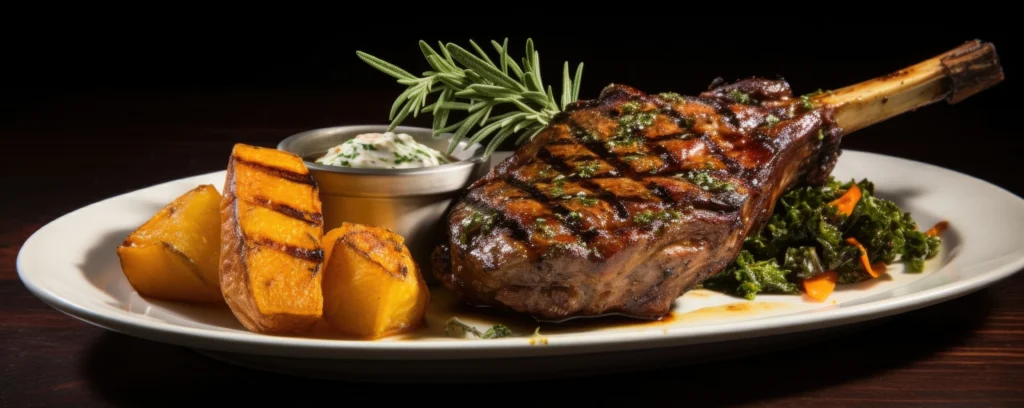
- Color: Cooked T-bone steak has a browned exterior with a pink to red interior, depending on the desired doneness.
- Shape: Characterized by its iconic T-shaped bone with meat on both sides.
- Size: The size can vary, but T-bone steaks are typically large, with a thickness of about 1 to 2 inches.
- Texture: Offers a combination of textures, with the tenderloin side being more tender and the strip side offering a bit more chew.
Culinary Uses
T-bone steak is celebrated for its flavor and versatility:
- Common Dishes: Primarily enjoyed grilled or broiled to highlight its rich flavor.
- Preparation Methods: Best cooked over high heat to achieve a seared exterior while keeping the inside juicy. The cooking time varies based on the desired level of doneness.
- Suitable Pairings: Pairs well with classic steak sides like baked potatoes, steamed vegetables, or a simple salad. Complements sauces such as béarnaise or a red wine reduction.
Geographical Information
- Origin: Domestic cattle have been a cornerstone of agriculture for thousands of years, with historical domestication occurring in regions that are now part of Europe, Asia, and Africa.
- Primary Growing Regions: Beef is produced worldwide, with leading producers including the United States, Brazil, the European Union, and China.
- Seasonal Availability: Available year-round, thanks to modern agricultural and livestock management practices.
T-bone steak, particularly when selected for its lean quality and grilled to perfection, offers a luxurious dining experience. It provides a high-quality source of protein and essential nutrients, making it a valuable part of a balanced diet when consumed in moderation. The unique combination of textures and flavors from the strip and tenderloin sides makes the T-bone steak a favorite among meat lovers.
| Proximates: | |
| Water | 60.3 g |
| Energy (Atwater General Factors) | 212 kcal |
| Energy (Atwater Specific Factors) | 219 kcal |
| Protein | 27.3 g |
| Total lipid (fat) | 11.4 g |
| Total fat (NLEA) | 10.5 g |
| Ash | 1.02 g |
| Carbohydrates: | |
| Carbohydrate, by difference | 0 g |
| Minerals: | |
| Calcium, Ca | 19 mg |
| Iron, Fe | 3.53 mg |
| Magnesium, Mg | 20 mg |
| Phosphorus, P | 211 mg |
| Potassium, K | 283 mg |
| Sodium, Na | 67 mg |
| Zinc, Zn | 4.69 mg |
| Copper, Cu | 0.078 mg |
| Manganese, Mn | 0.003 mg |
| Selenium, Se | 29.7 µg |
| Vitamins and Other Components: | |
| Riboflavin | 0.27 mg |
| Niacin | 6.37 mg |
| Vitamin B-6 | 0.753 mg |
| Vitamin B-12 | 1.88 µg |
| Lipids: | |
| Fatty acids, total saturated | 4.68 g |
| SFA 10:0 | 0.011 g |
| SFA 12:0 | 0.01 g |
| SFA 14:0 | 0.304 g |
| SFA 15:0 | 0.049 g |
| SFA 16:0 | 2.66 g |
| SFA 17:0 | 0.125 g |
| SFA 18:0 | 1.52 g |
| SFA 20:0 | 0.006 g |
| SFA 24:0 | 0.004 g |
| Fatty acids, total monounsaturated | 4.67 g |
| MUFA 14:1 c | 0.066 g |
| MUFA 16:1 c | 0.347 g |
| MUFA 17:1 | 0.089 g |
| MUFA 17:1 c | 0.089 g |
| MUFA 18:1 c | 4.15 g |
| MUFA 20:1 | 0.021 g |
| MUFA 20:1 c | 0.021 g |
| Fatty acids, total polyunsaturated | 0.514 g |
| PUFA 18:2 c | 0.407 g |
| PUFA 18:2 n-6 c,c | 0.367 g |
| PUFA 18:2 CLAs | 0.04 g |
| PUFA 18:3 c | 0.021 g |
| PUFA 18:3 n-3 c,c,c (ALA) | 0.021 g |
| PUFA 20:2 c | 0.002 g |
| PUFA 20:2 n-6 c,c | 0.002 g |
| PUFA 20:3 c | 0.018 g |
| PUFA 20:3 n-6 | 0.018 g |
| PUFA 20:4 | 0.051 g |
| PUFA 20:4c | 0.051 g |
| PUFA 20:5c | 0.002 g |
| PUFA 20:5 n-3 (EPA) | 0.002 g |
| PUFA 22:5 c | 0.013 g |
| PUFA 22:5 n-3 (DPA) | 0.013 g |
| PUFA 22:6 c | 0 g |
| PUFA 22:6 n-3 (DHA) | 0 g |
| Fatty acids, total trans | 0.594 g |
| Fatty acids, total trans-monoenoic | 0.533 g |
| TFA 16:1 t | 0.031 g |
| TFA 18:1 t | 0.502 g |
| Fatty acids, total trans-dienoic | 0.06 g |
| TFA 18:2 t not further defined | 0.06 g |
| Cholesterol | 80 mg |