

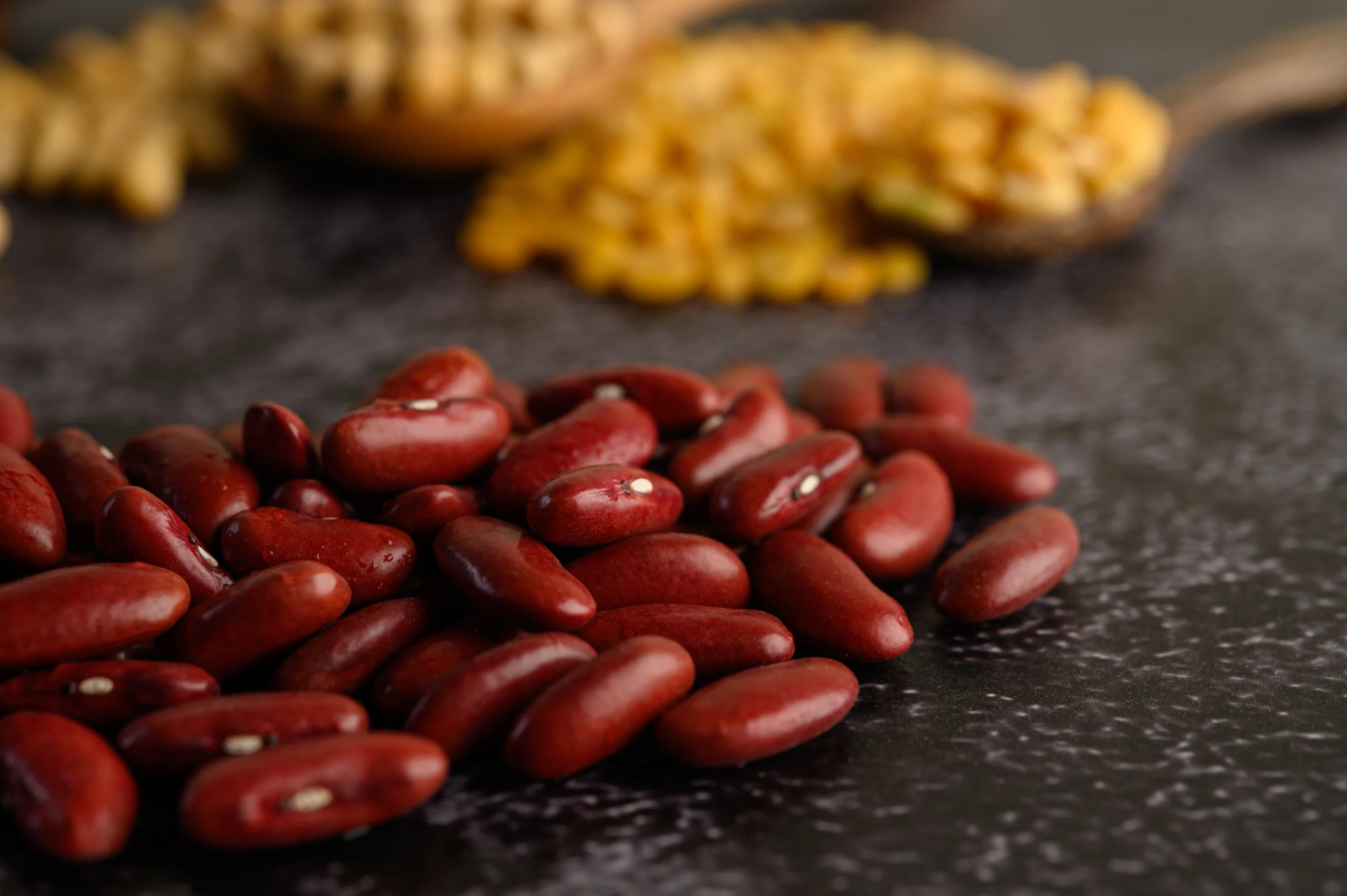
Basic Information
- Common Name: Dark Red Kidney Beans
- Scientific Name: Phaseolus vulgaris
- Category: Legume
Varieties
Dark Red Kidney Beans are a specific variety of the common bean. They are named for their close resemblance in shape and color to a kidney. While there are no further varieties specifically within the “dark red, canned, sodium and sugar added” category, kidney beans themselves come in a range of colors and sizes, including light red and white.
Nutritional Information
- Macronutrients: Kidney beans are high in carbohydrates, including a significant amount of fiber, and are a good source of protein. They have a low-fat content. The addition of sodium and sugar in canned beans can affect their nutritional profile. A typical serving (1 cup, approximately 165 grams, canned, drained, and rinsed) contains:
- Carbohydrates: About 21 grams, with added sugar-altering the total carb content.
- Proteins: About 7.8 grams
- Fats: Less than 1.26 gram
- Micronutrients: Rich in fiber, iron, potassium, magnesium, and several B vitamins, including folate.
Phytonutrients
Dark Red Kidney Beans, like other legumes, are rich in a variety of phytonutrients, compounds that contribute to their health benefits. The canning process, as well as the addition of sodium and sugar, may affect the levels of some phytonutrients, but these beans still offer a valuable source of these beneficial compounds. Here’s an overview of the key phytonutrients found in dark red kidney beans:
1. Anthocyanins
- Type: A type of flavonoid pigment that gives dark red kidney beans their deep color.
- Benefits: Antioxidant properties that can protect cells from damage and may reduce the risk of chronic diseases such as heart disease and cancer.
2. Fiber
- Type: Both soluble and insoluble fiber are present.
- Benefits: Supports digestive health, helps to regulate blood sugar levels, and can reduce cholesterol levels.
3. Saponins
- Type: Natural glycosides with a soap-like foaming characteristic.
- Benefits: May lower cholesterol, boost immune function, and possess anti-cancer properties.
4. Phytic Acid (Phytates)
- Type: Found in beans and other seeds, it’s a storage form of phosphorus.
- Benefits: Acts as an antioxidant, though it can bind minerals and reduce their absorption. The impact is lessened by the body’s ability to adapt to phytate levels over time and through cooking processes.
5. Lectins
- Type: Proteins that can bind to cell membranes.
- Benefits: In raw or improperly cooked beans, lectins can be harmful. However, the canning process includes high-heat treatment that deactivates lectins, making canned beans safe to eat and potentially beneficial for cell growth and repair.
6. Resistant Starch
- Type: A form of carbohydrate that resists digestion, acting similarly to fiber.
- Benefits: Feeds beneficial gut bacteria, improves gut health, and aids in blood sugar management.
7. Polyphenols
- Type: Including flavonoids and tannins beyond anthocyanins.
- Benefits: Offer antioxidant and anti-inflammatory effects, which can protect against chronic diseases and support overall health.
Despite the addition of sodium and sugar, the draining and rinsing process can help reduce these additives’ impact, making dark red kidney beans a nutritious component of the diet. These phytonutrients contribute to the health-promoting properties of dark red kidney beans, including their potential to protect against heart disease, support healthy digestion, and possibly lower the risk of certain cancers. Incorporating these beans into a balanced diet can provide these benefits while adding variety and flavor to meals.
- Calorie Count: Roughly 200-220 calories per cup, with added sugars contributing to the calorie count.
- Glycemic Index: Medium, generally between 40 to 52, but the addition of sugar may affect this.

Physical Characteristics
- Color: Dark red
- Shape: Kidney-shaped, with a curved edge
- Size: About 1/2 to 3/4 inch long
- Texture: Firm yet tender when cooked, with a creamy interior.
Culinary Uses
Dark Red Kidney Beans are versatile in culinary uses, including:
- Common Dishes: Chili, soups, salads, and rice dishes.
- Preparation Methods: Can be used directly from the can, though draining and rinsing are recommended to remove excess sodium and sugar.
- Suitable Pairings: Works well with bold flavors like cumin, chili powder, and tomatoes. They are also excellent in dishes paired with rice, other beans, and vegetables.
Geographical Information
- Origin: Originated in Central America and South America.
- Primary Growing Regions: Widely cultivated worldwide, with significant production in India, the United States, and China.
- Seasonal Availability: As a canned product, they are available year-round. Fresh or dried kidney beans are harvested in late summer to fall.
Dark Red Kidney Beans, especially when canned with added sodium and sugar, provide convenience for quick meal preparation. Despite the added ingredients, they remain a nutritious food choice, contributing to a balanced diet when consumed in moderation and as part of a varied diet.
| Proximates: | |
| Water | 68.8 g |
| Energy (Atwater General Factors) | 127 kcal |
| Energy (Atwater Specific Factors) | 123 kcal |
| Nitrogen | 1.25 g |
| Protein | 7.8 g |
| Total lipid (fat) | 1.26 g |
| Ash | 1.09 g |
| Carbohydrates: | |
| Carbohydrate, by difference | 21 g |
| Total dietary fiber (AOAC 2011.25) | 7.01 g |
| Starch | 12.2 g |
| Minerals: | |
| Calcium, Ca | 57 mg |
| Iron, Fe | 1.44 mg |
| Magnesium, Mg | 29.3 mg |
| Phosphorus, P | 104 mg |
| Potassium, K | 227 mg |
| Sodium, Na | 172 mg |
| Zinc, Zn | 0.56 mg |
| Copper, Cu | 0.273 mg |
| Manganese, Mn | 0.328 mg |