

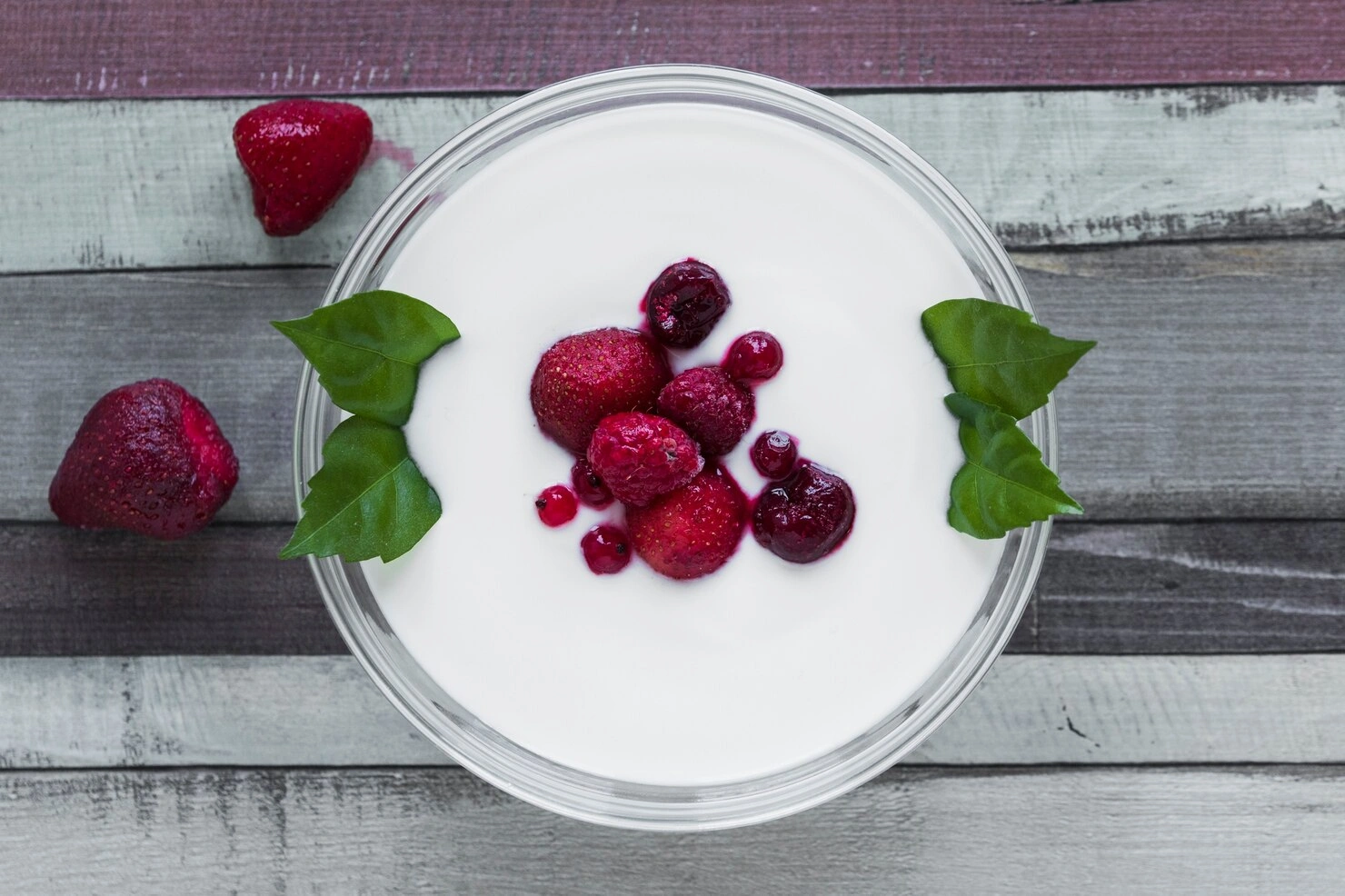
Basic Information
- Name: Greek Yogurt, Strawberry Flavor, Nonfat
- Scientific Name: N/A (Common name for a cultured dairy product)
- Category: Dairy
- Varieties: Flavored (strawberry, blueberry, peach, etc.), nonfat, low-fat, whole milk, and Greek-style.
Nutritional Information (per 100g of nonfat Greek yogurt with strawberry flavor)
- Macronutrients:
- Carbohydrates: 10.0g
- Proteins: 7.0g
- Fats: 0.0g
- Micronutrients:
- Calcium: 100mg (10% DV)
- Potassium: 150mg (3% DV)
- Sodium: 40mg (2% DV)
- Vitamin C: 3.0mg (4% DV)
- Vitamin A: 100 IU (2% DV)
Phytonutrients
Greek yogurt with strawberry flavor, being a dairy product, does not contain phytonutrients like those found in fruits and vegetables. Phytonutrients are plant-based compounds that provide health benefits and are primarily found in fruits, vegetables, grains, nuts, and seeds.
However, Greek yogurt, including the nonfat strawberry-flavored variety, offers various nutrients, including proteins, vitamins, and minerals, which contribute to its nutritional value and health benefits. These nutrients include:
- Proteins: Essential for muscle repair and growth, as well as various metabolic functions in the body.
- Calcium: Important for bone health, muscle function, and nerve transmission.
- Vitamin C: Provides antioxidant properties, supports immune function, and aids in collagen synthesis.
- Vitamin A: Essential for vision, immune function, and skin health.
- Potassium: Important for heart health, muscle contraction, and nerve function.
While Greek yogurt with strawberry flavor may not contain phytonutrients, it still offers a range of essential nutrients that contribute to overall health and well-being.

Calorie Count and Glycemic Index
- Calorie Count: Approximately 56 kcal
- Glycemic Index: Low to moderate, depending on added sugars
Physical Characteristics
- Color: Pinkish-red from strawberry flavoring
- Shape: Typically sold in individual cups or larger tubs
- Size: Varies by packaging, commonly in 150g or 200g servings
- Texture: Thick and creamy, with strawberry fruit puree or chunks mixed in
Culinary Uses
- Common Dishes: Breakfast bowls, smoothies, parfaits, frozen yogurt, and desserts like yogurt cake or cheesecake
- Preparation Methods: Enjoyed as-is or mixed with granola, nuts, seeds, or fresh fruits for added flavor and texture
- Suitable Pairings: Fresh strawberries, blueberries, bananas, granola, honey, nuts, and seeds
Geographical Information
- Origin: Greek yogurt has roots in Mediterranean cuisine, but flavored varieties like strawberry are produced globally
- Primary Growing Regions: Varies; strawberries are cultivated in many regions worldwide, including the United States, Europe, and parts of Asia
- Seasonal Availability: While Greek yogurt is available year-round, the availability of fresh strawberries may vary by region and season
Greek yogurt with strawberry flavoring offers a delicious and nutritious option for those seeking a low-fat dairy product with added fruit flavor. It can be enjoyed as a standalone snack or incorporated into various recipes and dishes.
| Proximates: | |
| Water | 92.4 g |
| Energy (Atwater General Factors) | 38 kcal |
| Energy (Atwater Specific Factors) | 38 kcal |
| Nitrogen | 0.57 g |
| Protein | 3.55 g |
| Total lipid (fat) | 2.12 g |
| Total fat (NLEA) | 1.88 g |
| Ash | 0.64 g |
| Carbohydrates: | |
| Carbohydrate, by difference | 1.29 g |
| Fiber, total dietary | <0.45 g |
| Sugars, Total | 0.56 g |
| Sucrose | 0.56 g |
| Glucose | <0.25 g |
| Fructose | <0.25 g |
| Lactose | <0.25 g |
| Maltose | <0.25 g |
| Galactose | <0.1 g |
| Oligosaccharides: | |
| Raffinose | 0.07 g |
| Stachyose | 0.43 g |
| Verbascose | 0.03 g |
| Minerals: | |
| Calcium, Ca | 101 mg |
| Iron, Fe | 0.54 mg |
| Magnesium, Mg | 21.5 mg |
| Phosphorus, P | 69 mg |
| Potassium, K | 158 mg |
| Sodium, Na | 34 mg |
| Zinc, Zn | 0.31 mg |
| Copper, Cu | 0.108 mg |
| Manganese, Mn | 0.208 mg |