
Basic Information
Name: Commonly known as Oats. The scientific name for the plant from which oats come is Avena sativa.
Category: Oats are categorized as a cereal grain, which means they are the seeds of a grass used for food.
Varieties: There are various types of oats, but here we focus on whole grain, rolled, old-fashioned oats. Other varieties include steel-cut oats (Irish oats), instant oats, and quick oats. The difference lies in the processing method and cooking time.
Nutritional Information
- Macronutrients: Rolled oats are a good source of complex carbohydrates and dietary fiber, particularly beta-glucan, which is known for its ability to lower cholesterol and stabilize blood sugar levels. They also contain more protein than most grains and a small amount of fats, most of which are healthy unsaturated fats.
- Carbohydrates: 68.7 g.
- Proteins: 13.5 g.
- Fats: 5.89 g.
- Micronutrients: Oats are rich in vitamins and minerals, including manganese, phosphorus, magnesium, copper, iron, zinc, folate, vitamin B1 (thiamin), and vitamin B5 (pantothenic acid).
Phytonutrients
Whole grain rolled oats, often referred to as old-fashioned oats, are a staple in many diets around the world due to their nutritional value and health benefits. These oats are processed by steaming and then rolling the oat groats (the hulled kernels) to produce flat, irregularly shaped flakes. This process preserves most of the nutrients found in the original oat grain, including a range of phytonutrients that contribute to their health-promoting properties. Here’s a detailed look at the key phytonutrients present in whole grain rolled oats:
1. Beta-Glucan
- Primary Phytonutrient: Beta-glucan is a type of soluble dietary fiber that’s particularly abundant in oats. It’s known for its ability to lower cholesterol levels, improve heart health, and regulate blood sugar levels. Additionally, beta-glucan enhances immune function and has prebiotic properties, supporting gut health.
2. Avenanthramides
- Unique to Oats: These are phenolic compounds exclusive to oats, offering potent antioxidant and anti-inflammatory benefits. Avenanthramides help to reduce blood pressure by increasing the production of nitric oxide, which aids in vascular dilation. They also play a role in soothing skin irritation when oats are applied topically.
3. Phenolic Acids
- Antioxidants: Oats contain several phenolic acids, including ferulic acid, caffeic acid, and vanillic acid, among others. These compounds contribute to the antioxidant capacity of oats, protecting cells from damage caused by free radicals and potentially reducing the risk of chronic diseases.
4. Phytic Acid
- Mineral Binding: Also known as inositol hexaphosphate, phytic acid has a strong binding affinity for dietary minerals such as calcium, iron, and zinc, which can affect their absorption. However, it also has antioxidant properties and may play a protective role against kidney stones and cancer.
5. Tocols
- Vitamin E Compounds: Oats contain tocols, including tocopherols and tocotrienols, which are part of the vitamin E family. These compounds are noted for their antioxidant properties, contributing to the protection against oxidative stress and supporting overall health.
6. Saponins
- Immune Function and Cholesterol: Saponins found in oats have immune-boosting properties and contribute to the cholesterol-lowering effects of oats. They also possess antifungal and antimicrobial activities.
Health Benefits of Phytonutrients in Oats
The combination of these phytonutrients in whole grain rolled oats contributes to a wide range of health benefits:
- Cardiovascular Health: Beta-glucan and saponins support heart health by lowering LDL (bad) cholesterol and potentially reducing blood pressure.
- Glycemic Control: The soluble fiber beta-glucan helps in the slow release of glucose into the bloodstream, aiding in blood sugar regulation.
- Antioxidant Protection: Avenanthramides, phenolic acids, and tocols provide antioxidant protection, which may reduce the risk of chronic diseases and support skin health.
- Digestive Health: The high fiber content, including beta-glucan, promotes healthy bowel function and supports a healthy gut microbiome.
Including whole grain rolled oats in your diet can provide these phytonutrient benefits, contributing to overall health and wellness.
Calorie Count and Glycemic Index
- Calorie Count: Approximately 379 calories per 100 grams.
- Glycemic Index: Rolled oats have a low to medium glycemic index (GI), which ranges from 50-70, making them beneficial for blood sugar control.
Physical Characteristics
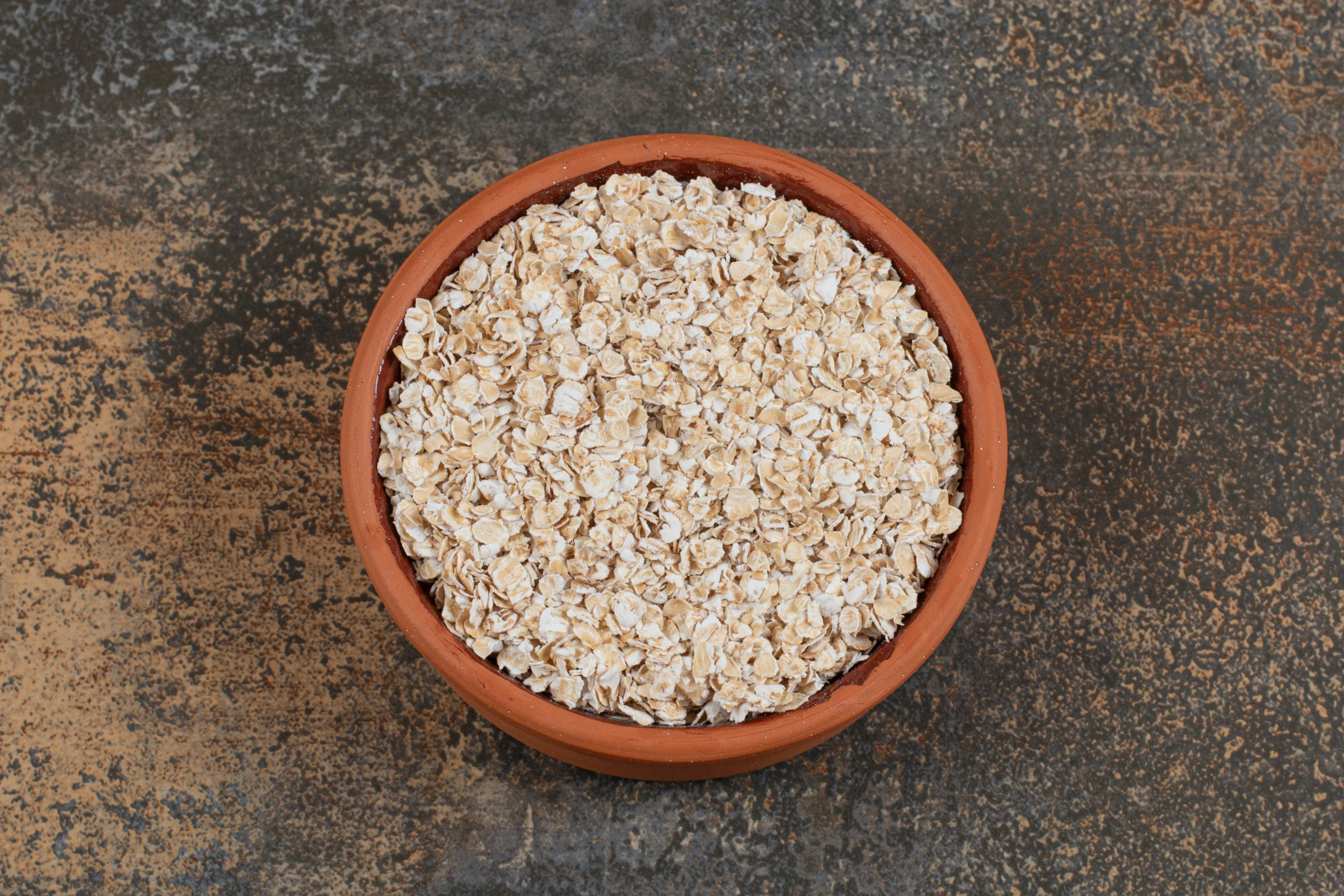
- Color: Light brown to creamy white.
- Shape: Flattened and rolled, with a discernible, slightly irregular disc shape.
- Size: Each oat flake is approximately 0.5 to 1 cm in diameter.
- Texture: Dry rolled oats are somewhat hard and flaky but become soft and mushy when cooked.
Culinary Uses
- Common Dishes: Rolled oats are commonly used in breakfast cereals, oatmeal (porridge), granola, and muesli. They are also a popular ingredient in baked goods like cookies, muffins, bread, and bars.
- Preparation Methods: Rolled oats can be cooked with water or milk to make oatmeal, soaked overnight in yogurt or milk for cold porridge, or baked. They can also be added directly to baked goods.
- Suitable Pairings: Oats pair well with a variety of flavors, including fruits (such as bananas, apples, and berries), nuts, honey, maple syrup, cinnamon, and chocolate. They are also used in savory dishes, like meatloaf or as a vegetarian burger base.
Geographical Information
- Origin: Oats have been cultivated for thousands of years and are believed to have originated in the Fertile Crescent region of the Near East.
- Primary Growing Regions: Today, the major producers of oats include Russia, Canada, the United States, Finland, and Poland.
- Seasonal Availability: While oats are harvested in late summer to early fall, rolled oats are processed and stored, making them available year-round in stores.
| proximates: | |
| Water | 10.2 g |
| Energy (Atwater General Factors) | 382 kcal |
| Energy (Atwater Specific Factors) | 379 kcal |
| Nitrogen | 2.32 g |
| Protein | 13.5 g |
| Total lipid (fat) | 5.89 g |
| Ash | 1.71 g |
| Carbohydrates: | |
| Carbohydrate, by difference | 68.7 g |
| Total dietary fiber (AOAC 2011.25) | 10.4 g |
| High Molecular Weight Dietary Fiber (HMWDF) | 9.7 g |
| Low Molecular Weight Dietary Fiber (LMWDF) | 0.7 g |
| Beta-glucan | 3.82 g |
| Starch | 53.8 g |
| Minerals: | |
| Calcium, Ca | 46 mg |
| Iron, Fe | 4.34 mg |
| Magnesium, Mg | 126 mg |
| Phosphorus, P | 387 mg |
| Potassium, K | 350 mg |
| Sodium, Na | 1 mg |
| Zinc, Zn | 2.74 mg |
| Copper, Cu | 0.428 mg |
| Manganese, Mn | 3.23 mg |
| Selenium, Se | 25.4 µg |
| Molybdenum, Mo | 160 µg |
| Vitamins and Other Components: | |
| Thiamin | 0.406 mg |
| Niacin | 0.993 mg |
| Vitamin B-6 | 0.135 mg |
| Biotin | 21.9 µg |
| Folate, total | 32 µg |