
Basic Information
- Name: Lowfat Milk (1% Milkfat)
- Scientific Name: N/A (Derived from Bos taurus, domestic cattle)
- Category: Dairy product
Varieties
While this entry focuses on lowfat milk with 1% milkfat, milk is available in several other fat content levels, including skim (<0.5% milkfat), reduced-fat (2%), and whole milk (approximately 3.25% milkfat). Variants may also include lactose-free and fortified options with additional vitamins and minerals.
Nutritional Information
- Macronutrients:
- Carbohydrates: Approximately 5.18 g per 100 ml, mainly from lactose (milk sugar).
- Proteins: About 3.38 g per 100 ml, providing essential amino acids.
- Fats: Roughly 0.95 g per 100 ml due to the low-fat designation.
- Micronutrients: Rich in calcium, phosphorus, and vitamin B12. Fortified with vitamin A and vitamin D to enhance its nutritional profile. Also contains riboflavin (B2), potassium, and small amounts of other vitamins and minerals.
phytonutrients
Low-fat milk, particularly the type that is fluid and contains 1% milkfat with added vitamin A and vitamin D, is primarily valued for its macronutrient content (proteins, carbohydrates, and fats) and its fortified micronutrients (vitamins A and D). While the term “phytonutrients” refers to plant-derived nutrients and bioactive compounds, milk, being an animal-derived product, does not contain phytonutrients. However, it is rich in other bioactive compounds and nutrients that contribute to its health benefits. Here’s an overview of the key nutrients and bioactive components found in low-fat milk:
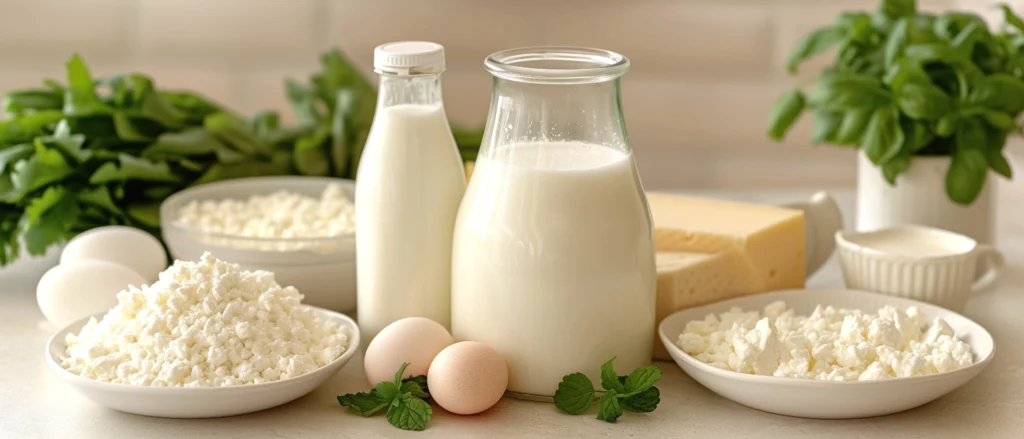
Key Nutrients and Bioactive Components in Low-Fat Milk
- Proteins: Milk is a good source of high-quality proteins like casein and whey, which are essential for muscle repair, growth, and overall health.
- Calcium: Essential for bone health, calcium is abundant in milk and is better absorbed in the presence of vitamin D.
- Vitamin D: Often fortified in milk, vitamin D is crucial for calcium absorption, bone health, and immune function.
- Vitamin A: Also commonly fortified in milk, vitamin A supports vision, immune function, and skin health.
- B Vitamins: Milk contains several B vitamins, including riboflavin (B2) and vitamin B12, which are important for energy production and maintaining healthy red blood cells.
- Phosphorus: Works with calcium to build and maintain strong bones and teeth.
- Potassium: Helps to maintain normal blood pressure by counteracting the effects of sodium.
- Magnesium: Important for muscle and nerve function, blood glucose control, and bone health.
Nutritional Implications
The fortification of low-fat milk with vitamins A and D, along with its natural nutrient content, offers several health benefits:
- Bone Health: The combination of calcium, vitamin D, and phosphorus in milk supports the development and maintenance of strong bones and teeth, reducing the risk of osteoporosis.
- Muscle Health: The high-quality proteins in milk support muscle repair and growth.
- Cardiovascular Health: The low-fat content helps manage cholesterol levels, while potassium helps maintain healthy blood pressure.
- Immune Support: Vitamins A and D play roles in supporting the immune system.
Including low-fat milk in your diet can contribute to nutritional intake, providing essential vitamins, minerals, and proteins. Its versatility makes it easy to incorporate into a balanced diet, whether consumed as a beverage, added to cereal, or used in cooking and baking.
Calorie Count and Glycemic Index
- Calorie Count: Around 43 calories per 100 ml.
- Glycemic Index: Low
Physical Characteristics
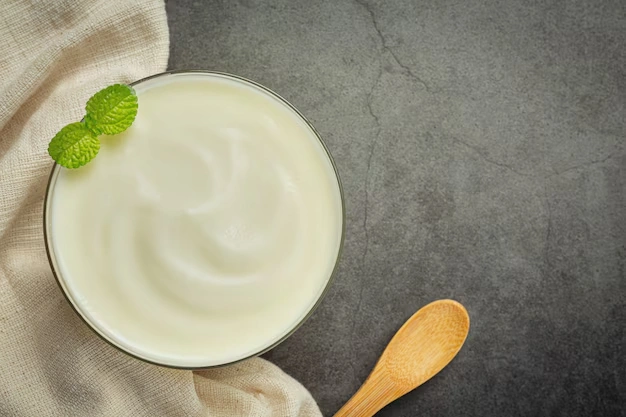
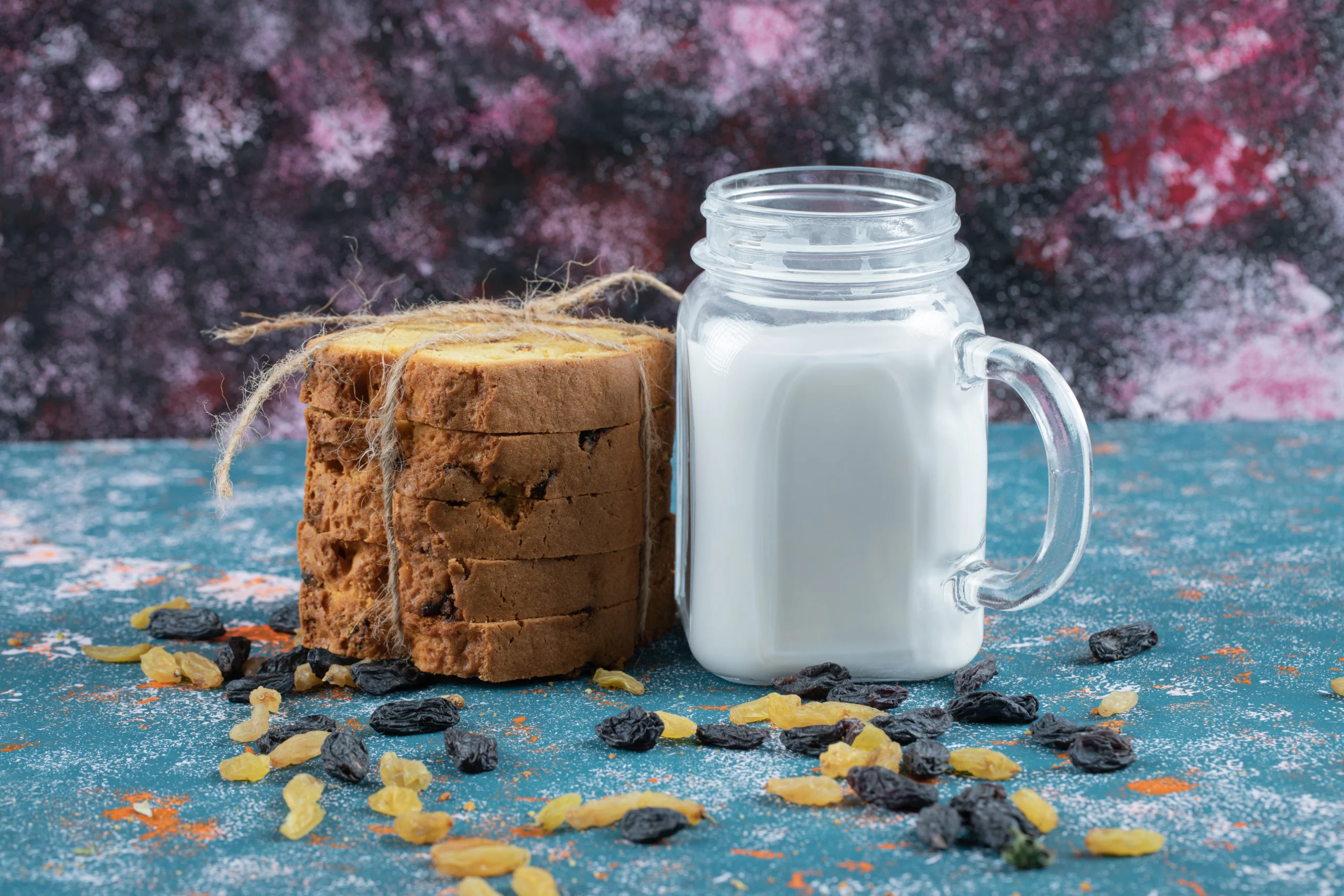
- Color: Creamy white
- Shape: Liquid form
- Size: Typically sold in various container sizes, from small cartons to large gallons.
- Texture: Smooth, fluid consistency
Culinary Uses
Lowfat milk is versatile in the kitchen and used in various culinary applications:
- Common Dishes: Consumed as a beverage, used in cereals, coffee, and tea. Essential in recipes for baked goods, soups, sauces, and smoothies.
- Preparation Methods: Can be consumed cold or heated, used as a base for shakes and smoothies, or as an ingredient in cooking and baking.
- Suitable Pairings: Complements a wide range of flavors, from sweet dishes and desserts to savory sauces and soups.
Geographical Information
- Origin: Domestication of cattle and milk consumption date back thousands of years, with origins traced to various regions including the Middle East and the Indus Valley.
- Primary Growing Regions: Milk production is a global industry, with the United States, India, China, Brazil, and Russia among the top producers.
- Seasonal Availability: Available year-round.
Lowfat milk with added vitamin A and vitamin D offers a nutritious option for those looking to reduce fat intake without sacrificing essential nutrients. Its widespread availability and nutritional benefits make it a staple in diets worldwide, supporting bone health, muscle function, and overall wellness.
| proximates: | |
| Water | 89.7 g |
| Energy (Atwater General Factors) | 43 kcal |
| Energy (Atwater Specific Factors) | 43 kcal |
| Nitrogen | 0.53 g |
| Protein | 3.38 g |
| Total lipid (fat) | 0.95 g |
| Total fat (NLEA) | 0.85 g |
| Ash | 0.8 g |
| Carbohydrates: | |
| Carbohydrate, by difference | 5.18 g |
| Sugars, Total | 4.96 g |
| Lactose | 4.96 g |
| Minerals: | |
| Calcium, Ca | 126 mg |
| Magnesium, Mg | 12 mg |
| Phosphorus, P | 103 mg |
| Potassium, K | 159 mg |
| Sodium, Na | 39 mg |
| Zinc, Zn | 0.43 mg |
| Copper, Cu | 0.001 mg |
| Iodine, I | 36.2 µg |
| Selenium, Se | 2.1 µg |
| Vitamins and Other Components: | |
| Thiamin | 0.057 mg |
| Riboflavin | 0.14 mg |
| Niacin | 0.113 mg |
| Pantothenic acid | 0.368 mg |
| Vitamin B-6 | 0.06 mg |
| Folate, total | 2 µg |
| Choline, total | 17.4 mg |
| Choline, free | 3 mg |
| Choline, from phosphocholine | 0.9 mg |
| Choline, from phosphotidyl choline | 1.8 mg |
| Choline, from glycerophosphocholine | 10.9 mg |
| Choline, from sphingomyelin | 0.8 mg |
| Betaine | 0.9 mg |
| Vitamin B-12 | 0.61 µg |
| Vitamin A, RAE | 58 µg |
| Retinol | 58 µg |
| Carotene, beta | 1 µg |
| trans-beta-Carotene | 1 µg |
| Vitamin E (alpha-tocopherol) | 0.02 mg |
| Vitamin D (D2 + D3), International Units | 42.4 IU |
| Vitamin D (D2 + D3) | 1.06 µg |
| Vitamin D3 (cholecalciferol) | 1.06 µg |
| Lipids: | |
| Fatty acids, total saturated | 0.568 g |
| SFA 4:0 | 0.022 g |
| SFA 6:0 | 0.015 g |
| SFA 8:0 | 0.011 g |
| SFA 10:0 | 0.023 g |
| SFA 12:0 | 0.026 g |
| SFA 14:0 | 0.093 g |
| SFA 15:0 | 0.01 g |
| SFA 16:0 | 0.265 g |
| SFA 17:0 | 0.006 g |
| SFA 18:0 | 0.096 g |
| SFA 20:0 | 0.001 g |
| Fatty acids, total monounsaturated | 0.21 g |
| MUFA 14:1 c | 0.007 g |
| MUFA 16:1 c | 0.012 g |
| MUFA 17:1 | 0.002 g |
| MUFA 17:1 c | 0.002 g |
| MUFA 18:1 c | 0.187 g |
| MUFA 20:1 c | 0.001 g |
| Fatty acids, total polyunsaturated | 0.032 g |
| PUFA 18:2 c | 0.029 g |
| PUFA 18:2 n-6 c,c | 0.026 g |
| PUFA 18:2 CLAs | 0.004 g |
| PUFA 18:3 c | 0.004 g |
| PUFA 18:3 n-3 c,c,c (ALA) | 0.004 g |
| PUFA 20:3 c | 0.001 g |
| PUFA 20:3 n-6 | 0.001 g |
| PUFA 20:4 | 0.001 g |
| PUFA 20:4c | 0.001 g |
| Fatty acids, total trans | 0.036 g |
| Fatty acids, total trans-monoenoic | 0.031 g |
| TFA 14:1 t | 0.001 g |
| TFA 16:1 t | 0.002 g |
| TFA 18:1 t | 0.027 g |
| Fatty acids, total trans-dienoic | 0.004 g |
| TFA 18:2 t not further defined | 0.004 g |
| Cholesterol | 5 mg |
| Amino acids: | |
| Tryptophan | 0.045 g |
| Threonine | 0.158 g |
| Isoleucine | 0.174 g |
| Leucine | 0.342 g |
| Lysine | 0.308 g |
| Methionine | 0.092 g |
| Phenylalanine | 0.168 g |
| Tyrosine | 0.167 g |
| Valine | 0.21 g |
| Arginine | 0.128 g |
| Histidine | 0.099 g |
| Alanine | 0.111 g |
| Aspartic acid | 0.286 g |
| Glutamic acid | 0.809 g |
| Glycine | 0.069 g |
| Proline | 0.349 g |
| Serine | 0.194 g |
| Cysteine | 0.036 g |