

Basic Information
- Name: Purple Grape Juice (with added Vitamin C, from concentrate, shelf-stable)
- Scientific Name: N/A (Processed food product derived from grapes of various species, predominantly Vitis vinifera)
- Category: Beverage
Nutritional Information
- Macronutrients:
- Carbohydrates: Approximately 15.6 g per 100 ml, mainly from sugars
- Proteins: Negligible, typically less than 0.26 g per 100 ml
- Fats: Virtually none
- Micronutrients: High in Vitamin C (due to fortification), and contains small amounts of Vitamin K, Vitamin B6, and minerals like potassium and manganese.
Phytonutrients
Purple grape juice, especially when fortified with vitamin C, is a rich source of various phytonutrients that contribute to its health benefits. These compounds are derived from the purple grapes used in making the juice concentrate and are preserved through the shelf-stabilization process. Here’s a look at the key phytonutrients present in purple grape juice:
Types of Phytonutrients in Purple Grape Juice
- Resveratrol: This is a well-known antioxidant found in the skin of purple grapes. Resveratrol has been studied for its potential to improve heart health, protect against certain types of cancer, and its anti-inflammatory properties.
- Anthocyanins: These are the pigments that give purple grape juice its rich color. Anthocyanins have antioxidant properties, which may help protect cells from damage and reduce inflammation. They have also been associated with heart health benefits.
- Flavonoids: Purple grape juice contains various flavonoids, including catechins and quercetin, which are powerful antioxidants. They can help reduce the risk of chronic diseases by combating oxidative stress and inflammation.
- Polyphenols: In addition to resveratrol and anthocyanins, grape juice is rich in other polyphenols, which have antioxidant properties and may contribute to improved cardiovascular health, blood sugar regulation, and overall health protection.
- Vitamin C (Ascorbic Acid): Although not a phytonutrient originally found in grapes, vitamin C is added to this juice for its antioxidant properties and is essential for immune function, skin health, and iron absorption.
Nutritional Implications
The phytonutrients in purple grape juice with added vitamin C contribute to its health-promoting properties. These compounds offer antioxidant and anti-inflammatory benefits, which are crucial for preventing oxidative stress and reducing the risk of chronic diseases, such as heart disease, cancer, and diabetes. The addition of vitamin C not only boosts the antioxidant content but also enhances the juice’s nutritional profile, making it a beneficial dietary choice for supporting overall health.
While purple grape juice is nutritious, it’s also high in sugars, so it should be consumed in moderation as part of a balanced diet to maximize its health benefits while minimizing the risk of adverse effects associated with excessive sugar intake.
Calorie Count and Glycemic Index
- Calorie Count: Around 66 calories per 100 ml
- Glycemic Index: Moderate, generally in the range of 45-55
Physical Characteristics
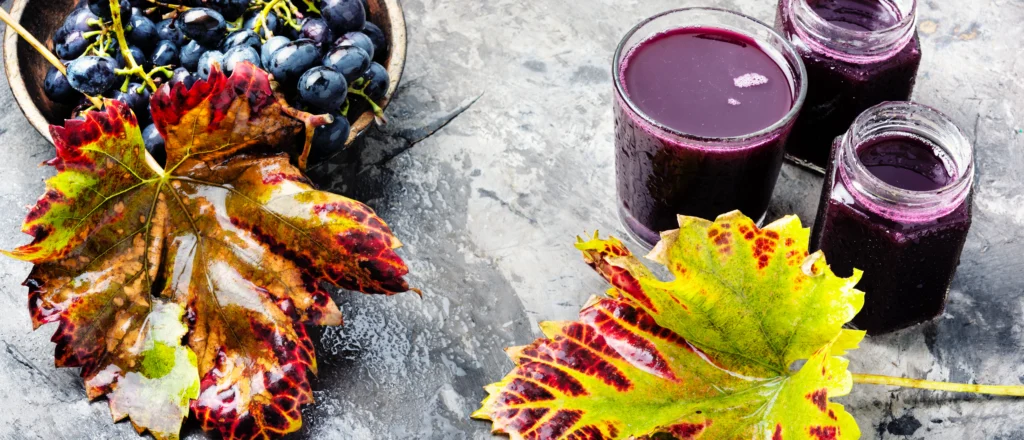
- Color: Deep purple, characteristic of concentrated purple grape varieties
- Shape: Liquid
- Size: Sold in various container sizes, typically measured in milliliters or liters
- Texture: Smooth, viscous liquid
Culinary Uses
Purple grape juice is a popular beverage enjoyed on its own or used as an ingredient in:
- Common Dishes: Often consumed as a drink, both cold and at room temperature. It can also be used in smoothies, cocktails, or mocktails, and as a base for sauces or marinades for meats.
- Preparation Methods: Ready to drink from the container or can be mixed with other beverages for cocktails or used in cooking.
- Suitable Pairings: Complements breakfast items, such as pancakes and oatmeal, and can be used in culinary preparations that call for a sweet, fruity element.
Geographical Information
- Origin: The cultivation of grapes for wine, juice, and fresh consumption dates back thousands of years, with origins in the Near East, notably the region around modern-day Iran.
- Primary Growing Regions: Grape cultivation for juice production is widespread, with significant contributions from the United States (particularly California), France, Italy, and Spain, among others.
- Seasonal Availability: As a shelf-stable product made from concentrate, purple grape juice with added vitamin C is available year-round in supermarkets and stores.
Purple grape juice is a flavorful and nutritious beverage choice, offering the health benefits of grapes in a convenient, concentrated form. The addition of vitamin C enhances its nutritional profile, making it an excellent source of this essential nutrient.
| proximates: | |
| Water | 83.7 g |
| Energy (Atwater General Factors) | 66 kcal |
| Energy (Atwater Specific Factors) | 65 kcal |
| Nitrogen | 0.04 g |
| Protein | 0.26 g |
| Total lipid (fat) | 0.29 g |
| Ash | 0.12 g |
| Carbohydrates: | |
| Carbohydrate, by difference | 15.6 g |
| Sugars, Total | 14 g |
| Sucrose | <0.25 g |
| Glucose | 6.61 g |
| Fructose | 7.42 g |
| Lactose | <0.25 g |
| Maltose | <0.25 g |
| Galactose | <0.1 g |
| Organic acids: | |
| Citric acid | 110 mg |
| Malic acid | 228 mg |
| Oxalic acid | <40 mg |
| Quinic acid | <40 mg |
| Minerals: | |
| Calcium, Ca | 10 mg |
| Iron, Fe | 0.04 mg |
| Magnesium, Mg | 7.9 mg |
| Phosphorus, P | 12 mg |
| Potassium, K | 50 mg |
| Sodium, Na | 4 mg |
| Zinc, Zn | 0.06 mg |
| Copper, Cu | 0.015 mg |
| Manganese, Mn | 0.166 mg |
| Vitamins and Other Components: | |
| Vitamin C, total ascorbic acid | 45.6 mg |
| Thiamin | 0.026 mg |
| Niacin | 0.016 mg |
| Vitamin B-6 | 0.039 mg |
| Folate, total | 1 µg |