

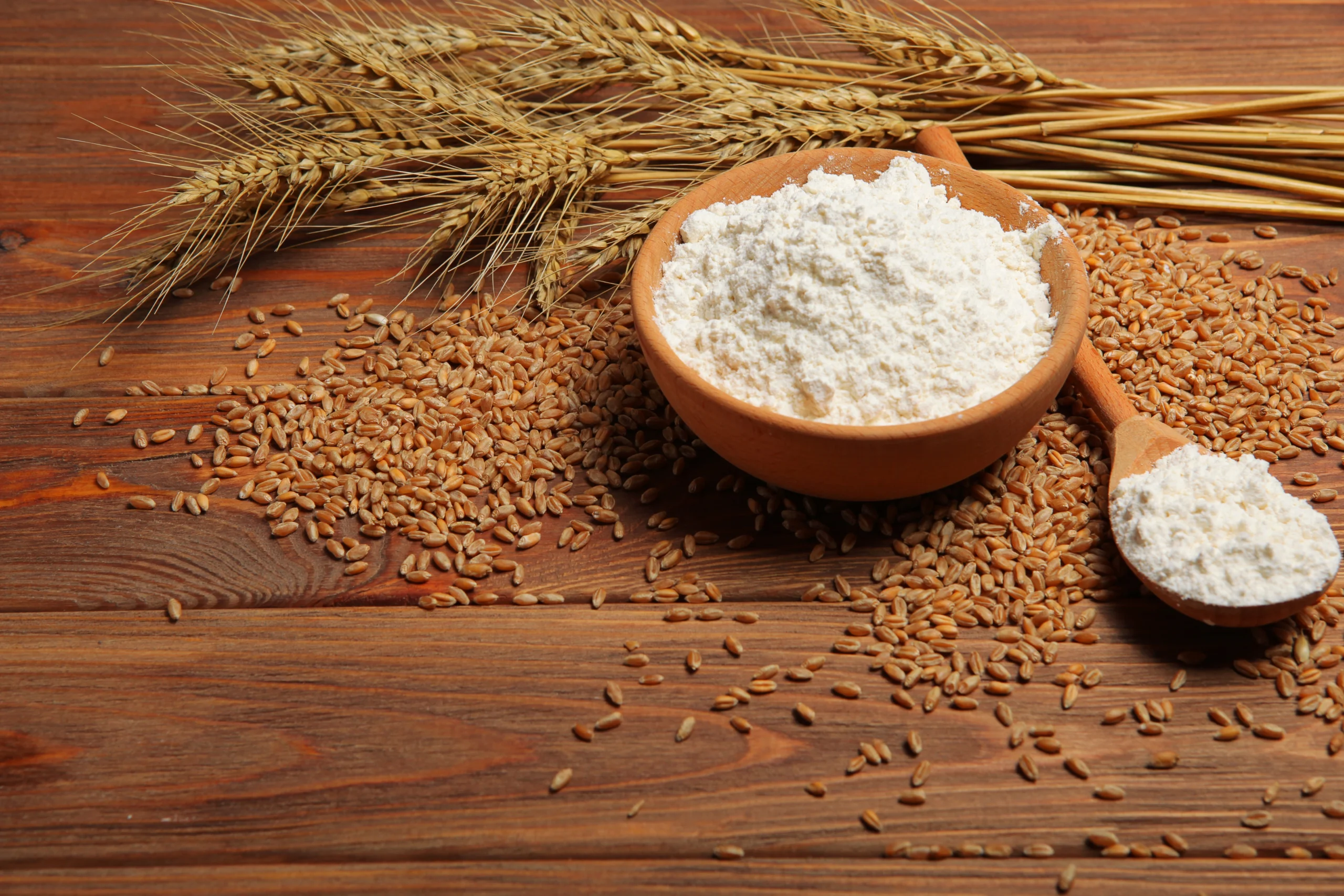
All-purpose, enriched, bleached wheat flour is a staple ingredient in many kitchens around the globe, known for its versatility in baking and cooking. Derived from the common wheat plant (Triticum aestivum), this type of flour undergoes processing to remove the bran and germ, leaving mostly the endosperm. It’s then enriched with vitamins and minerals that were lost during milling and bleached to give it a lighter color and softer texture. Here’s a comprehensive overview of enriched, bleached all-purpose wheat flour.
Basic Information
- Common Name: All-Purpose Enriched Bleached Wheat Flour
- Scientific Name: Triticum aestivum
- Category: Grain (Cereal)
- Varieties: While the primary focus here is on enriched and bleached all-purpose flour, it’s worth noting that all-purpose flour can also be unbleached. The choice between bleached and unbleached flour often depends on the desired outcome in baking and personal preference.
Nutritional Information
- Macronutrients: This flour is predominantly composed of carbohydrates, with a small amount of protein and very little fat. The enrichment process adds back certain B vitamins (like folic acid, niacin, thiamine, and riboflavin) and iron that are lost during the refining process.
- Micronutrients: Enriched with vitamins and minerals such as iron and B vitamins. Some brands may also add calcium.
Phytonutrients
All-purpose, enriched, bleached wheat flour, primarily made from the endosperm of the Triticum aestivum grain, undergoes significant processing which affects its phytonutrient content. The milling process removes the bran and germ, which are the nutrient-rich parts of the wheat grain, and thus, much of the flour’s original phytonutrients are significantly reduced. However, through the enrichment process, some nutrients are added back, although these are mainly vitamins and minerals rather than phytonutrients. Here’s an overview of the phytonutrient situation for this type of flour:
Phytonutrients in All-Purpose, Enriched, Bleached Wheat Flour
Due to the refining process, the majority of phytonutrients found in whole wheat are largely absent in all-purpose, enriched, bleached wheat flour. Whole wheat contains several types of phytonutrients, including phenolic acids, flavonoids, lignans, betaine, and alkylresorcinols, which have various health benefits, ranging from antioxidant properties to anti-inflammatory effects. However, in all-purpose, enriched, bleached wheat flour, these compounds are significantly reduced for the following reasons:
- Refining Process: The removal of the wheat grain’s bran and germ layers during the refining process significantly diminishes the flour’s phytonutrient content. These components are where most of the grain’s phytonutrients are concentrated.
- Bleaching Process: Bleaching further alters the flour’s natural composition and potentially affects any remaining phytonutrients, although the primary purpose of bleaching is to modify the flour’s color and texture.
Enrichment and Phytonutrients
- Enrichment: This process adds back certain nutrients (mainly B vitamins such as folic acid, niacin, riboflavin, and thiamine, and minerals like iron) that are lost during the milling process. However, enrichment typically does not replace the wide array of phytonutrients found in the whole grain.
- Phytonutrient Comparison: Compared to whole wheat flour, all-purpose, enriched, bleached wheat flour has a lower concentration of phytonutrients such as phenolic acids (e.g., ferulic acid), flavonoids, and other antioxidants that contribute to health benefits.
Health Considerations
While all-purpose, enriched, bleached wheat flour is a versatile and widely used ingredient in baking and cooking, from a nutritional standpoint, it lacks the broad spectrum of phytonutrients present in whole grain alternatives. These phytonutrients in whole grains contribute to reduced inflammation, improved heart health, and lower risks of chronic diseases.
In summary, all-purpose, enriched, bleached wheat flour is not a significant source of phytonutrients due to the refining and bleaching processes it undergoes. For those looking to maximize their intake of phytonutrients from grains, incorporating whole grain flours into the diet is a more effective strategy.

Calorie Count and Glycemic Index
- Calorie Count: Approximately 366 calories per 100 grams.
- Glycemic Index: High, as it is a refined grain, which can lead to quicker spikes in blood sugar levels compared to whole grains.
Physical Characteristics
- Color: Light, almost white, due to the bleaching process. This is one of the distinguishing features from unbleached flour.
- Shape and Size: It is a fine, powdery substance.
- Texture: Smooth and uniform, ideal for creating a tender crumb in baked goods.
Culinary Uses
- Common Dishes: All-purpose flour is used in a wide range of baked goods, from bread, cakes, and pastries to cookies and pies. It’s also used as a thickening agent in sauces and gravies.
- Preparation Methods: It can be mixed with fats, liquids, and leavening agents to create various doughs and batters. The enriched nutrients do not significantly affect the cooking properties compared to unenriched flour.
- Suitable Pairings: Its neutral flavor and color make it suitable for both sweet and savory applications, pairing well with virtually any ingredient.
Geographical Information
- Origin: Domesticated wheat has origins in the Fertile Crescent region of the Middle East. Modern all-purpose flour has been developed through centuries of cultivation and processing to meet diverse culinary needs.
- Primary Growing Regions: The largest wheat producers include China, India, Russia, and the United States, with significant production also occurring in Europe, Pakistan, and Canada.
- Seasonal Availability: All-purpose flour is available year-round, thanks to global production and distribution.
All-purpose, enriched, bleached wheat flour is a foundational ingredient in many culinary traditions, valued for its versatility and consistency in cooking and baking. While it offers convenience and a certain level of nutrition due to enrichment, health-conscious consumers may also consider incorporating whole grain flours into their diets for added fiber and nutrients.
| proximates: | |
| Water | 9.83 g |
| Energy (Atwater General Factors) | 366 kcal |
| Energy (Atwater Specific Factors) | 375 kcal |
| Nitrogen | 1.75 g |
| Protein | 10.9 g |
| Total lipid (fat) | 1.48 g |
| Ash | 0.42 g |
| Carbohydrates: | |
| Carbohydrate, by difference | 77.3 g |
| Minerals: | |
| Calcium, Ca | 19 mg |
| Iron, Fe | 5.62 mg |
| Magnesium, Mg | 26.7 mg |
| Phosphorus, P | 108 mg |
| Potassium, K | 136 mg |
| Sodium, Na | 2 mg |
| Zinc, Zn | 0.72 mg |
| Copper, Cu | 0.155 mg |
| Manganese, Mn | 0.758 mg |
| Selenium, Se | 15.7 µg |
| Molybdenum, Mo | 37.6 µg |
| Vitamins and Other Components: | |
| Thiamin | 0.939 mg |
| Riboflavin | 0.443 mg |
| Niacin | 6.74 mg |
| Vitamin B-6 | 0.066 mg |
| Folate, total | 160 µg |