

Basic Information
- Common Name: White Bread Flour (Enriched, Unbleached)
- Scientific Name: Triticum spp.
- Category: Grain (Wheat Flour)
Varieties
White bread flour does not have varieties in the traditional sense but can vary based on the wheat species used and the protein content, which affects its baking qualities. The main distinction for this flour is its enrichment and lack of bleaching.
Nutritional Information
- Macronutrients:
- Carbohydrates: High, about 72.8g per 100g, with a small portion coming from dietary fiber.
- Proteins: High, approximately 14.3g per 100g, ideal for gluten development in bread making.
- Fats: Low, around 1.65g per 100g.
- Micronutrients:
- Vitamins: Enriched with B vitamins such as thiamin (B1), riboflavin (B2), niacin (B3), and folic acid (B9).
- Minerals: Often enriched with iron and may contain calcium, selenium, and potassium.
Phytonutrients
White bread flour, especially when enriched and unbleached, is primarily processed to enhance its baking qualities, focusing on the gluten content necessary for bread making. This processing significantly reduces the natural phytonutrient content found in the whole wheat kernel. Phytonutrients are bioactive compounds found in plants that contribute to their color, taste, and disease resistance, and in the human diet, they are associated with various health benefits.

Original Phytonutrients in Whole Wheat
In its whole form, wheat contains a range of phytonutrients, including:
- Phenolic Acids: Such as ferulic acid, which has antioxidant properties.
- Flavonoids: Which are known for their anti-inflammatory and antioxidant benefits.
- Lignans: Plant compounds that may have estrogenic and antiestrogenic effects, potentially reducing the risk of certain cancers.
- Alkylresorcinols: Found in the outer layers of wheat, associated with potential anti-cancer properties.
- Phytic Acid: While often considered an anti-nutrient due to its mineral-binding properties, it also has antioxidant effects.
Phytonutrients in Enriched, Unbleached White Bread Flour
The process of making white bread flour involves removing the bran and germ from the wheat kernel, which significantly reduces its phytonutrient content. The remaining endosperm, from which white flour is made, contains fewer of these compounds. Enriching the flour adds back certain nutrients (like B vitamins and iron) that are lost during processing, but it does not restore the original phytonutrients. Unbleached flour retains a bit more of the wheat’s original nutrients compared to bleached flour, but the difference in phytonutrient content is still minimal.
Nutritional Considerations
While enriched, unbleached white bread flour is a good source of protein and certain enriched vitamins and minerals, it lacks the broad spectrum of phytonutrients present in whole wheat flour. This makes whole grains a healthier choice for incorporating a range of phytonutrients into the diet. The enrichment process focuses on micronutrients (vitamins and minerals) rather than phytonutrients.
Conclusion
For those looking to maximize their intake of phytonutrients, choosing whole grain products over refined and even enriched grains is advisable. Whole grain flours, including whole wheat flour, retain the bran and germ, preserving the natural phytonutrients, fiber, and a portion of the oil, which contribute to their health benefits. Incorporating a variety of whole grains into the diet can help ensure a broad intake of these beneficial compounds.
Calorie Count and Glycemic Index
- Calorie Count: About 363 calories per 100g.
- Glycemic Index: High, typically around 70-85, depending on the specific product and its processing.
Physical Characteristics
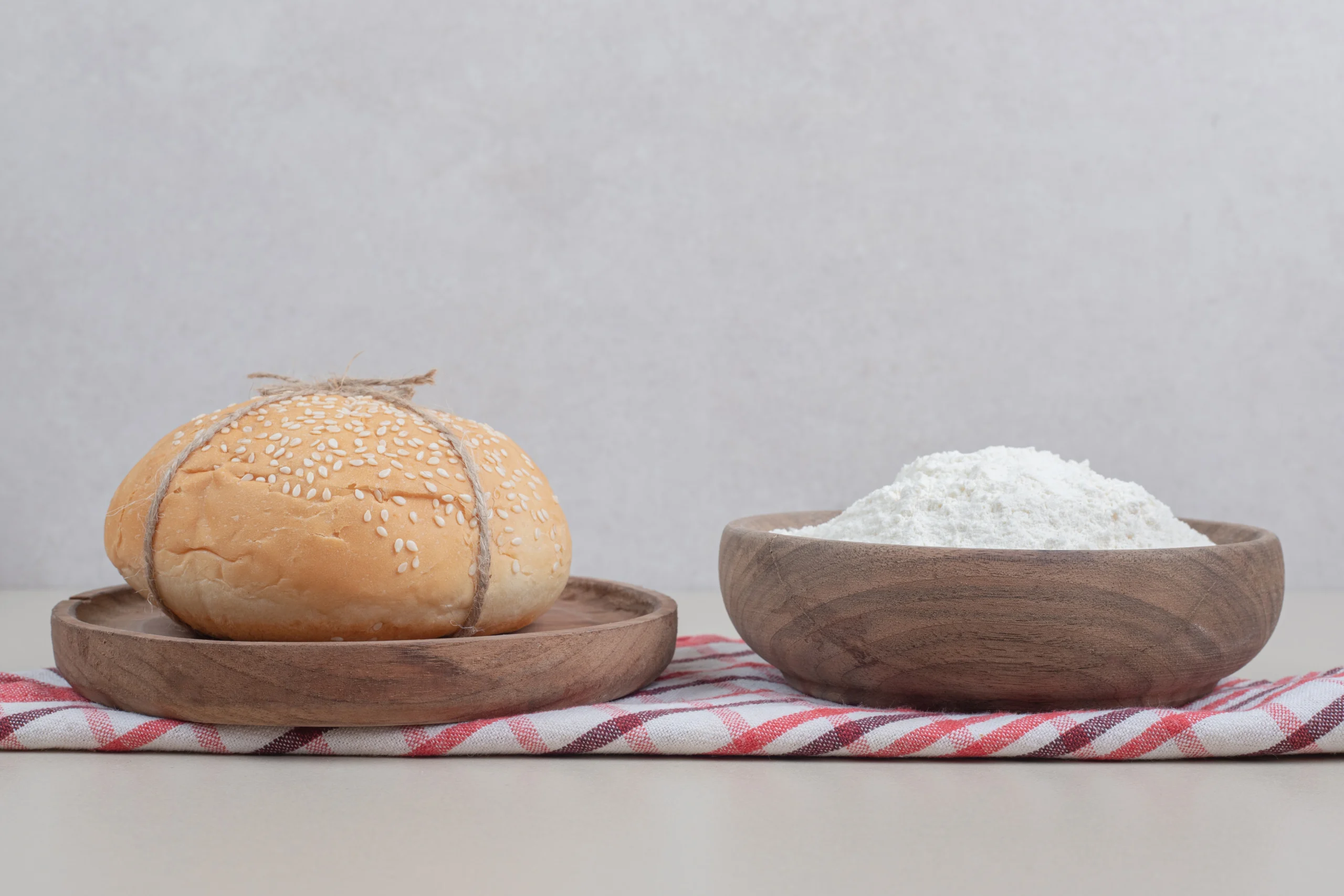
- Color: Light cream to white, slightly darker than bleached flour due to the lack of bleaching agents.
- Shape: Fine powder.
- Size: Consistency is uniform, with a very fine granular size.
- Texture: Smooth and powdery, with a slightly elastic feel when moistened, due to gluten content.
Culinary Uses
- Common Dishes: Primarily used for baking bread, including artisan loaves, baguettes, and rolls. It’s also suitable for pizza dough, some pastries, and other baked goods requiring a strong gluten network.
- Preparation Methods: Mixed with water, yeast, and salt to create dough, which is then kneaded, shaped, and baked. The high protein content is ideal for recipes that require a good rise and chewy texture.
- Suitable Pairings: Complements a wide range of flavors, from sweet jams and spreads to savory meats, cheeses, and vegetables.
Geographical Information
- Origin: Cultivated wheat has ancient origins, likely in the Fertile Crescent region of the Near East.
- Primary Growing Regions: Today, wheat is grown globally, with major producers including China, India, Russia, the United States, and France.
- Seasonal Availability: Flour, including white bread flour, is available year-round due to modern agricultural and storage practices.
White bread flour (enriched, unbleached) is a staple ingredient in many kitchens, prized for its versatility in bread baking and other culinary applications. Its enrichment with vitamins and minerals enhances its nutritional profile, making it a more nutritious option than non-enriched flour. The lack of bleaching preserves more of the natural wheat proteins, providing a strong gluten network for baking.
| proximates: | |
| Water | 10.7 g |
| Energy (Atwater General Factors) | 363 kcal |
| Energy (Atwater Specific Factors) | 372 kcal |
| Nitrogen | 2.29 g |
| Protein | 14.3 g |
| Total lipid (fat) | 1.65 g |
| Ash | 0.5 g |
| Carbohydrates: | |
| Carbohydrate, by difference | 72.8 g |
| Minerals: | |
| Calcium, Ca | 19 mg |
| Iron, Fe | 5.55 mg |
| Magnesium, Mg | 35.9 mg |
| Phosphorus, P | 124 mg |
| Potassium, K | 127 mg |
| Sodium, Na | 3 mg |
| Zinc, Zn | 1.06 mg |
| Copper, Cu | 0.194 mg |
| Manganese, Mn | 0.751 mg |
| Selenium, Se | 33.3 µg |
| Molybdenum, Mo | 36.6 µg |
| Vitamins and Other Components: | |
| Thiamin | 0.953 mg |
| Riboflavin | 0.436 mg |
| Niacin | 6.56 mg |
| Vitamin B-6 | 0.079 mg |
| Folate, total | 145 µg |