
Cranberry juice, particularly when it’s not fortified and comes from concentrate in a shelf-stable form, is a popular beverage known for its unique taste and potential health benefits. Here’s a detailed overview based on the specified categories.
Basic Information
Name: Cranberry Juice (Not Fortified, From Concentrate, Shelf Stable)
Scientific: The juice is derived from the cranberry plant, Vaccinium macrocarpon.
Category: Beverage/Fruit Juice
Varieties: While this entry focuses on non-fortified, concentrate-based, shelf-stable cranberry juice, it’s worth noting that cranberry juice can also come in “light” or low-calorie versions, fortified options (with added vitamins and minerals), and as 100% juice blends not from concentrate.
Nutritional Information
For a typical serving size of 8 ounces (240 ml) of cranberry juice from concentrate, shelf-stable and not fortified:
Macronutrients
- Carbohydrates: Approximately 30-34 grams, mostly from sugars.
- Proteins: 0-1 grams; cranberry juice contains minimal protein.
- Fats: 0 grams; cranberry juice is fat-free.
Micronutrients
Contains small amounts of Vitamin C and E, with trace amounts of various minerals such as potassium, magnesium, and calcium. Since it’s not fortified, it lacks added vitamins and minerals that other versions might have.
Phytonutrients
Cranberry juice, even when not fortified and made from concentrate, contains several important phytonutrients that contribute to its health benefits and vibrant color. Cranberries, and by extension their juice, are renowned for their antioxidant properties and potential health benefits, particularly in relation to urinary tract health. Here’s an overview of the key phytonutrients found in cranberry juice:
Key Phytonutrients in Cranberry Juice
Proanthocyanidins (PACs): These are perhaps the most notable phytonutrients in cranberries. PACs are a type of condensed tannin that can prevent the adhesion of certain bacteria, including E. coli, to the urinary tract walls, potentially helping to prevent infections.
Anthocyanins: These are the pigments that give cranberries their deep red color. Anthocyanins are powerful antioxidants that can help protect cells from damage caused by free radicals. They may also support heart health and provide anti-inflammatory benefits.
Flavonols: Cranberries contain several flavonols, including quercetin, myricetin, and kaempferol. These compounds also have antioxidant properties and may contribute to the reduction of inflammation and the prevention of chronic diseases.
Ursolic Acid: This triterpenoid compound found in cranberry skins has anti-inflammatory and anticancer properties. It may also play a role in fat loss and muscle sparing, although its effects are less direct in juice form due to the processing.
Benzoic Acid: While not a phytonutrient in the traditional sense, benzoic acid is a natural preservative found in cranberries that helps extend the shelf life of the juice. It also has antimicrobial properties.
Nutritional Implications
The combination of these phytonutrients in cranberry juice contributes to several potential health benefits:
Urinary Tract Health: The PACs in cranberry juice are most commonly associated with preventing urinary tract infections (UTIs), though their effectiveness can vary based on individual physiology and the concentration of the juice.
Antioxidant Support: The anthocyanins, flavonols, and other antioxidant compounds in cranberry juice help neutralize harmful free radicals, potentially reducing the risk of chronic diseases.
Anti-inflammatory Effects: The various phytonutrients in cranberry juice may help reduce inflammation, a key factor in many chronic conditions.
Considerations
When choosing cranberry juice, it’s important to select a product with high cranberry content to maximize the intake of these beneficial phytonutrients. Many cranberry juices from concentrate contain added sugars or other juices to improve palatability, which can dilute the phytonutrient content and add unnecessary calories. Opting for 100% cranberry juice or products labeled as having no added sugars can provide the most health benefits.
Despite the processing involved in creating shelf-stable, concentrated cranberry juice, the phytonutrients remain relatively stable, making it a convenient and beneficial addition to a balanced diet. However, consuming the whole fruit when possible can provide additional fiber and potentially higher levels of phytonutrients.
Calorie Count and Glycemic Index
- Calorie Count: About 140 calories per 8-ounce serving.
- Glycemic Index: Moderate, generally ranging from 50 to 68. However, this can vary based on the specific product and any additional ingredients or sugars.
Physical Characteristics
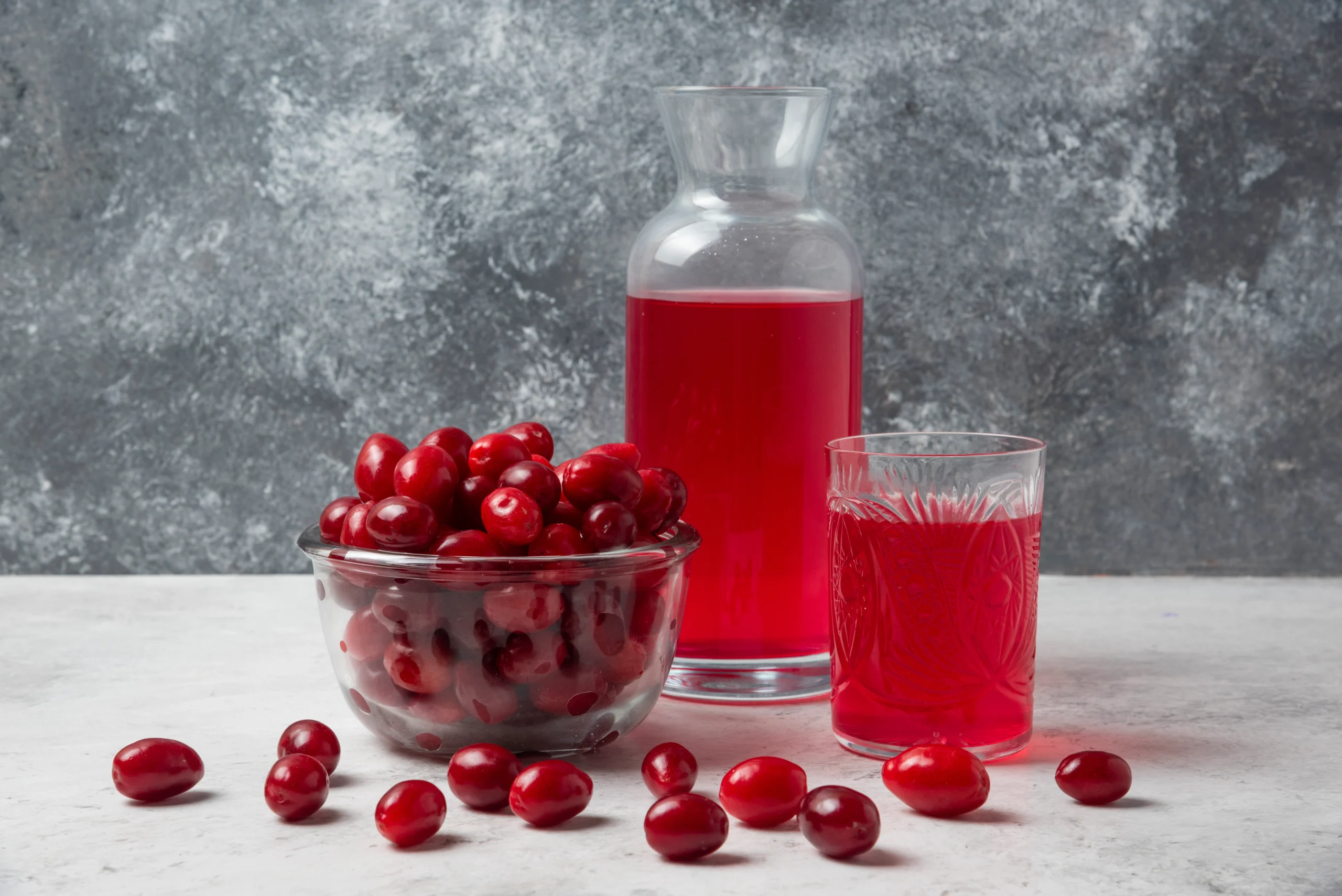
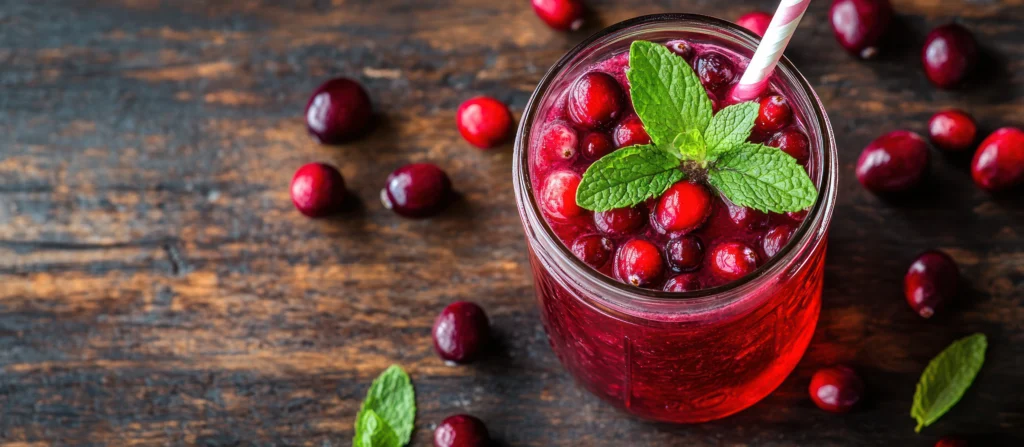
Color: Bright red to dark red, depending on concentration and processing.
Shape: Liquid, so it takes the shape of its container.
Size: Available in various bottle sizes, commonly ranging from small single-serve bottles to larger multi-serve containers.
Texture: Smooth, with a watery viscosity.
Culinary Uses
Common Dishes: Consumed on its own as a beverage, used in cocktails (e.g., the Cosmopolitan), mocktails, smoothies, and various recipes that call for a sweet yet tart liquid component.
Preparation Methods: Typically consumed chilled or over ice. Can be mixed with other juices or used as a base for sauces and dressings.
Suitable Pairings: Pairs well with citrus flavors, vodka, and sparkling water for beverages; complements poultry and pork dishes when used in cooking.
Geographical Information
Origin: Cranberries are native to North America, with commercial cultivation starting in the early 19th century.
Primary Growing Regions: Major cranberry-producing regions include the United States (particularly Massachusetts, Wisconsin, New Jersey, and Oregon), Canada (British Columbia and Quebec), and Chile.
Seasonal Availability: Fresh cranberries are typically harvested in September and October, but cranberry juice from concentrate is shelf-stable and available year-round.
Cranberry juice from concentrate provides a convenient and long-lasting option for enjoying the distinctive tart flavor and potential health benefits of cranberries, including supporting urinary tract health. While it offers some nutrients, particularly when not fortified, it’s important to be mindful of the sugar content and opt for 100% juice versions when possible to maximize health benefits.
| Proximates: | |
| Water | 92.3 g |
| Energy (Atwater General Factors) | 32 kcal |
| Energy (Atwater Specific Factors) | 31 kcal |
| Nitrogen | <0.02 g |
| Protein | 0 g |
| Total lipid (fat) | 0.34 g |
| Ash | 0.1 g |
| Carbohydrates: | |
| Carbohydrate, by difference | 7.26 g |
| Sugars, Total | 3.41 g |
| Sucrose | <0.25 g |
| Glucose | 2.7 g |
| Fructose | 0.72 g |
| Lactose | <0.25 g |
| Maltose | <0.25 g |
| Galactose | <0.1 g |
| Organic acids: | |
| Citric acid | 1160 mg |
| Malic acid | 756 mg |
| Oxalic acid | <40 mg |
| Quinic acid | 1020 mg |
| Minerals: | |
| Calcium, Ca | 7 mg |
| Iron, Fe | 0.13 mg |
| Magnesium, Mg | 4.4 mg |
| Phosphorus, P | 3 mg |
| Potassium, K | 71 mg |
| Sodium, Na | 6 mg |
| Zinc, Zn | 0.04 mg |
| Copper, Cu | 0.013 mg |
| Manganese, Mn | 0.211 mg |
| Vitamins and Other Components: | |
| Vitamin C, total ascorbic acid | <0.63 mg |
| Thiamin | 0.018 mg |
| Niacin | 0.01 mg |
| Vitamin B-6 | 0.09 mg |
| Folate, total | 9 µg |