
Basic Information
- Common Name: Turkey Breakfast Sausage
- Scientific Name: N/A (This category doesn’t typically have a scientific name as it’s a processed food product made from turkey meat.)
- Category: Processed Meat
- Varieties: There are various brands and formulations, including those that emphasize lower fat content, use different seasonings, or cater to dietary restrictions (e.g., gluten-free).
Nutritional Information
- Macronutrients:
- Carbohydrates: Generally low in carbs, often less than 0.93g per serving since it’s primarily made of meat.
- Proteins: High in protein, with amounts varying depending on the specific product but typically around 16.7 g per serving.
- Fats: Variable, depending on the leanness of the turkey used and added ingredients, but can range from 10.4 g per serving.
- Micronutrients: Sources of B vitamins (especially B12 and niacin), selenium, zinc, and phosphorus. The specific content can vary based on the ingredients used.
- Calorie Count: Varies, but approximately 150-250 calories per serving (4 links or 3.2 oz), depending on the fat content.
- Glycemic Index: Low; meat products like turkey sausage have minimal impact on blood sugar levels.
Phytonutrients
“Sausage, turkey, breakfast links, mild, raw” is primarily a processed meat product, and while it does provide certain nutrients, its content of phytonutrients — which are naturally occurring compounds found in plants — would be minimal or non-existent. Phytonutrients are typically associated with fruits, vegetables, grains, legumes, nuts, and teas. Since turkey sausage is made from animal meat and added ingredients for flavor and preservation, its phytonutrient profile would not be a significant point of discussion.
However, it’s important to note that turkey meat itself can contribute to a healthy diet when consumed in moderation, offering high-quality protein, vitamins, and minerals such as vitamin B6, niacin, selenium, and zinc. The additional ingredients in turkey sausage, such as herbs and spices, may provide minimal amounts of certain phytochemicals, but these would vary widely depending on the specific recipe and amounts used by the manufacturer.
For a diet rich in phytonutrients, it’s recommended to consume a wide variety of whole plant foods alongside lean protein sources like turkey.
Physical Characteristics
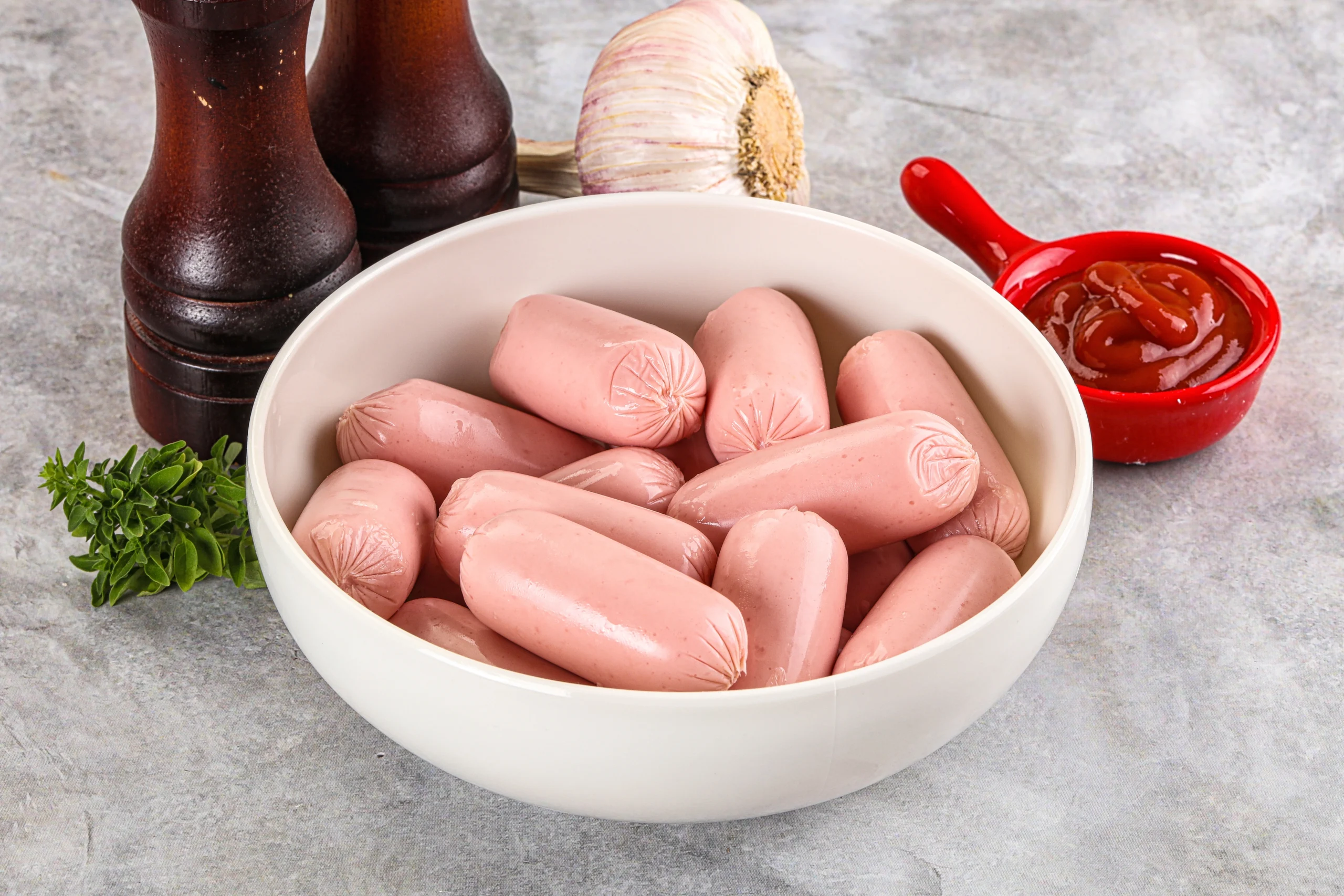
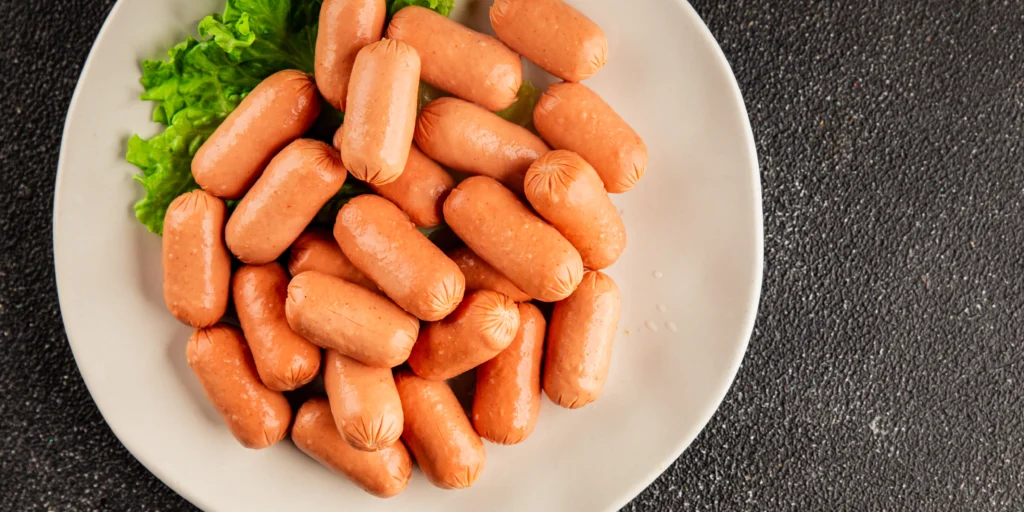
- Color: Cooked turkey sausage is usually a light to golden brown.
- Shape: Typically cylindrical, about 2-3 inches long, resembling traditional breakfast sausage links.
- Size: The size can vary slightly by brand but generally fits the description above.
- Texture: Firm and slightly coarse, with a juicy bite if cooked properly.
Culinary Uses
- Common Dishes: Often served as part of a breakfast meal, alongside eggs, pancakes, or within breakfast sandwiches or burritos.
- Preparation Methods: Can be pan-fried, grilled, or baked. Often cooked from raw until the internal temperature reaches a safe level (165°F or 74°C).
- Suitable Pairings: Complements traditional breakfast items like eggs, toast, and hash browns, and is often used in breakfast casseroles or as a protein addition to breakfast tacos.
Geographical Information
- Origin: Turkey sausage, as a concept, is rooted in the tradition of sausage making but adapted to use turkey as a healthier, leaner alternative to pork.
- Primary Growing Regions: Turkey used in these sausages is raised in poultry farms across various countries, with the United States being a significant producer.
- Seasonal Availability: As a processed food product, turkey breakfast sausage is available year-round.
Turkey breakfast sausage offers a lower-fat alternative to traditional pork sausage, catering to those seeking healthier breakfast meat options without sacrificing flavor. Its versatility and compatibility with various dietary preferences make it a popular choice in many households.
| Proximates: | |
| Water | 69.6 g |
| Energy (Atwater General Factors) | 164 kcal |
| Energy (Atwater Specific Factors) | 169 kcal |
| Nitrogen | 2.67 g |
| Protein | 16.7 g |
| Total lipid (fat) | 10.4 g |
| Total fat (NLEA) | 8.86 g |
| Ash | 2.37 g |
| Carbohydrates: | |
| Carbohydrate, by difference | 0.93 g |
| Minerals: | |
| Calcium, Ca | 32 mg |
| Iron, Fe | 1.17 mg |
| Magnesium, Mg | 18.9 mg |
| Phosphorus, P | 178 mg |
| Potassium, K | 310 mg |
| Sodium, Na | 599 mg |
| Zinc, Zn | 2.58 mg |
| Copper, Cu | 0.07 mg |
| Manganese, Mn | 0.035 mg |
| Selenium, Se | 12.5 µg |
| Vitamins and Other Components: | |
| Thiamin | 0.047 mg |
| Riboflavin | 0.296 mg |
| Niacin | 5.02 mg |
| Pantothenic acid | 0.952 mg |
| Vitamin B-6 | 0.335 mg |
| Choline, total | 59.6 mg |
| Choline, free | 1.6 mg |
| Choline, from phosphocholine | 46.4 mg |
| Choline, from phosphotidyl choline | 1 mg |
| Choline, from glycerophosphocholine | 2.1 mg |
| Choline, from sphingomyelin | 8.4 mg |
| Betaine | 8.1 mg |
| Vitamin B-12 | 1.2 µg |
| Vitamin E (alpha-tocopherol) | 0.24 mg |
| Tocopherol, gamma | 0.24 mg |
| Tocopherol, delta | 0.68 mg |
| Vitamin K (phylloquinone) | 0.4 µg |
| Vitamin K (Menaquinone-4) | 36.6 µg |
| Lipids: | |
| Fatty acids, total saturated | 2.53 g |
| SFA 4:0 | 0.001 g |
| SFA 10:0 | 0.001 g |
| SFA 12:0 | 0.011 g |
| SFA 14:0 | 0.081 g |
| SFA 15:0 | 0.012 g |
| SFA 16:0 | 1.73 g |
| SFA 17:0 | 0.024 g |
| SFA 18:0 | 0.65 g |
| SFA 20:0 | 0.011 g |
| SFA 22:0 | 0.005 g |
| SFA 24:0 | 0.002 g |
| Fatty acids, total monounsaturated | 3.07 g |
| MUFA 14:1 c | 0.014 g |
| MUFA 16:1 c | 0.232 g |
| MUFA 17:1 | 0.012 g |
| MUFA 17:1 c | 0.012 g |
| MUFA 18:1 c | 2.75 g |
| MUFA 20:1 c | 0.046 g |
| MUFA 22:1 c | 0.013 g |
| MUFA 22:1 n-9 | 0.013 g |
| MUFA 24:1 c | 0.005 g |
| Fatty acids, total polyunsaturated | 3.15 g |
| PUFA 18:2 c | 2.82 g |
| PUFA 18:2 n-6 c,c | 2.8 g |
| PUFA 18:2 CLAs | 0.018 g |
| PUFA 18:3 c | 0.19 g |
| PUFA 18:3 n-3 c,c,c (ALA) | 0.186 g |
| PUFA 18:3 n-6 c,c,c | 0.004 g |
| PUFA 20:2 c | 0.016 g |
| PUFA 20:2 n-6 c,c | 0.016 g |
| PUFA 20:3 c | 0.012 g |
| PUFA 20:3 n-6 | 0.012 g |
| PUFA 20:4 | 0.091 g |
| PUFA 20:4c | 0.091 g |
| PUFA 20:5c | 0.002 g |
| PUFA 20:5 n-3 (EPA) | 0.002 g |
| PUFA 22:5 c | 0.009 g |
| PUFA 22:4 | 0.017 g |
| PUFA 22:5 n-3 (DPA) | 0.009 g |
| PUFA 22:6 c | 0.007 g |
| PUFA 22:6 n-3 (DHA) | 0.007 g |
| Fatty acids, total trans | 0.104 g |
| Fatty acids, total trans-monoenoic | 0.086 g |
| TFA 16:1 t | 0.002 g |
| TFA 18:1 t | 0.084 g |
| Fatty acids, total trans-dienoic | 0.018 g |
| TFA 18:2 t not further defined | 0.018 g |
| Cholesterol | 78 mg |
| Amino acids: | |
| Tryptophan | 0.15 g |
| Threonine | 0.71 g |
| Isoleucine | 0.65 g |
| Leucine | 1.24 g |
| Lysine | 1.41 g |
| Methionine | 0.45 g |
| Phenylalanine | 0.82 g |
| Tyrosine | 0.56 g |
| Valine | 0.65 g |
| Arginine | 1.03 g |
| Histidine | 0.42 g |
| Alanine | 0.94 g |
| Aspartic acid | 1.48 g |
| Glutamic acid | 2.5 g |
| Glycine | 0.88 g |
| Proline | 0.77 g |
| Serine | 0.7 g |
| Hydroxyproline | 0.2 g |
| Cysteine | 0.19 g |