

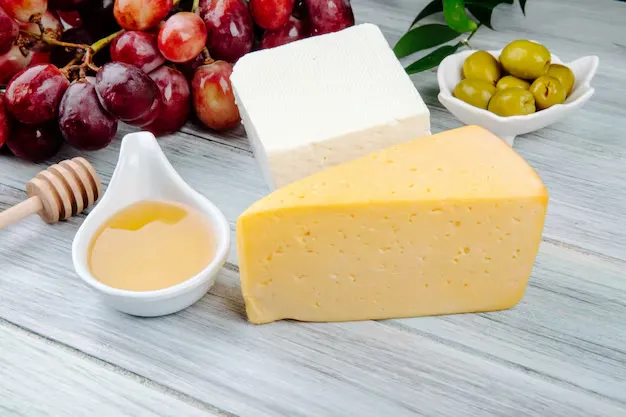
American cheese, particularly in its form as pasteurized process cheese food or product, is a staple in many kitchens for its versatility and meltability. Here’s a detailed overview:
Basic Information
- Name (Common): American Cheese (Singles)
- Scientific: Not applicable, as it’s a processed food product rather than a natural species.
- Category: Dairy product, Processed cheese.
- Varieties: Varieties are primarily based on the milk fat content and added flavors, including traditional, low-fat, and reduced-sodium versions.
Nutritional Information
Macronutrients
- Carbohydrates: Generally low, about 2-3 grams per 100 grams, mainly from added ingredients.
- Proteins: Moderate, around 14-16 grams per 100 grams, providing a source of dairy proteins.
- Fats: Varied, approximately 20-24 grams per 100 grams, with a mix of saturated and unsaturated fats.
Micronutrients
- Rich in calcium, important for bone health.
- Provides phosphorus, zinc, vitamin A, and sometimes vitamin D if fortified.
Phytonutrients
Pasteurized processed cheese food or product, commonly referred to as American cheese singles, is a processed cheese product rather than a natural cheese like cheddar or Parmesan. Due to its processed nature, the focus for American cheese is typically on its macronutrient content (proteins, fats, and carbohydrates) and some micronutrients (such as calcium and vitamins added during processing) rather than on phytonutrients, which are natural compounds found in plant-based foods known for their health benefits.
Phytonutrients and Bioactive Compounds
In the context of American cheese singles, the term “phytonutrients” might not be entirely applicable as these are specifically associated with plants. However, we can discuss the bioactive compounds present in dairy that might also be found in American cheese to a certain extent:
- Conjugated Linoleic Acid (CLA): While more prominent in natural cheeses and dairy products from grass-fed cows, processed cheeses may contain lower amounts of CLA, a fatty acid associated with anti-inflammatory benefits and potential weight management support.
- Butyric Acid: A type of short-chain fatty acid found in butter and other dairy fats, butyric acid supports gut health and has anti-inflammatory properties. The concentration in processed cheese products like American cheese singles may be lower compared to natural dairy products.
- Bioactive Peptides: Depending on the degree of processing and the source of the dairy ingredients, some bioactive peptides with potential health benefits could be present. These peptides can have various effects, including antimicrobial, antihypertensive, and immunomodulatory activities.
- Vitamins and Minerals: While not phytonutrients, American cheese is often fortified with vitamins A and D, and it naturally contains calcium and phosphorus. These nutrients are essential for bone health, immune function, and other metabolic processes.
Considerations
- The processing involved in making American cheese singles can affect the nutritional profile, potentially reducing the concentration of naturally occurring nutrients found in the raw dairy ingredients.
- The addition of emulsifiers, preservatives, and colorants in American cheese may also impact its overall health benefits compared to unprocessed cheeses.
In summary, while American cheese singles contain some bioactive compounds and are fortified with certain vitamins and minerals, they are not a significant source of phytonutrients like those found in plant-based foods. When considering the health benefits of dairy, whole and less processed options are generally recommended for their richer nutritional profile, including potentially higher levels of beneficial compounds.
Calorie Count and Glycemic Index
- Calorie Count: About 330 calories per 100 grams.
- Glycemic Index: Very low, as it’s primarily fat and protein with minimal carbohydrates.
Physical Characteristics
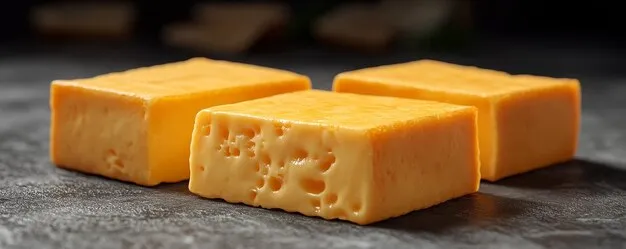
- Color: Creamy white to orange, depending on additives.
- Shape: Comes in individual slices, typically square or rectangular, wrapped in plastic.
- Size: Standard slices are about 2×2 inches and thin, but size can vary by brand.
- Texture: Smooth, creamy, and uniform, designed to melt easily.
Culinary Uses
- Common Dishes: Widely used in sandwiches, burgers, grilled cheese, and as a topping for dishes requiring a creamy melt, such as casseroles and nachos.
- Preparation Methods: Can be used straight from the package without the need for further preparation. Melts well under heat.
- Suitable Pairings: Pairs well with bread, tomatoes, pickles, and cold cuts for sandwiches; also complements beef in burgers and is a popular cheese choice for making cheese sauces due to its melting properties.
Geographical Information
- Origin: United States, developed as a processed cheese product to have a longer shelf life and consistent melting behavior.
- Primary Growing Regions: Produced throughout the U.S., with no specific growing region due to its processed nature.
- Seasonal Availability: Available year-round, with consistent production and distribution.
American cheese singles are a product of food science, designed for convenience, shelf stability, and versatility in cooking. While not celebrated for its artisan qualities or complex flavors like traditional cheeses, American cheese serves a functional and popular role in American cuisine and beyond, offering a reliable melting cheese for everyday use.
| Proximates: | |
| Water | 44.8 g |
| Energy (Atwater General Factors) | 310 kcal |
| Energy (Atwater Specific Factors) | 308 kcal |
| Nitrogen | 2.44 g |
| Protein | 15.6 g |
| Total lipid (fat) | 23.9 g |
| Ash | 7.6 g |
| Carbohydrates: | |
| Carbohydrate, by difference | 8.19 g |
| Minerals: | |
| Calcium, Ca | 1500 mg |
| Iron, Fe | 1.3 mg |
| Magnesium, Mg | 34.6 mg |
| Phosphorus, P | 880 mg |
| Potassium, K | 212 mg |
| Sodium, Na | 1420 mg |
| Zinc, Zn | 2.38 mg |
| Copper, Cu | <0.05 mg |
| Manganese, Mn | 0.065 mg |
| Iodine, I | 52.5 µg |
| Vitamins and Other Components: | |
| Vitamin A | |
| Retinol | 156 µg |
| Vitamin D (D2 + D3), International Units | 177 IU |
| Vitamin D (D2 + D3) | 4.42 µg |
| Vitamin D2 (ergocalciferol) | <0.1 µg |
| Vitamin D3 (cholecalciferol) | 4.42 µg |
| Lipids: | |
| Fatty acids, total saturated | 13.7 g |
| SFA 12:0 | 0.723 g |
| SFA 14:0 | 2.2 g |
| SFA 16:0 | 6.52 g |
| SFA 18:0 | 2.13 g |
| Fatty acids, total monounsaturated | 4.89 g |
| PUFA 18:2 | 0.558 g |
| Cholesterol | 73 mg |