
Basic Information
- Common Name: Great Northern Beans
- Scientific Name: Phaseolus vulgaris
- Category: Legume
Varieties
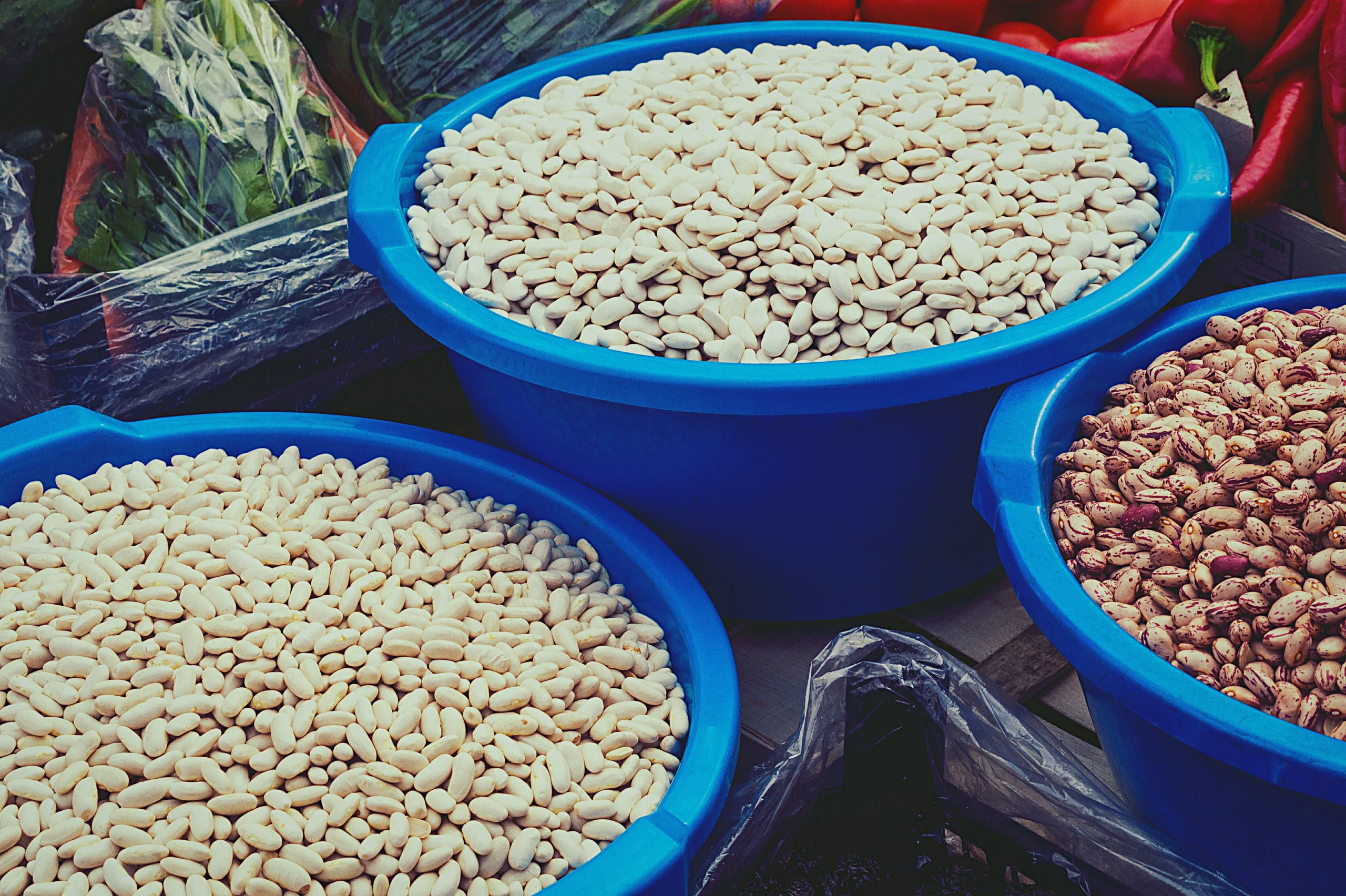
Great Northern Beans are a type of white bean, similar to but smaller than cannellini beans and larger than navy beans. They are known for their mild, nutty flavor and firm flesh. They don’t have distinct varieties once canned, but in their natural form, they are a specific variety of the common bean.
Nutritional Information
- Macronutrients: Great Northern Beans are primarily composed of carbohydrates, with a significant amount of protein and a low fat content. A typical serving (1 cup, approximately 175 grams, canned, drained, and rinsed) contains:
- Carbohydrates: About 19.3 grams
- Proteins: About 7.03 grams
- Fats: Less than 1.27 gram
- Micronutrients: They are a good source of various vitamins and minerals, particularly:
- Fiber: About 12 grams per serving
- Iron, Magnesium, Potassium, and Zinc
- Vitamin B6 and Folate
Phytonutrients
Great Northern beans, like other legumes, are rich in various phytonutrients, which are plant compounds beneficial to health. While the canning process may affect the levels of some phytonutrients compared to their fresh or dried counterparts, canned beans still retain a significant amount of these beneficial compounds. Here’s a breakdown of key phytonutrients found in Great Northern beans:
1. Fiber
- Type: Both soluble and insoluble fiber.
- Benefits: Aids in digestion, helps regulate blood sugar levels, and can lower cholesterol.
2. Polyphenols
- Type: Includes flavonoids, phenolic acids, and tannins.
- Benefits: Antioxidant properties, which can help fight oxidative stress and may reduce the risk of chronic diseases such as heart disease and cancer.
3. Saponins
- Type: Glycosides with a foamy characteristic when mixed with water.
- Benefits: May have anti-inflammatory and immune-boosting properties, as well as potential to lower cholesterol.
4. Phytic Acid (Phytates)
- Type: A storage form of phosphorus in plants.
- Benefits: Antioxidant effects and a reduced risk of kidney stones; however, it can also bind minerals and reduce their absorption.
5. Lectins
- Type: A type of protein that can bind to cell membranes.
- Benefits: While lectins can be toxic in high amounts or when beans are raw, cooking (and the canning process) significantly reduces their levels, making beans safe to eat. In the right amounts, lectins may have health benefits, including potential anti-cancer properties.
6. Isoflavones
- Type: A class of phytoestrogens, plant-derived compounds with estrogen-like activity.
- Benefits: Associated with reduced risk of certain cancers, heart disease, and osteoporosis, particularly in postmenopausal women.
7. Resistant Starch
- Type: Not exactly a phytonutrient but a type of carbohydrate that resists digestion in the small intestine, functioning similarly to fiber.
- Benefits: Feeds beneficial gut bacteria, improves gut health, and helps regulate blood sugar levels.
The presence of these phytonutrients in Great Northern beans contributes to their health benefits, including anti-inflammatory effects, potential protection against certain diseases, and support for heart health and digestion. It’s important to note that while draining and rinsing canned beans can reduce the sodium content, it might also slightly lower the levels of water-soluble phytonutrients. However, the overall impact on health benefits is minimal, and canned beans remain a nutritious option.
- Calorie Count: Roughly 200 calories per cup.
- Glycemic Index: Low to medium, generally ranging between 31 to 50, making them a good option for blood sugar management.
Physical Characteristics
- Color: White to off-white
- Shape: Kidney-shaped, slightly flattened
- Size: Medium-sized beans, about 1/2 inch long
- Texture: Soft and creamy when cooked, with a firm outer skin that holds up well in various dishes.
Culinary Uses
Great Northern Beans are versatile in the kitchen. They can be used in a wide range of dishes, including:
- Common Dishes: Soups, stews, casseroles, and salads. They are particularly popular in white chili recipes.
- Preparation Methods: Can be used directly from the can, added to dishes without the need for pre-cooking. Draining and rinsing are recommended to reduce sodium content.
- Suitable Pairings: Pairs well with vegetables, herbs, and meats. Common flavor companions include garlic, onions, tomatoes, sage, and thyme.
Geographical Information
- Origin: Native to the Americas, with a long history of cultivation dating back thousands of years.
- Primary Growing Regions: Today, they are grown in various parts of the United States, particularly in the Midwest and California.
- Seasonal Availability: As a canned product, they are available year-round. Fresh beans are typically harvested in late summer to early fall.
Great Northern Beans, especially when canned with sodium added, offer convenience and nutritional benefits, making them a staple ingredient in many healthy diets. Their widespread availability and versatile culinary uses have made them a favorite among cooks around the world.
| Proximates: | |
| Water | 0g |
| Energy (Atwater General Factors) | 117kcal |
| Energy (Atwater Specific Factors) | 114kcal |
| Nitrogen | 1.12g |
| Protein | 7.03g |
| Total lipid (fat) | 1.27g |
| Ash | 1.21g |
| Carbohydrates: | |
| Carbohydrate, by difference | 19.3g |
| Total dietary fiber (AOAC 2011.25) | 6.91g |
| Starch | 11.7g |
| Minerals: | |
| Calcium, Ca | 67mg |
| Iron, Fe | 1.38mg |
| Magnesium, Mg | 29.3mg |
| Phosphorus, P | 89mg |
| Potassium, K | 213mg |
| Sodium, Na | 223mg |
| Zinc, Zn | 0.63mg |
| Copper, Cu | 0.256mg |
| Manganese, Mn | 0.436mg |